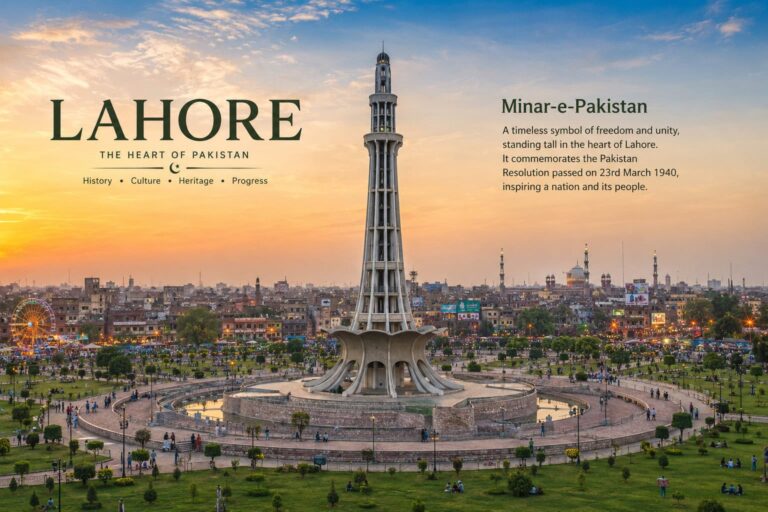
Lahore is not only a city of monuments, markets, and memory. It is also a city shaped by people whose ideas, labour, and imagination gave it character. Many who contributed to Lahore’s civic, educational, and cultural life are still not remembered as fully as they deserve. Among them are Sir Ganga Ram, Bhai Ram Singh, Sardar Dyal Singh Majithia, and Shakir Ali. They worked in different fields, yet each left a lasting mark on Lahore.
Sir Ganga Ram, born in Mangtanwala, now in Nankana Sahib District, and later dying in London, was educated at Government College Lahore before training as an engineer at Thomason College, Roorkee. He began his career in the Public Works Department, but his real importance lies in the way he turned technical skill into public service. He is remembered for institutions named after him, including Sir Ganga Ram Hospital, and for his work on roads, canals, irrigation, and urban development. His Renala Khurd hydel and irrigation project helped turn barren land into productive farmland, while Gangapur, the model village he established after retirement, reflected his belief that development should improve ordinary lives.
Bhai Ram Singh, born in Rasulpur near Batala and later dying in Lahore, brought another kind of greatness to the city. Trained at the Mayo School of Arts, he rose from student to teacher and later principal, becoming one of the most respected architects and designers of his time. His contribution was not simply that he designed important buildings. It was he who helped shape Lahore’s visual identity. Aitchison College, the Lahore Museum, and the National College of Arts continue to reflect his artistic skill and architectural vision. In a city where buildings do more than serve a practical purpose, Bhai Ram Singh helped create spaces that carried beauty and memory. His legacy reminds us that architecture is not just about construction. It is also about giving a city its face and spirit.
Sardar Dyal Singh Majithia, born in Kashi (now Varanasi) and later dying in Lahore, represents another important strand in Lahore’s making: philanthropy, learning, and institution-building. Educated at Mission Church School, he became closely linked with Lahore through his civic vision and generous use of wealth. He played an important role in the setting up of Punjab University and founded The Union Academy in Lahore in 1893, which later became Dyal Singh College. He also founded The Tribune in Lahore in 1881, giving the region a major platform for public debate and intellectual exchange. Punjab National Bank also traces its origins to Lahore, and Dyal Singh Majithia served as its first Chairman. He believed in building indigenous institutions that could strengthen society.
Shakir Ali, born in Rampur, India, and later dying in Lahore, helped shape the city’s modern cultural identity. He received his early education at home and at Jamia Millia Islamia, and later studied art in South Asia and Europe before returning to Pakistan in 1951. He soon emerged as one of the most important figures in modern art in the country. In 1952, he helped found the Lahore Art Circle, which gave fresh energy to artistic production and exhibition, and in 1962, he became the first Pakistani principal of the National College of Arts. His influence was not limited to his own paintings. He helped nurture a new artistic language in Pakistan and inspired generations of students. Through Shakir Ali, Lahore became not only a city of inherited culture, but also a centre of creative renewal.
Taken together, these four figures remind us that Lahore was not built by one kind of talent alone. It was shaped through engineering, architecture, philanthropy, education, journalism, finance, and art. That is what gives the city its richness. Its greatness lies not only in its landmarks, but also in the diversity of minds and hands that helped define its spirit. To remember these men is not simply to praise the past. It is to recognise the values they stood for: service, excellence, learning, beauty, and creativity.
If Lahore truly wants to honour its history, it must do more than preserve old buildings. It must also preserve the memory of those who gave the city its shape and soul. Sir Ganga Ram, Bhai Ram Singh, Sardar Dyal Singh Majithia, and Shakir Ali deserve to be remembered not as footnotes, but as part of Lahore’s living story. Their lives still offer lessons for the present and point toward the kind of city Lahore can continue to become.
Zahid Maqsood Sheikh
About the Author