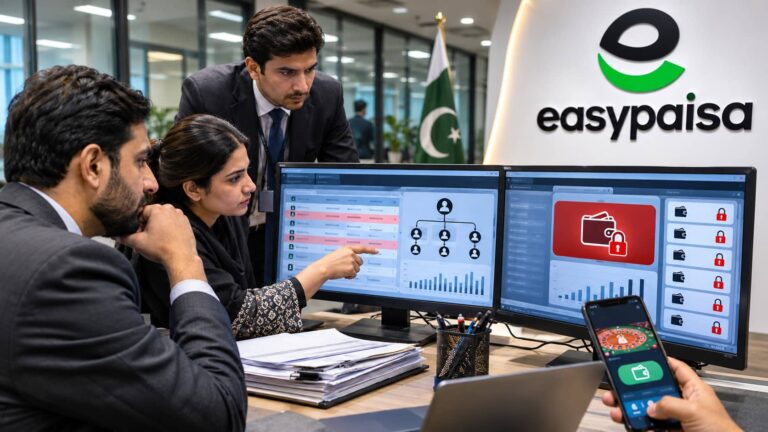
LAHORE – Pakistan is exploring major transformation of its international remittance system, with Minister of State and Pakistan Virtual Assets Regulatory Authority (PVARA) Chairman Bilal Bin Saqib revealing that cheaper digital transactions could unlock nearly $1 billion in additional economic benefits.
The ambitious proposal comes as authorities consider introducing blockchain-powered payment solutions, regulated stablecoins and a pilot project for remittances from Gulf countries, potentially reshaping how millions of overseas Pakistanis send money home.
Speaking at dialogue Digital Assets and the Future of Banking at Lahore University of Management Sciences (LUMS), Bilal Bin Saqib said Pakistan could secure substantial financial benefits by cutting the cost of cross-border money transfers. During a discussion with Pakistan Banks Association (PBA) Chairman Zafar Masud, he highlighted the economic potential of reducing remittance charges by two to three percentage points.
With annual remittances estimated at around $41 billion to $41.6 billion, such a reduction could theoretically free up approximately $820 million to $1.25 billion, potentially allowing nearly $1 billion more to reach Pakistani households and local businesses.
He argued that reducing transaction costs would directly benefit families dependent on overseas earnings while improving financial inclusion and encouraging the use of regulated banking channels.
Bilal disclosed that PVARA and State Bank of Pakistan (SBP) are working together to examine how emerging financial technologies could make international payments faster, cheaper and more transparent. A joint working group is evaluating potential digital payment solutions, including a proposed pilot initiative focused on the Gulf remittance corridor.
Gulf remains one of Pakistan’s most important sources of workers’ remittances, making it a key target for efforts to modernise cross-border transactions. The proposed pilot would explore innovative payment infrastructure through supervised banking arrangements while maintaining regulatory compliance, financial stability and consumer protection.
Although initiative remains under consideration, it signals growing interest in integrating blockchain-based financial systems into Pakistan’s formal banking network. Saqib stressed that blockchain technology offers opportunities far beyond cryptocurrency trading and speculative investment. He said its applications extend to international payments, digital asset custody, tokenisation, programmable money and broader access to financial services.
Financial institutions worldwide are already embracing these technologies, with major banking groups such as JPMorgan, HSBC, Citibank and BNY developing blockchain-related services and infrastructure. Pakistan, he argued, cannot afford to remain on the sidelines while international financial systems undergo rapid technological change.
He recalled that Pakistan had limited influence over the development of earlier global payment networks, including correspondent banking arrangements and international card systems, leaving the country dependent on infrastructure designed by others. The minister urged policymakers and financial institutions to ensure Pakistan plays a meaningful role in shaping the next generation of global financial rules.
He warned that countries failing to invest in emerging financial technologies risk becoming increasingly dependent on foreign infrastructure and paying higher costs for essential services.
PVARA chairman called on Pakistani banks to move beyond conventional competition and cooperate in developing shared technological infrastructure. He identified digital custody services, Know Your Customer (KYC) verification systems and cybersecurity networks as areas where joint investment could significantly improve efficiency.
Under such approach, banks could share essential infrastructure while competing independently on service quality, financial products and customer pricing. Bilal said this model could help financial institutions avoid unnecessary duplication, reduce operating expenses and accelerate the adoption of modern banking technologies.
However, he cautioned that expanding digital financial services without adequate security measures could expose institutions and consumers to serious risks. He stressed that cyberattacks frequently exploit weaknesses in security protocols and operational safeguards, making strong defensive systems essential for the future of digital banking.
Closer coordination between PVARA, SBP, the Securities and Exchange Commission of Pakistan (SECP) and commercial banks would be critical to ensuring innovation proceeds within a secure regulatory environment.
Earlier, Finance Minister Aurangzeb presented an optimistic outlook for overseas remittance inflows. He revealed that Pakistan received approximately $41.6 billion from overseas workers during the previous fiscal year, with the government expecting the figure to exceed $44 billion in the current financial year.
Pakistan’s Stablecoin Plan could unlock $400 Million in Remittance Savings: PVARA chief
About the Author