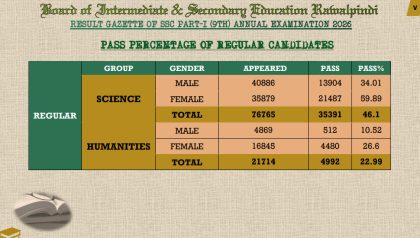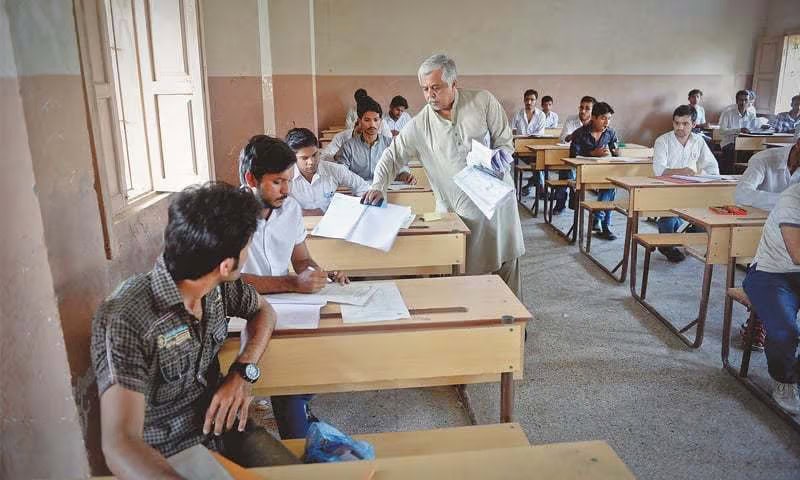
According to the board’s statistics, 287,597 candidates registered for the examination, while 280,676 appeared. Of those who appeared, 130,543 candidates passed.
Female Students Outperform Males
Female candidates recorded a pass rate of 54.62%, substantially higher than their male counterparts. A total of 150,882 female students appeared, of whom 82,410 passed. Meanwhile, 129,794 male candidates appeared, with 48,133 declared successful, resulting in a pass percentage of 37.08%.
The results also revealed a considerable performance gap between regular and private candidates. Of the 180,264 regular candidates who appeared, 96,566 passed, giving them a pass rate of 53.57%. Among 100,412 private candidates, only 33,977 passed, resulting in a significantly lower pass percentage of 33.84%.
The institutional breakdown showed a notable difference between government and private schools. Among regular candidates from government institutes, 101,079 students appeared, with 40,409 passing, translating into a pass rate of 39.98%.
In comparison, 79,185 students from private institutes appeared, of whom 56,157 passed, producing a substantially higher pass rate of 70.92%.
2026 examination also marks a major change in the evaluation system. Under the new criteria, the minimum passing threshold has been raised from 33% to 40%. Students are now required to secure at least 220 marks out of 550 to pass.
A GPA-based grading system has also been introduced. Under the revised system, the term “Fail” has been replaced with “Unsatisfactory” on result cards.
About the Author