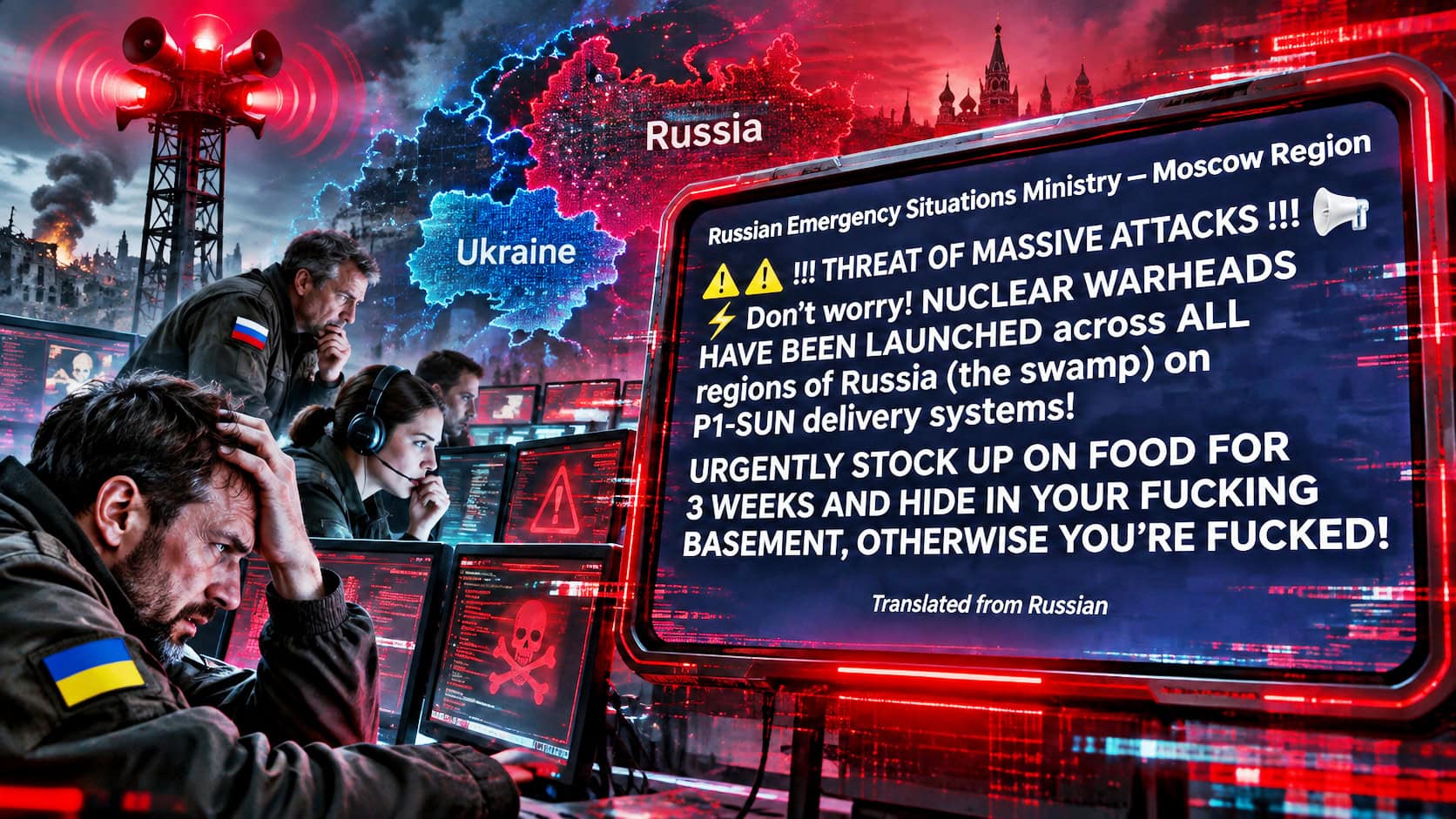
MOSCOW – Fake nuclear attack warnings triggered alarm as Russia and Ukraine report massive cyberattacks on their emergency alert systems. Hackers spread terrifying messages about nuclear-armed drones as ceasefire expired, raising fears of renewed fighting and escalating cyberwarfare.
Kremlin and Kyiv reported major cyberattacks targeting emergency warning applications, with fabricated nuclear strike alerts and alarming security notifications raising fears of widespread panic as a crucial six-day ceasefire in southern Ukraine comes to an end.
The incidents intensified concerns about security of public warning systems during wartime, particularly as millions of civilians rely on emergency applications to receive potentially life-saving information about missile strikes, drone attacks and other threats.
A fake notification appearing on Russia’s emergency alert application claimed that Ukraine had launched nuclear-armed drones toward Russian territory. The fabricated warning reportedly instructed residents to gather enough food and essential supplies for three weeks and immediately move to secure locations.
Although the nuclear threat was false, the incident highlighted the potentially dangerous consequences of cybercriminals gaining access to platforms designed to protect civilians during emergencies.
Russia’s Ministry of Emergency Situations announced that its official emergency alert application had been targeted by what it described as a large-scale cyberattack. According to the ministry, the security breach could have enabled attackers to distribute fabricated emergency notifications, potentially misleading millions of users.
The incident gained particular attention after a fake warning circulated claiming that Ukrainian forces had dispatched nuclear-armed drones toward all regions of Russia. The message urged citizens to prepare for an extended emergency by stockpiling food, water and other essential supplies for at least three weeks.
However, Russian authorities clarified that the country’s main public warning infrastructure remained operational despite the reported cyberattack. Moscow did not officially identify who was responsible for the incident. The announcement came just hours after Ukraine reported a similar cyber incident affecting its own air raid warning application.
Ukraine also experienced a suspected cyberattack that caused its air raid warning application to display fabricated emergency messages. The misleading notifications appeared shortly before the expiration of a temporary ceasefire in the southern Kherson region. Ukrainian authorities blamed Russia for the apparent hacking attempt and warned citizens against trusting unusual or suspicious messages appearing on the application.
Officials urged residents to disregard fabricated notifications and rely on verified government communication channels for accurate emergency information.
Pictures of false alerts were subsequently released, showing how the compromised application had apparently been used to distribute misleading warnings. The incident raised serious concerns about the vulnerability of digital systems that millions of Ukrainians depend on for warnings about incoming military attacks.
While the cyber incidents generated anxiety in both countries, authorities maintained that their primary emergency warning systems continued functioning.
The timing of the cyber incidents has attracted particular attention because the fake Ukrainian emergency notifications appeared just minutes before a six-day ceasefire was scheduled to end in the Russian-occupied town of Oleshky.
The temporary ceasefire had provided a rare opportunity for civilians trapped in the conflict zone to escape to safer areas. Hundreds of residents were reportedly evacuated during the six-day humanitarian operation.
Despite the continuing military tensions, the evacuation operation has offered a rare sign of cooperation between Moscow and Kyiv. Ukrainian officials expressed cautious optimism that the humanitarian initiative could contribute to a lasting solution and potentially open the door to further progress in the peace process.
Russia’s coordinator for the Oleshky operation, Yana Lantratova, also indicated that both countries had agreed to continue conducting regular humanitarian missions. The development suggests that limited cooperation on civilian protection could remain possible despite ongoing disagreements over the broader conflict.
The reported cyberattacks have exposed an increasingly dangerous dimension of the Russia-Ukraine conflict, where digital infrastructure has become another potential target alongside military installations and strategic facilities.
About the Author