ISLAMABAD – Days after QatarEnergy-linked venture walked away from Pakistan’s LNG sector, a new multibillion-dollar opportunity is at the door as Trump-backed US consortium is now eyeing $4.4 billion investment to build giant LNG terminal and 1,100-kilometre gas pipeline.
The development comes after collapse of major LNG venture involving Pakistan’s Lucky Group and QatarEnergy over unresolved policy disputes, raising fresh questions about the country’s ability to woo foreign investment.
The proposed American-backed project could reshape Pakistan’s gas import infrastructure, introduce its first major onshore LNG storage facilities and potentially establish Port Qasim as an important regional energy trading centre. However, despite the scale of the investment being discussed, the project remains at the proposal stage, with major financing arrangements and binding investment commitments yet to be finalised.
Global Vision Energy Partners (GVEP), Khanjee Holdings and Luxembourg-based General Mediterranean Holding are working alongside prospective international financial and infrastructure investors. The consortium gets backing from the Trump administration, while its proposal has been approved for consideration under the US Trade and Development Agency’s project preparation programme.
Financial assistance could also be pursued through the US International Development Finance Corporation, with possible export credit guarantees from the Export-Import Bank of US. These arrangements could help support the procurement of American equipment, technology and services for the proposed infrastructure.
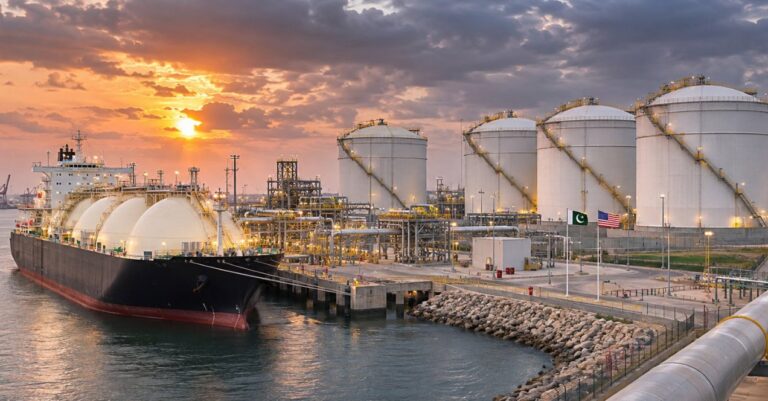
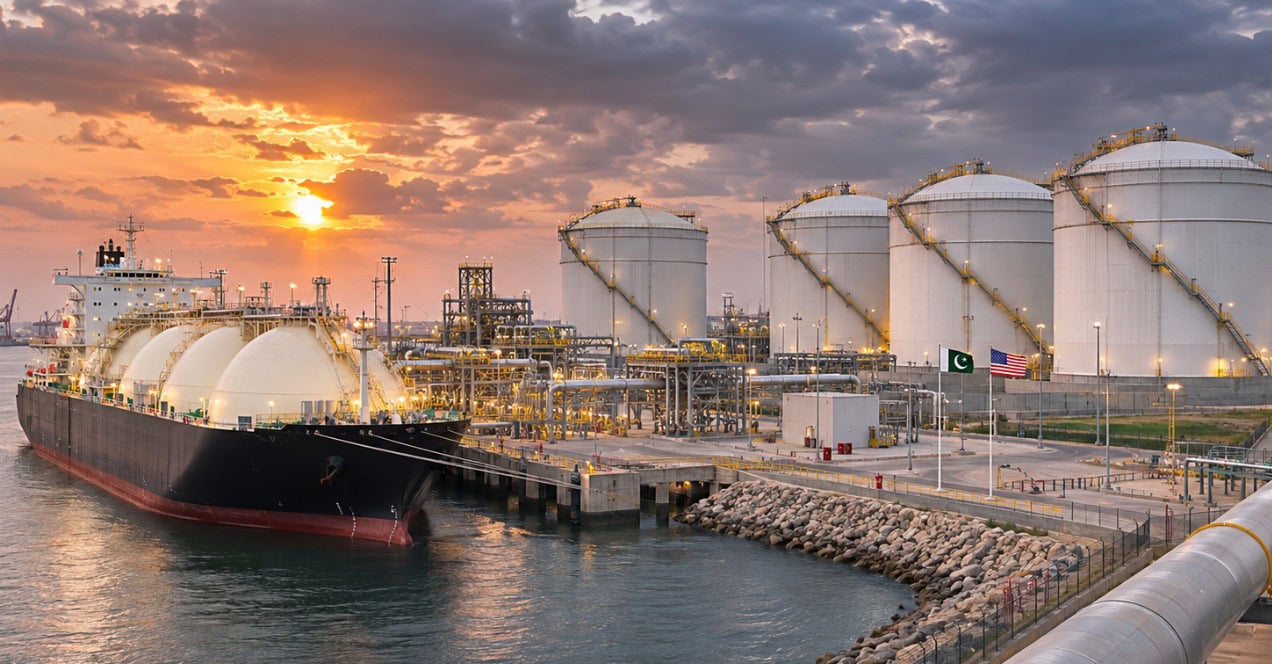
The consortium identified Port Qasim near Karachi as the proposed location for its new LNG import and storage infrastructure. Project sponsors have reportedly obtained consent from the Port Qasim Authority regarding the proposed site and submitted an application to the Oil and Gas Regulatory Authority (Ogra) for a provisional licence.
A separate special purpose vehicle has also been incorporated to manage the project’s development, ownership and operations. Facilitation has reportedly been indicated through the Ministry of Maritime Affairs and the Petroleum Division.
The project would be developed in two stages, beginning with a $1.7 billion LNG terminal and storage complex. The initial facility would feature four large storage tanks, each designed to hold approximately 140,000 cubic metres of LNG. Combined, the tanks would offer storage capacity of 560,000 cubic metres, marking a potentially historic expansion of Pakistan’s energy infrastructure. The terminal is projected to handle around 35 to 35.6 billion cubic feet of natural gas annually, assuming three inventory turnover cycles.
1,100-KM Gas Pipeline to Connect Major Markets
The consortium’s plans extend far beyond constructing a new import terminal. A second development phase envisages an approximately 1,100-kilometre gas transmission pipeline connecting the southern coastal region with major consumption centres farther north.
The proposed pipeline would measure between 42 and 48 inches in diameter and transport approximately 1.2 billion cubic feet of gas per day. Once the pipeline is included, the total projected investment would reach $4.4 billion.
The sponsors are seeking participation from some of the world’s prominent investment institutions and sovereign wealth funds. Prospective strategic investors mentioned in the plans include Grey Rock Investment Partners, KKR, Blackstone, Saudi Arabia’s Public Investment Fund and the Kuwait Investment Authority.
The consortium is also offering Pakistani investors opportunity to acquire up to 10% of the proposed equity, with indicative investment commitments beginning at approximately $50 million per participant. Under the proposed ownership distribution, GVEP would control 26%, General Mediterranean Holding 24%, Khanjee Holdings 20%, international strategic investors 20%, and local investors the remaining 10%. The financing framework envisages 70% debt and 30% equity.
Unlike conventional LNG projects that depend heavily on government-backed long-term purchase arrangements, the proposed venture is intended to operate as a merchant infrastructure platform. For Pakistan’s industrial sector, improved LNG handling and transportation infrastructure could potentially ease supply constraints and support manufacturing activity.
Despite its ambitious scope, the project faces substantial obstacles. Pakistan’s energy market remains affected by circular debt, uncertain demand projections, high imported gas costs and changing consumption patterns. The growing adoption of renewable energy and consumers’ sensitivity to gas prices could also affect the long-term financial viability of new LNG infrastructure.
The South Asian nation is seeking fresh foreign capital and greater resilience against international energy disruptions. A major LNG storage and transportation network could help address longstanding infrastructure gaps while opening opportunities for private-sector participation in gas trading.
Pakistan to face LNG supply shortages from Qatar amid regional tensions
About the Author