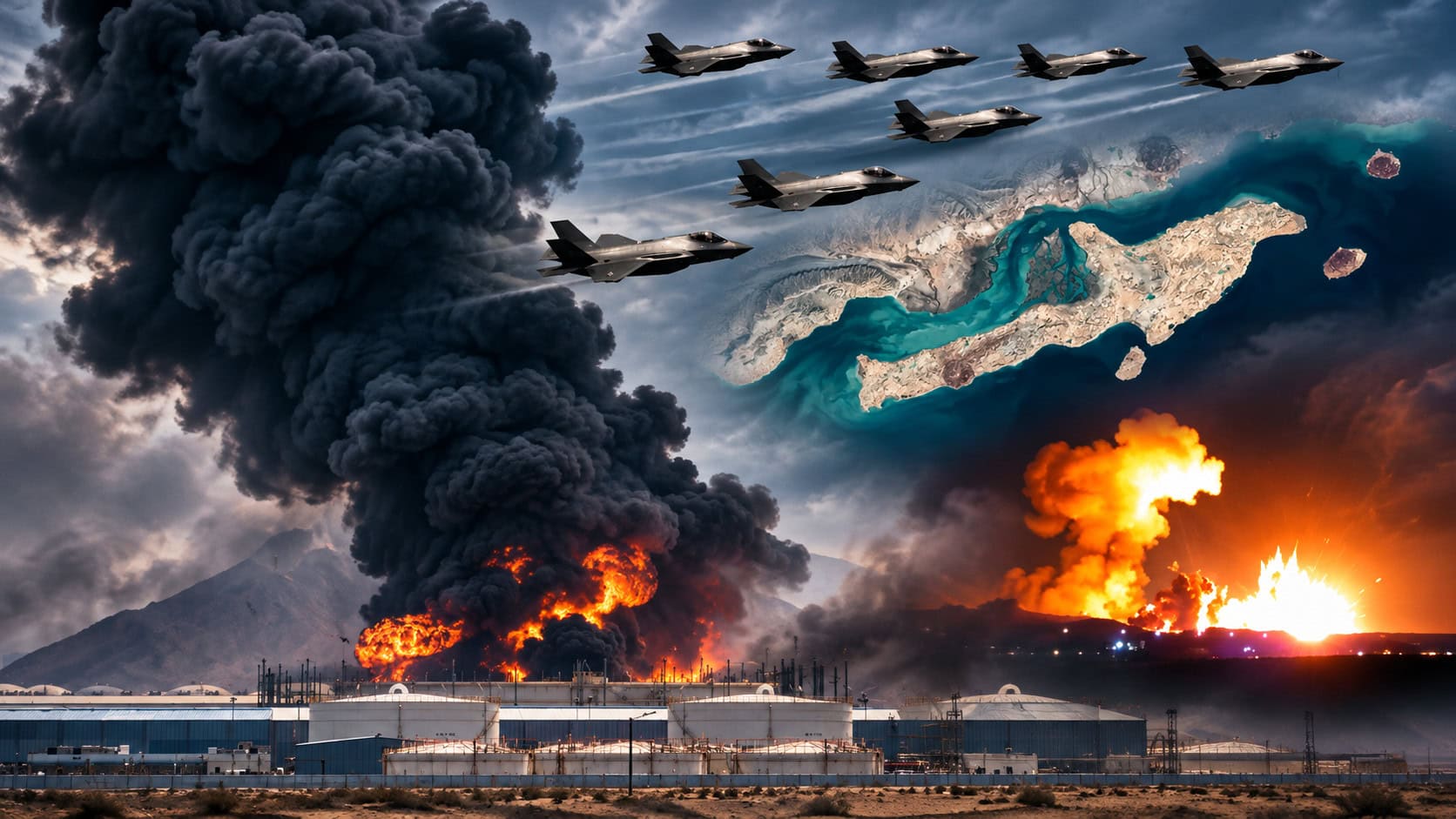
WASHINGTON – Multiple explosions rocked Qeshm Island near Hormuz as US reportedly carried out secret military strikes against Iranian targets, raising fresh fears of wider Middle East conflict just hours before the crucial midterm elections.
Washington launched fresh attacks on Iran’s strategically important Island, exposing previously undisclosed campaign of American strikes against Tehran at a time when President Donald Trump is publicly suggesting that another major war could be avoided.
American officials revealed that their forces have been conducting limited operations against Iranian targets for several weeks without making public announcements, apparently seeking to contain Iranian military activity without triggering a wider confrontation.
US officials termed this operation as defensive move to protect American military assets and international shipping routes.
Iranian media reported a series of powerful explosions on Qeshm Island, located near the entrance to the Strait of Hormuz, one of the world’s most sensitive maritime chokepoints. At least five explosions were heard in quick succession, while residents reportedly observed aircraft flying over the island.
The precise targets and damage caused by the American strikes remain unclear, with no independently verified casualty figures immediately available. Qeshm Island is significant for Tehran because it reportedly houses underground missile complex, an Iranian naval installation and a major desalination facility.
Washington previously targeted Qeshm during earlier phases of the conflict, but the latest attack shows that military operations against Iranian territory have continued despite Washington’s increasingly optimistic statements about diplomacy.
The most striking aspect of the latest developments is Washington’s decision to avoid publicly acknowledging its recent military operations. According to American officials, the administration deliberately maintained low profile to avoid suggesting that the United States is preparing to resume the large-scale military campaign conducted earlier in the conflict.
Officials said the limited strikes were intended to restrict Iran’s ability to threaten commercial vessels navigating the Strait of Hormuz and protect American forces operating in the region. The operations have reportedly included attacks on missile launchers and other facilities linked to Iran’s military capabilities.
One American official disclosed that previous strikes targeted empty cruise missile launchers, while another indicated that Monday’s operation followed an encounter involving Iranian forces and US aircraft.
Iran, meanwhile, separately claimed that its forces had brought down two American drones south of Qeshm Island using electronic warfare systems. These competing accounts have not been independently reconciled.
The revelation of continued American military activity shows contrast between developments on the ground and President Trump’s public statements. POTUS declared that US had already won its confrontation with Iran and questioned whether the situation should still be described as a war.
He insisted that sustained fighting had not taken place for months, even as reports emerged that American forces had continued carrying out smaller military operations. When asked whether he intended to order another attack against Iran after the November 3 midterm elections, Trump responded with a clear “no.”
‘Trump planning Nuclear Strike on Iran’s Pickaxe Mountain’: Tucker Carlson makes shocking claims
During his recent interview, Trump played down intensity of the conflict while warning that renewed fighting remained possible if negotiations failed. He argued that Iran was eager to reach an agreement and expressed confidence that Washington could secure a deal.
The new campaign shows latest phase of American military activity against Iran following significant confrontations earlier this year. According to US officials, the recent operations marked the first American strikes inside Iranian territory since a two-day bombing campaign in early September.
During that period, American forces also reportedly destroyed five Iranian crude oil carriers after Iran launched missiles toward two American warships in the Arabian Sea. The missiles reportedly failed to hit the American vessels, but the incident triggered a military response from Washington.
Gulf Countries on High Alert
The renewed American strikes have heightened concerns among Gulf countries, which fear that another major US-Iran confrontation could expose their infrastructure, airports and energy facilities to retaliation.
Several Middle Eastern nations reportedly delivered warnings to Tehran that attacks against their territories could trigger individual or collective responses. Qatar and the United Arab Emirates have intensified security preparations, including emergency exercises at airports and other important installations.
About the Author