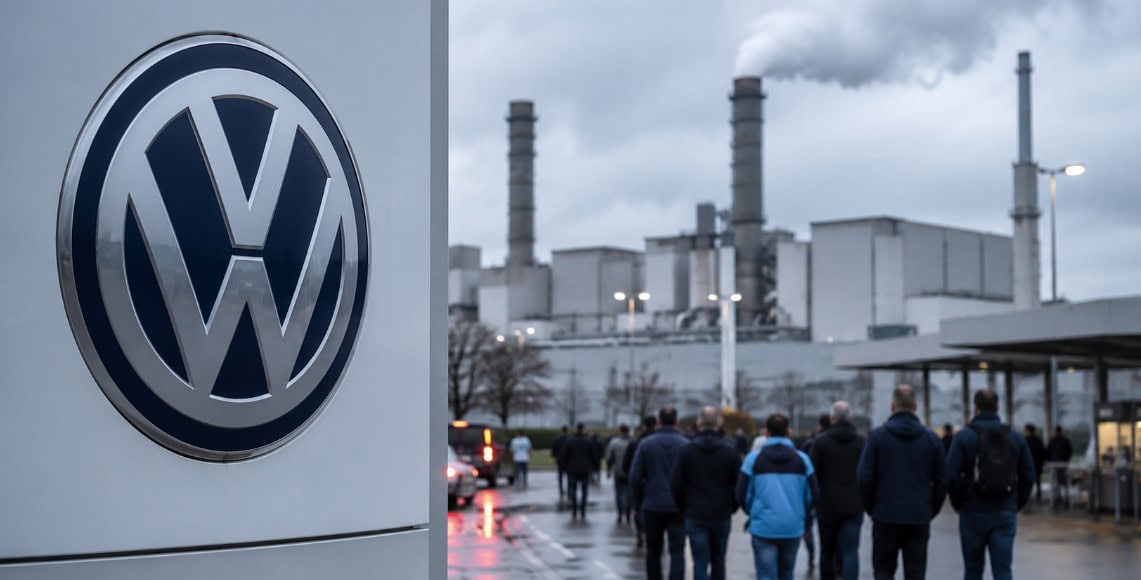
BERLIN – The 90-year-old auto company Volkswagen, which still stands as a symbol of Germany’s industrial strength, is facing the toughest moments in its history, with plans under consideration to cut up to 1Lac jobs and close four factories as it struggles with rising competition, weakening demand, and mounting global economic pressures.
The company is reportedly preparing for sweeping restructuring, with plans under consideration that could result in up to 100,000 job cuts and shut down four manufacturing plants in Germany as the company battles mounting global competition and economic headwinds.
The proposed restructuring plan has already been presented to the company’s supervisory board and is expected to come under detailed discussion during a July 9 meeting. The initiative is aimed at dramatically reducing costs and reshaping Volkswagen’s operational structure to strengthen its long-term competitiveness.
The facilities believed to be under review include Volkswagen’s plants in Hanover, Zwickau, and Emden, along with Audi’s Neckarsulm factory. Together, these sites employ more than 45,000 workers, raising fears of significant job losses if the proposal moves forward.
Volkswagen is facing growing pressure from several fronts, including fierce competition from Chinese electric vehicle manufacturers, weakening demand across the European automotive market, and the impact of U.S. trade tariffs. Industry observers say these challenges have intensified the strain on the company’s traditional business model.
The company high-ups previously introduced broad reform agenda in 2024, but those measures met strong resistance from labor unions. The latest restructuring proposal has once again sparked concern among Germany’s influential unions and Volkswagen’s works council, both of which have signaled opposition to large-scale job cuts and factory closures.
Analysts warn that reducing costs alone will not be enough to secure Volkswagen’s future. They argue the automaker must accelerate the development of products that meet rapidly changing market demands, particularly in the electric vehicle segment, or risk falling further behind global rivals.
Adding another layer of complexity, the German state of Lower Saxony, one of Volkswagen’s largest shareholders, also reportedly expressed reservations about the proposed measures, setting the stage for what could become one of the most closely watched corporate battles in Europe’s automotive industry.
News Desk
About the Author