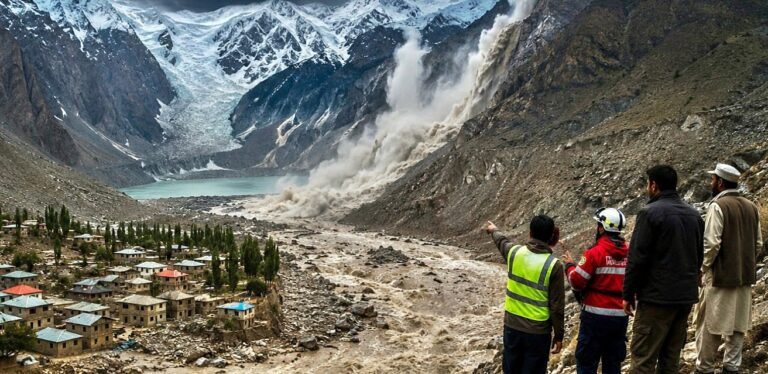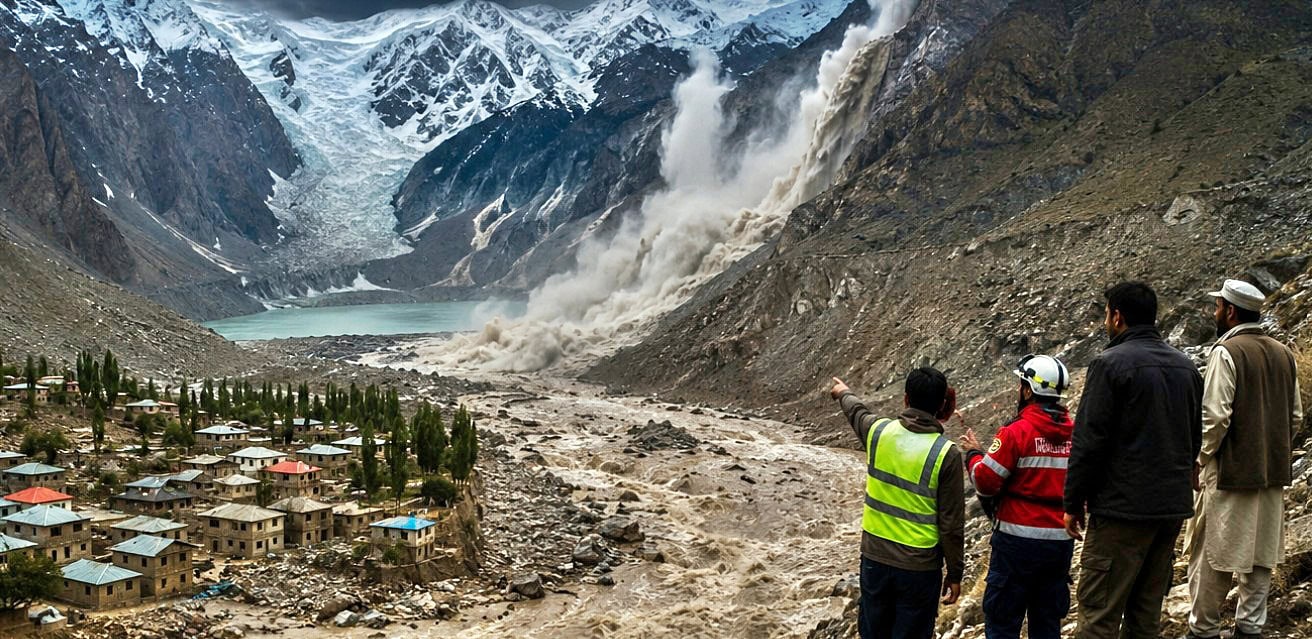
ISLAMABAD – Northern Pakistan has been placed on high alert after Met Office warned of rising threat of Glacial Lake Outburst Floods (GLOFs) in Gilgit-Baltistan and Khyber Pakhtunkhwa, as an intense heatwave is expected to persist until the first week of July.
High temperatures are accelrating melting of glaciers and snowfields across the northern mountain ranges, increasing the risk of dangerous glacial lake overflows.
Officials warned that rivers and streams are expected to remain swollen as meltwater continues to surge downstream. Existing glacial lakes could expand rapidly, while the continued influx of water may also lead to the formation of new glacial lakes in vulnerable regions.
The department cautioned that the natural ice and moraine dams holding back these lakes could become unstable under mounting pressure. If these barriers fail, they could unleash devastating Glacial Lake Outburst Floods (GLOFs), sending massive torrents of water rushing into downstream communities with little or no warning.
Low-lying settlements along rivers are particularly vulnerable to sudden flooding, while flash floods, landslides, and rockfalls remain a serious concern in mountainous terrain. Authorities say the current weather conditions have significantly increased the likelihood of slope failures and debris flows, posing additional threats to roads, infrastructure, and isolated communities.
Met Office urged residents and tourists to avoid rivers, streams, seasonal waterways, glacial lakes, and narrow mountain valleys. Camping and trekking in these high-risk areas have been strongly discouraged until conditions improve.
The warning comes only weeks after Pakistan’s Space and Upper Atmosphere Research Commission (SUPARCO) identified 130 potentially dangerous glacial lakes across the country that could trigger GLOF events, placing downstream populations at heightened risk.
KP Health Department instructed all hospitals across the province to establish dedicated emergency units for patients suffering from heat-related illnesses and heatstroke, as extreme temperatures continue to grip the region.
Pakistan is facing most dangerous glacier-melt seasons in recent years as an unrelenting heatwave fuels fears of Glacial Lake Outburst Floods (GLOFs), prompting fresh warnings from authorities and heightened emergency preparedness.
This was second major GLOF alert this month, warning that extreme temperatures are accelerating the melting of glaciers across Gilgit-Baltistan and Khyber Pakhtunkhwa. The department says the heatwave is expected to persist until at least the first week of July, increasing the likelihood of sudden floods, landslides, and other climate-related disasters.
Earlier this month, PMD cautioned that soaring temperatures combined with rainfall could trigger GLOF events in several northern districts, including Hunza, Nagar, Ghizer, Skardu, Ghanche, Astore, Diamer, Chitral, Swat, Upper and Lower Kohistan, Upper and Lower Dir, and Mansehra. The latest advisory reinforces those concerns, indicating that risks continue to grow as glaciers melt at an accelerated pace.
The danger extends well beyond glacier lake bursts. Authorities warn that northern Pakistan could face a chain reaction of hazards, including flash floods, debris flows, mudslides, rockfalls, and landslides capable of damaging roads, bridges, power infrastructure, and isolated mountain communities. Major transport corridors, including sections of the Karakoram Highway and access routes to valleys such as Hunza and Skardu, remain particularly vulnerable during periods of intense weather.
SUPARCO also identified over 100 glacial lakes that are considered potentially dangerous. Among them, 24 lakes are currently unfrozen and under continuous satellite surveillance, with experts tracking changes in water levels and mapping downstream populations that could be affected if an outburst occurs. The monitoring effort is one of the country’s most extensive glacier-risk assessment programs to date.

News Desk
About the Author