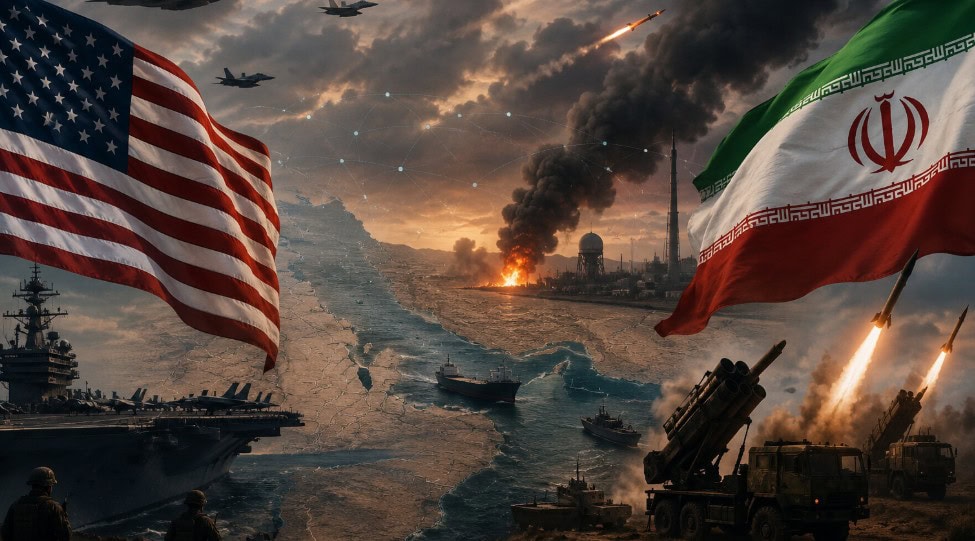
TEHRAN – Iranian authorities launched retaliatory strikes against multiple targets linked to US forces, accusing Washington of violating ceasefire memorandum and UN Charter through recent air strikes on its southern coastline.
Iranian Foreign Ministry said the military action comes in response to US attacks but did not reveal the locations of the targeted sites. Officials maintained that the operation was defensive and directed at several US-linked military positions.
The latest exchange of fire fuelled fears that the already fragile ceasefire between Tehran and Washington could be on the verge of collapse, with both sides once again trading military strikes in the strategically vital Gulf region.
Iran’s Islamic Revolutionary Guard Corps (IRGC) said on Saturday that it had struck multiple US military deployment sites in retaliation for American attacks on Iranian missile, drone, and radar facilities. The US had launched those strikes after accusing Iran of carrying out a drone attack on a cargo ship transiting the Strait of Hormuz.
IRGC accused Washington of breaching its commitments under war-ending memorandum by targeting Iranian territory. Stressing that its response was aimed at multiple locations rather than a single site, the force described the operation as a direct answer to what it called US aggression.
As tensions rise, analysts say both countries appear to be balancing military action with diplomatic signalling. Mohammad Eslami, a research fellow in Middle East and North Africa Studies at the University of Tehran, said both Tehran and Washington are attempting to project strength while avoiding a full-scale escalation.
According to Eslami, the limited and deliberately vague nature of the strikes suggests that both sides are leaving space for negotiations as officials continue working on the details of a memorandum intended to formally end the conflict.
Iran further issued warning to countries along southern coast of the Gulf, urging them not to allow their territory to be used for military operations against Iran, and reiterated its position on Hormuz, insisting that it does not consider the waterway an international passage under its proposed framework.
Iranian officials said they intend to seek regional support for new rules that would require commercial vessels passing through the strait to pay for secure transit, a proposal that could have significant implications for global shipping and energy markets if pursued.
Tehran vows retaliation as US strikes Iranian military sites after Strait of Hormuz ship attack
News Desk
About the Author