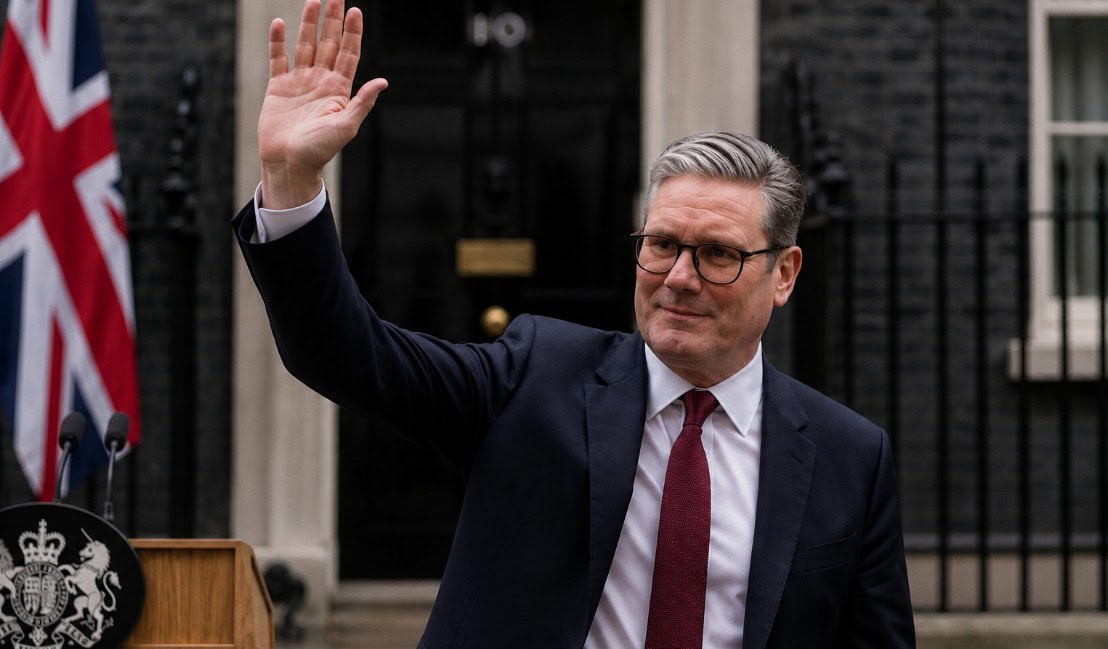
LONDON — UK Prime Minister Keir Starmer announced his resignation as both Prime Minister and Leader of the Labour Party, ending a turbulent period in office less than two years after leading Labour back to power.
Standing outside 10 Downing Street, Starmer confirmed that he would step aside after concluding that he was no longer the right person to lead Labour into the next general election. The announcement marks a stunning reversal for a leader who only months ago appeared firmly in control of both his party and government.
“I have heard the answer,” Starmer said, referring to growing questions within Labour over his future leadership. “I accept that answer with good grace.”
The resignation extends an extraordinary era of political instability in Britain. Since Brexit referendum in 2016, UK has seen prime ministers come and go at an unprecedented pace, averaging a new national leader roughly every 18 months.
Starmer revealed that he informed King Charles III of his decision earlier in the day and had instructed Labour’s National Executive Committee to launch a leadership contest. Nominations are expected to open on 9 July, with a new Labour leader in place before Parliament returns from its summer recess in September.
Until a successor is chosen, Starmer will remain in Downing Street to oversee what he described as an orderly transfer of power. He pledged full cooperation with the incoming leader, saying Britain would be handed over in a stronger position than when Labour took office.
Starmer argued that he inherited a Labour Party facing deep political, financial and reputational challenges. He claimed his leadership restored public confidence in the party and strengthened its standing on key issues including the economy, defence and national security. He highlighted efforts to eliminate anti-Semitism from Labour, describing it as a crucial step in rebuilding trust with voters.
Fighting back emotion, he paid tribute to his wife, Victoria, whom he described as a constant source of strength throughout his political journey. After holding what he called “the biggest job in the country,” Starmer said he now wanted to focus on what mattered most: being a husband and father.
Starmer’s departure shows high-stakes contest for future direction of Labour Party and the country. Potential contenders are already being discussed within Westminster as Labour prepares for one of the most significant leadership battles in recent years.
With Britain set to welcome yet another prime minister, questions are once again being asked about political stability at the highest levels of government. For now, Starmer leaves office insisting that every major decision he made was driven by a desire to put the nation first. Whether history judges his premiership as a success or a missed opportunity will be a matter for future debate.
About the Author