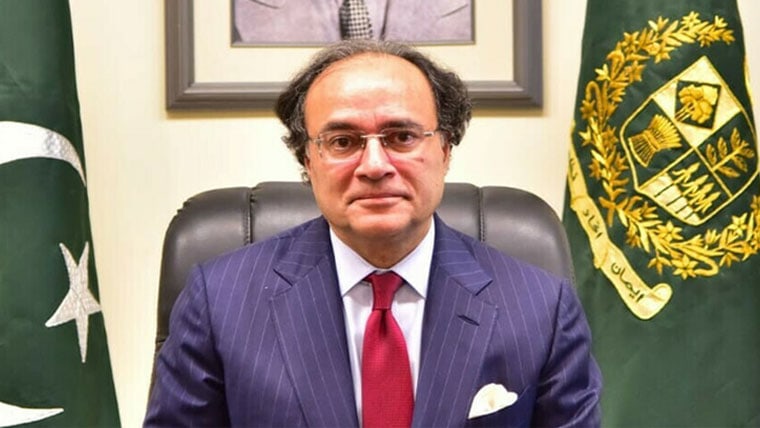
ISLAMABAD – Federal Minister for Finance Senator Muhammad Aurangzeb met a World Bank delegation to review progress under the ongoing economic reform partnership and discuss implementation priorities.
The meeting covered reforms in several areas, including economic growth, employment, fiscal management, revenue mobilisation, trade and investment, and capital markets.
Aurangzeb stressed the need to move from designing reforms to implementing targeted and practical measures. He said concrete actions should deliver measurable improvements in economic activity, investment, employment and the business environment.
The proposed World Bank Growth and Jobs Operation was also discussed, along with measures to improve the investment climate, expand access to finance for small and medium-sized enterprises (SMEs), and promote export financing.
The participants reviewed reforms aimed at strengthening the Prime Minister’s Access to Finance initiative, as well as a unified insolvency framework, factoring legislation and the expansion of commercial financing.
Reform measures in the pharmaceutical, medical products and agriculture sectors were also discussed. The meeting reviewed seed registration, deregulation of selected commodities and international accreditation issues.
The participants also discussed skills development, vocational qualifications and efforts to improve the international recognition of Pakistani skilled workers.
The meeting reviewed the World Bank’s ongoing analytical support for Pakistan’s National Tariff Policy and future tariff reforms, with emphasis on improving competitiveness, productivity, investment and exports.
The sides also discussed ways to strengthen Pakistan’s integration into global value chains.
World Bank technical assistance for tax policy and the medium-term revenue strategy was reviewed, including GST harmonisation, federal-provincial coordination and improved data sharing.
Progress on agricultural income tax and provincial property tax reforms also came under discussion.
The participants reviewed a reform roadmap for developing Pakistan’s capital markets, with a focus on expanding and deepening markets and diversifying sources of financing.
World Bank support for improving public-sector performance and the government’s rightsizing agenda was also discussed. The meeting stressed the importance of strengthening debt-management capacity and the domestic bond market.
The participants also discussed ways to further improve Pakistan’s sovereign credit profile and credit rating.
Aurangzeb said efforts would continue to strengthen both quantitative and qualitative factors influencing the country’s sovereign credit rating.
He said sustainable fiscal and debt management, stronger external financial buffers and durable economic growth were important for improving Pakistan’s credit profile. He also stressed the need for continued institutional effectiveness and structural reforms.
Governance, transparency, accountability, regulatory standards and institutional effectiveness were also discussed during the meeting.
Both sides reaffirmed their commitment to continued cooperation under the economic reform partnership, with a shared focus on private-sector-led growth, greater investment and expanding economic opportunities.
Web Desk
About the Author