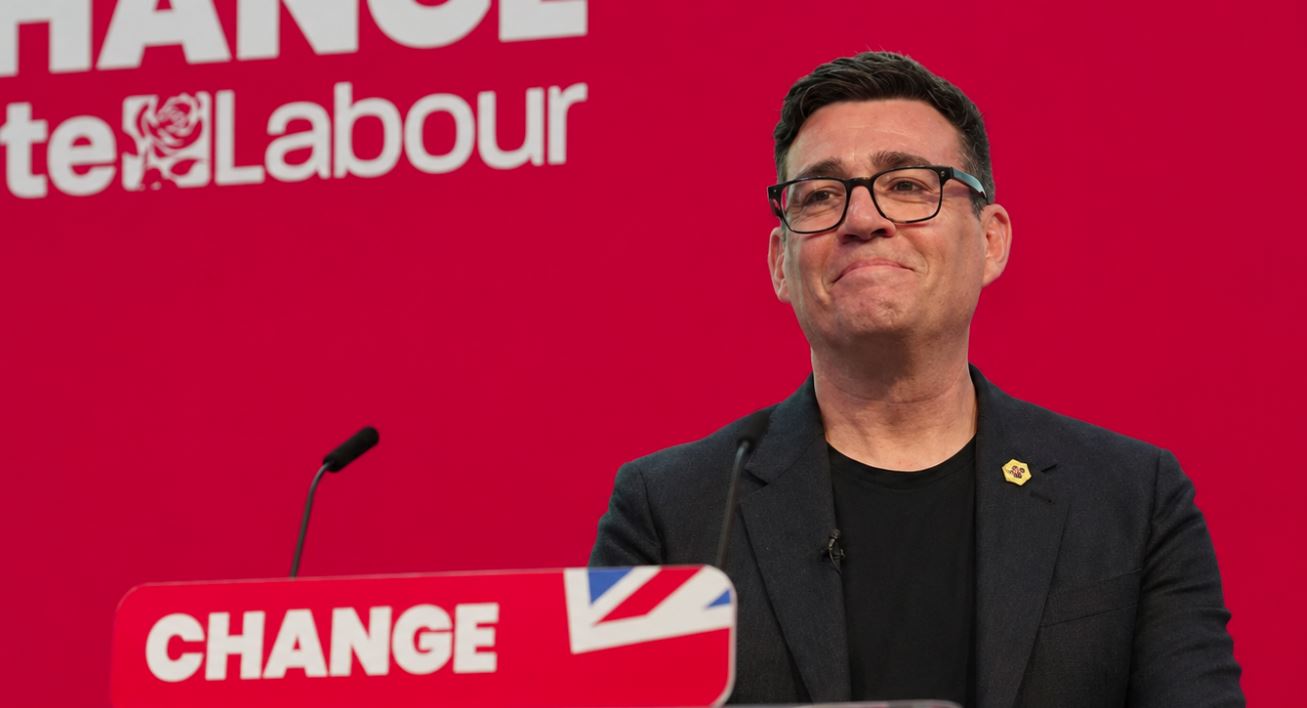
LONDON – Andy Burnham built his reputation far from corridors of Westminster, becoming the outspoken Mayor of Greater Manchester and earning the nickname “The King of the North” for his fierce advocacy of regional communities. Now, after securing Labour’s leadership with overwhelming backing from MPs, Burnham is preparing to be UK’s next prime minister.
The 56-year-old’s rise marks another chapter in the UK’s turbulent politics, placing a seasoned politician with promise to decentralize power and revive the economy at the helm of a nation facing mounting economic, political and social woes.
He secured an overwhelming mandate from Labour lawmakers, and swept the party’s leadership contest with the backing of 322 of Labour’s 403 Members of Parliament, emerging as the sole candidate. He is expected to be formally confirmed as Labour leader on Friday before King Charles III invites him to form a government on Monday.
“We are united, and we put the power that comes from that unity at the service of people and places who have been waiting too long for politics to let them hope again,” Andy Burnham says after becoming Labour Party leader
Follow live: https://t.co/EnnQLF0FnC pic.twitter.com/WedF8jKq5a
— BBC Breaking News (@BBCBreaking) July 17, 2026
Burnham replaces Keir Starmer, whose resignation on June 22 followed growing unrest within Labour, triggering a swift leadership transition that will reshape the country’s political landscape.
Despite the dramatic handover of power, British voters will not return to the ballot box. Under the UK’s parliamentary system, a governing party can replace its leader without holding a general election, provided it retains a majority in Parliament. Labour’s majority allows Burnham to take office immediately, with the next nationwide election not due until 2029.
His arrival at Downing Street comes at a pivotal moment. Britain faces sluggish economic growth, soaring public debt, mounting pressure on the National Health Service, widening political divisions and an increasingly heated debate over immigration. Among the first and toughest challenges awaiting Burnham is reforming the country’s asylum system—an issue expected to define the early months of his premiership.
In his first speech as Labour leader, Burnham unveils an ambitious blueprint for national renewal. The agenda includes expanding public control over essential services, transferring significant powers from Westminster to local governments and launching a renewed industrial strategy aimed at reviving Britain’s long-term economic fortunes.
Burnham will argue that successive governments have failed to confront the country’s most pressing problems. He is expected to tell supporters that Britain can no longer afford political hesitation and must embrace bold reforms to reverse years of stagnation.
At the heart of his vision is decentralization. a cause that defined much of his recent political career. Drawing on nearly a decade as Mayor of Greater Manchester, Burnham plans to establish government office in Manchester, a move designed to symbolize a shift in political influence away from Westminster and toward local communities, particularly across northern England.
Although Burnham has often cast himself as an outsider challenging the Westminster establishment, his political roots run deep. He began his career as a parliamentary researcher before entering Parliament at a young age. Under Labour governments led by Tony Blair and Gordon Brown, he climbed through the ranks, serving in several senior ministerial roles, including as health secretary.
His path to the top, however, was far from straightforward. Burnham unsuccessfully contested the Labour leadership in both 2010 and 2015. His second defeat to Jeremy Corbyn reshaped the party’s direction and ushered in years of ideological conflict.
In 2017 Burnham left Westminster to become Mayor of Greater Manchester. Free from Labour’s internal battles, he built a formidable regional profile by championing northern England and repeatedly confronting central government over investment, transport and regional inequality.
His outspoken advocacy earned him the nickname “The King of the North,” transforming him into one of Britain’s most recognizable political figures outside Westminster.
Supporters credit Burnham with helping drive Greater Manchester’s economic resurgence through major investments in public transport, large-scale housing projects and sustained economic growth that strengthened the city’s standing as one of Britain’s leading urban economies.
About the Author