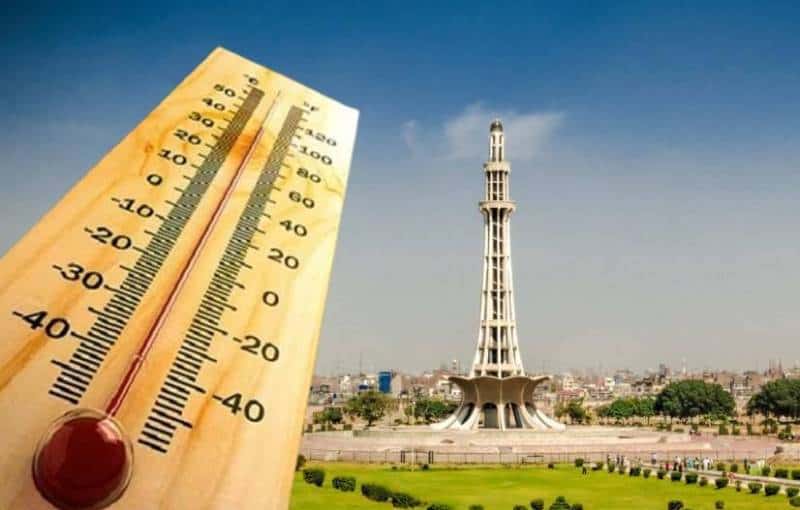
LAHORE – Intense heat continued to grip Lahore over weekend as the city recorded temperature of 40°C under scorching heat. According to the latest weather observations, the RealFeel temperature reached near 42°C, while Shade remained at 38°C, indicating persistent heat stress even in shaded areas.
Humidity levels were recorded at 30-40%, with indoor humidity measured at the same level, categorized as slightly humid. The dew point remained at 13°C, while atmospheric pressure was steady at 1002 mb.
Lahore Temperature
| Indicator | Details |
|---|---|
| Sky Condition | sunshine |
| Actual Temperature | around 40°C |
| RealFeel® Temperature | 41-42°C |
| RealFeel Shade™ | 38°C |
| Heat Index | 40°C |
| Observation Time | around 3:00 PM |
Winds were blowing from the west at 17 km/h, with gusts reaching 19 km/h. The maximum UV Index was recorded at 4.8, classified as moderate.
The national weather outlook states that continental air is prevailing over most parts of the country, maintaining hot and dry conditions nationwide. However, a shallow westerly wave is expected to influence the upper regions of the country beginning tomorrow.
The weather department forecast said most regions will continue to experience hot and dry weather, while southern and central parts of the country are likely to face very hot conditions. In parts of Khyber Pakhtunkhwa, particularly southern and central districts, partly cloudy weather with rain, wind, and thunderstorms may develop during evening and nighttime hours.
For Monday, weather experts predict that most districts of Punjab will remain hot and dry, with central and southern districts expected to experience severe heat. Meanwhile, cooler hill regions including Murree and Galliyat are expected to stay dry during daytime, though partly cloudy conditions with possible rain-wind/thunderstorms may occur during the evening and night.
Authorities have advised citizens to avoid unnecessary outdoor exposure during peak afternoon hours, stay hydrated, and take precautionary measures against heat-related illnesses as temperatures remain significantly above seasonal averages.

News Desk
About the Author