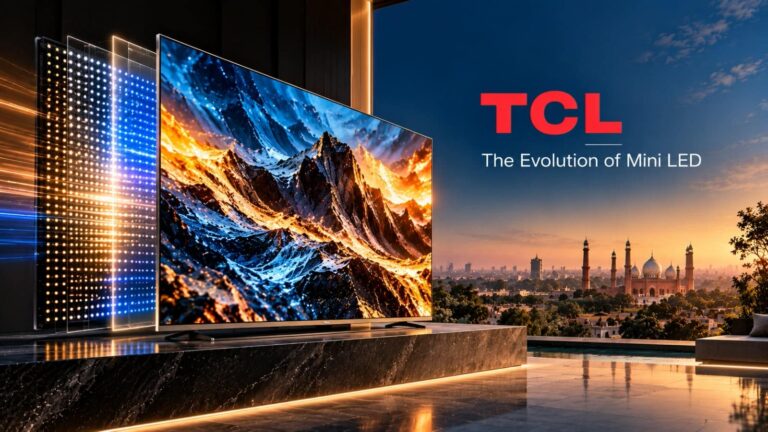
LAHORE – TCL reported shipments of 2.43 million Mini LED televisions in the first half of 2026, an increase of 77.1 per cent compared with the same period last year, the company said on Monday in its interim results report.
Citing data from market research firm Omdia, the company said it ranked first globally by Mini LED TV shipment volume during the six-month period.
TCL also reported a 31.1pc share of global Mini LED television shipments in 2025, with its shipment volume rising by 118pc year on year.
The figures reflect growing adoption of the technology. According to Omdia data cited in the statement, Mini LED televisions accounted for 13pc of global TV shipments in the second quarter of 2026.
Backlight control shapes performance
As Mini LED becomes more widely available, picture quality increasingly depends on how manufacturers implement the technology.
Mini LED televisions use small LEDs to form dense backlight systems. Local dimming allows different sections of the backlight to be controlled independently, helping manage bright and dark areas within an image.
The number of dimming zones influences how finely light can be distributed across the screen. However, performance also depends on how precisely those zones operate.
Full Array Local Dimming places controllable backlight zones behind the display panel, allowing brightness to be adjusted in specific areas.
These features work together to influence the viewing experience. Brightness levels and zone counts, considered individually, do not provide a complete measure of picture quality.
Clearer information for buyers
In its statement, TCL called for greater consumer awareness of the technical differences between Mini LED televisions as the technology reaches more market segments and price points.
The company said manufacturers had a role in explaining features such as local dimming, zone precision and backlight design, helping buyers assess individual models beyond the Mini LED label.
While shipment figures indicate commercial reach, evaluating picture quality requires closer examination of each television’s hardware and light-control capabilities.
About the Author