Written by: Fatima Kamran
For almost three decades, a Spanish nun governed a Lahore convent as though Pakistan’s constitution had been written for its girls. The country has not yet said thank you.
A seat the size of a school
Every leader has a seat. Hers was a principal’s chair on 4 Durand Road, Lahore, and from it, for almost three decades, she governed a republic the size of a school.
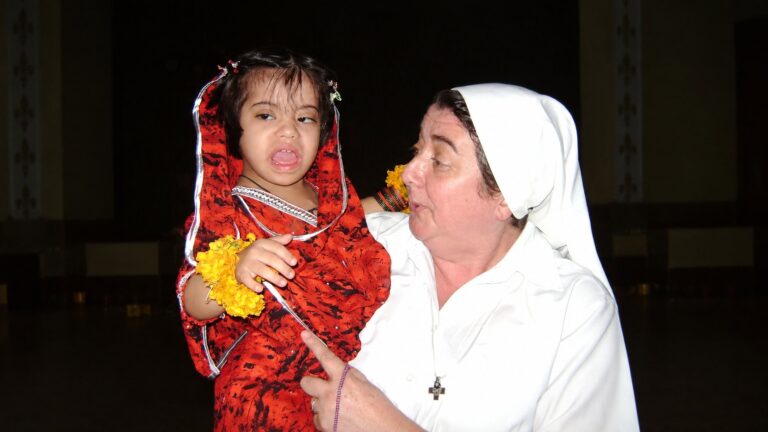
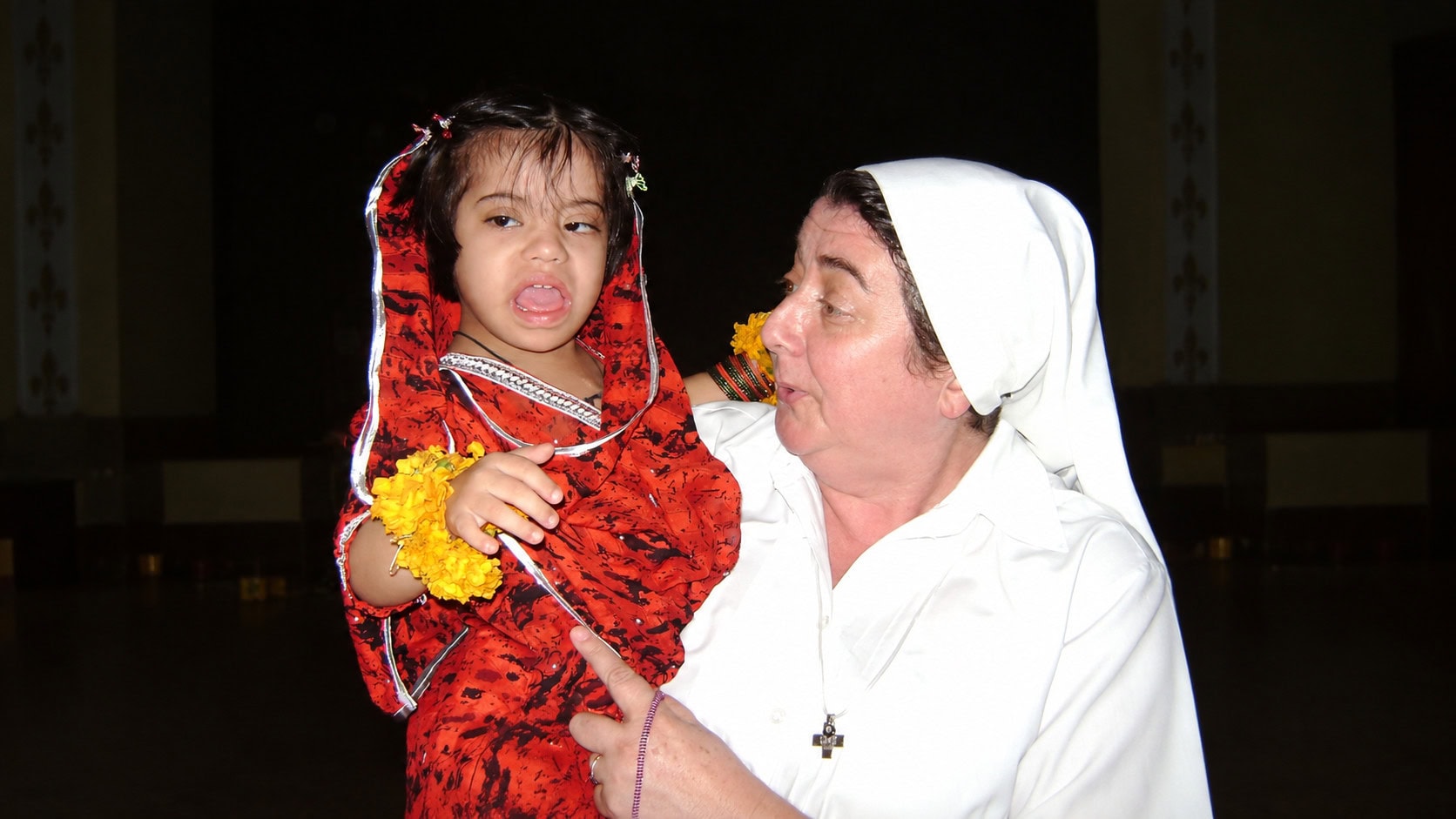
On Friday, 23 October 2026, that chair fell empty. Sister Pilar Vila-San Juan Sagnier, RJM, principal of the Convent of Jesus and Mary from 1997 until her death, was laid to rest by the women she had raised, in a ceremony she had shaped so each could mourn her in her own faith. I was among them. I went to bury my principal. I left understanding, after years spent studying how education systems sort and separate the young, that we had just lost an education leader, and that Pakistan had not yet noticed.
The distinction is not sentimental. A principal administers a school. An education leader decides who is allowed to walk into it, what they will become there, and what they will owe the world when they leave. Sister Pilar made all three decisions, quietly, from a chair that gave her no mandate beyond a boundary wall. The nation has a name for work like hers. The Decorations Act 1975 reserves the Order of Imtiaz for those “rendering dedicated services with selfless devotion in human rights and public service”. Hold that sentence. We will return to it.
The woman who chose Lahore
She came from Barcelona and from comfort. I had the privilege of meeting her family in 2015, when she accompanied a group of us to Spain for an exchange summer semester, and I understood then what she had set aside to serve our women. Asked by El País in 2009 what she was doing in Lahore, she said she had fallen in love with Pakistan, and that she had come not to convert anyone but to teach Muslim and Christian children to live alongside one another. She asked the reporter one favour: “do not forget my mother’s surname”. In a country that names its daughters after their fathers, she carried her mother in her own.
According to the paper, she was no friend of flattery. When a father tried to bribe her into changing his daughter’s failing grade, she showed him the door. When he raised his hand to her, she told him not to dare treat women in such a manner. That was the temperament she brought to the chair in 1997, and it never softened.
Four strands, one boundary wall
Education policy speaks of equity, inclusive education, interfaith cohesion, and schooling for children from lower socio-economic backgrounds as four separate files, handled by four separate committees. Sister Pilar ran them as one school. The intersection of those four strands is the hardest place in any education system to stand, because each one costs money, status, or comfort, and she stood there for almost 30 years.
Inclusion. In 1999, two years into her tenure, she opened the Thevenet Centre for children with disabilities, named after the French founder of her order. She didn’t build it across town, where the rest of us would never have to look. She built it inside our boundary wall. Children who learn differently shared our grounds, our playing fields, our assemblies and our ordinary days. Long before Article 25-A promised every child between five and sixteen a free and compulsory education, and long before mainstreaming entered Pakistan’s policy vocabulary, she had made it the architecture of the place.
Equity. Sociologists call what elite schools usually do social reproduction. Children arrive with their parents’ economic capital, the school converts it into cultural capital, and hands it back as merit. She interrupted the machine at its most sensitive point. For girls from lower socio-economic backgrounds, she ran a separate section at nominal fees, and waived even those when a household could not pay. Then she did something no fee-waiver policy I have read provides for. She employed their mothers.
Consider what that single decision does. A fee waiver keeps one girl in school for one year. A mother’s wage turns a single-income household into a dual-income one, lowers the opportunity cost that pulls daughters out of classrooms, and changes what a family believes its girls are for. In a country where barely a fifth of women participate in the labour force, every mother she hired was a small, deliberate correction to a national failure. That is not charity. It is a household-level intervention, where educational exclusion begins, and intergenerational mobility is actually made.
Conscience. In the English section where the Cambridge curriculum ran, the privileged weren’t lectured about the poor. We were taught to feel the weight of our own choices. From age six, we learnt that the snack we bought without thinking every week had an opportunity cost, and that it might have been another girl’s textbook, a mother’s medicine, or a term’s fees that had quietly fallen behind. The money we gave up went exactly there. In 2009, when the people of Swat fled into camps, every class was set to carry one displaced family. Curriculum theorists speak of a hidden curriculum, the lessons a school teaches without announcing them. Hers was that privilege arrives with an invoice, and that the invoice is addressed to you.
Equality. She also stripped the school of class markers. No air conditioners. One uniform. No status flasks, no private tiffin hierarchies, none of the small conspicuous consumptions by which children learn to rank one another. The girl who arrived in a political family’s convoy and the girl who came by school bus sweated through the same June on the same bench. Inside those red brick walls, you could not tell whose father was who. We were human first and equal second, and the order mattered.
The law has words for each of these. Inclusion of the disabled is a human right. Schooling the poor is public service. Doing both for thirty years without salary or applause is dedicated service with selfless devotion. She did not set out to meet the criteria of a national honour. She simply met them.
Formation, not information
Above the door of her office hung the school’s creed: education is not information but formation. Every week for twelve years, from the age of six to eighteen, we sat through character-building workshops. Today the education sector sells emotional intelligence as a product, and I say that with affection, having built one for a private school last year. At Convent, self-awareness and empathy were not a module. They were the socialisation itself. In an age when AI can produce information on demand, formation is the one thing a school is still uniquely for, and she had been doing it since 1997.
Missionary schools are caricatured as strict, and she was. But her discipline never served obedience. “I do not want to raise hangee hangee girls,” she would tell us, girls, who say yes to everything. “You are not a flock of sheep.” Have a spine. Hold an opinion. Stand alone if the cause is right. Freire called it critical consciousness. She called it an ordinary Tuesday at Covent.
When she hired teachers for the Thevenet Centre, she read the CV and then asked for the one thing a CV cannot hold. “Show me your dil.” She believed patience with a child who learns differently is a matter of the heart, not the transcript. Remember that line. The state has a scoring sheet for its highest honours, and I have read it. There is no column for dil.
A community of faiths
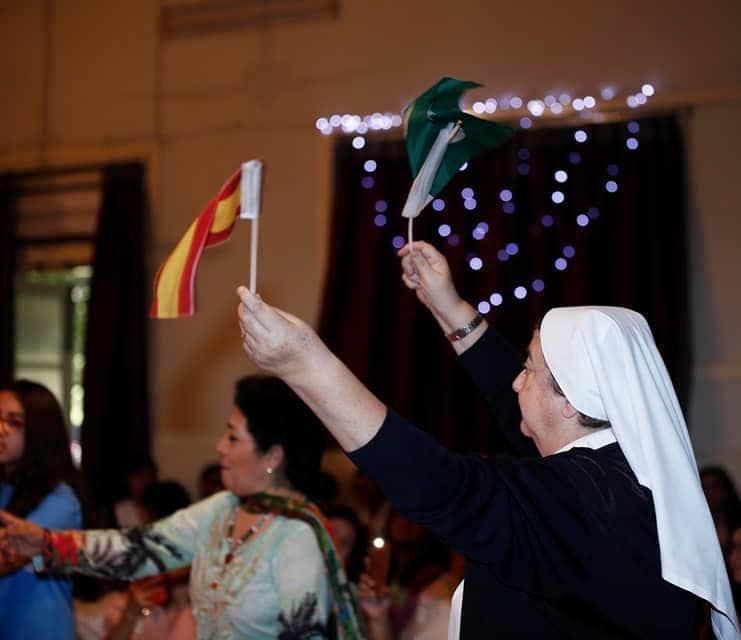
People called it the Christian school. In truth, it was a community where faiths lived side by side under a leader who treated each one as sacred. Most of us were Muslim. When Bible studies began, the Christian girls moved to another classroom, so Islamiyat kept its room and never felt secondary. In a country where minorities are usually the ones asked to make space, here the minority made space, and the head of that minority insisted on it.
We were taught to honour the differences between our religions and never to dishonour the religion of humanity. That was the spirit in which her own farewell was arranged. By a tradition she had introduced, her Muslim pupils were invited to grieve her in their own way; a milad was held before the sisters proceeded with the rites of their faith. It was a small part of a larger life, and entirely a piece of it: a community that had learnt to pray in different ways yet mourn in one room.
Pakistan has recognised this kind of leadership before. Sister Berchmans Conway, an Irish sister of Sister Pilar’s own order, received the Sitara-i-Quaid-i-Azam in 2012 for her services to education and interfaith harmony. Dr Ruth Pfau, the German nun who fought leprosy, received the Hilal-i-Imtiaz in 1979 and a state funeral in 2017. Our state knows the road to a convent door. It has simply stopped walking towards it.
The women those rooms produced
Look at what such classrooms have given this country. An Irish sister of the same order taught Benazir Bhutto. Asma Jahangir, the first woman to lead the Supreme Court Bar Association, and Maryam Nawaz, Punjab’s first woman Chief Minister, both studied at the Convent of Jesus and Mary, Lahore. They did not always agree, which is precisely the point. A flock of sheep does not produce a Benazir and an Asma in the same generation.
And yet, when the woman who held that chair for twenty-nine years died, sadly, one newspaper and one news channel noticed. She taught selflessness so thoroughly that her country learnt it too, and practised it on her. A nation that lets its most selfless servants pass unrecorded is not honouring their humility. It is simply exploiting it.
The star she never asked for
Under the Decorations Act 1975, the Sitara-i-Imtiaz, the Star of Excellence, may be conferred posthumously. Its criterion, once more: dedicated service with selfless devotion in human rights and public service. Read her life against that sentence, and it stops being a criterion and becomes a citation.
Yet the selection process is not based on any transparent, meritorious criteria. It hangs, rather, on the fancy of a few individuals holding the reins of power. A teacher who served all her life with devotion and dedication could not qualify, but a banquet manager at an eatery outlet may be decorated with a national award for his performance at the wedding ceremonies of senior despot rulers. These decorations are meant to reflect the aspirations of a nation, not of an individual preference.
Sister Pilar, scrutinised from every angle, deserves the highest national award of this country: for having served three decades of her life raising three generations of our women, for setting an example in the care of disabled individuals, for honouring the indigenous culture, and thereby cultivating interfaith and religious harmony, and for choosing that her burial take place, on a Friday, after a milad held by her Muslim pupils.
An invitation
This is not an article that ends in anger. It ends in an invitation. A petition for her nomination is open, and it asks nothing of you that she didn’t ask of us at six years old: to notice what something costs, and who pays the price. If you were raised in a Pakistani classroom, or hope one day to raise a daughter in one, your name belongs on it.
Sitara means star. She spent almost thirty years making them, three generations at a time, and never once asked for one. She asked every teacher she hired to show her their dil.
Pakistan, it is your turn. Show us yours.
About the Author