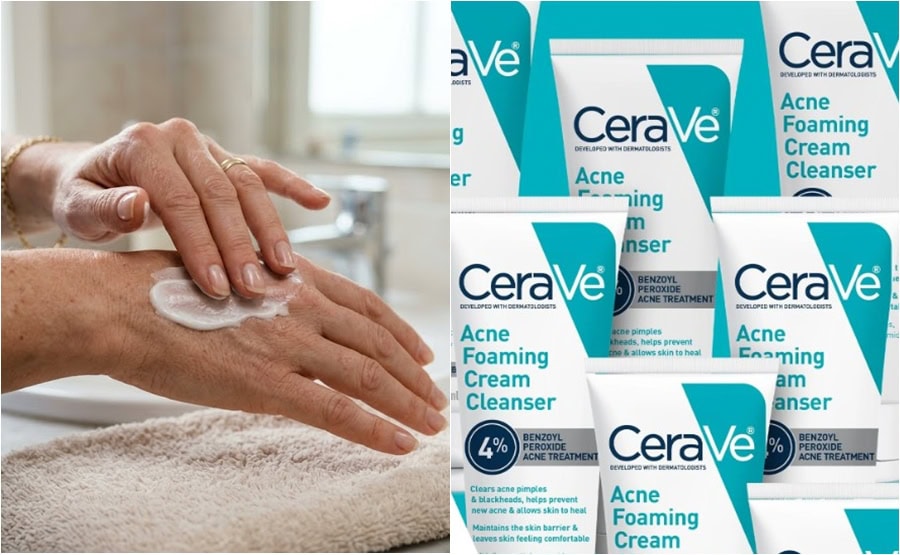
LAHORE –CeraVe and its parent company L’Oréal are facing lawsuits alleging that some acne products may form benzene, a chemical linked to cancer, under certain conditions.
The startling claims were triggered by report that raised safety concerns about product stability, leading to legal action and calls for propert testing and transparency. While plaintiffs argue consumers were not properly warned, the companies dispute allegations, and regulators like the FDA have reported generally low or undetectable benzene levels in most tested products, with no CeraVe recalls.
The report suggest that exposure to heat such as typical bathroom temperatures, prolonged storage, or even body warmth may contribute to the formation of benzene, in some cases allegedly at levels far above the U.S. Food and Drug Administration’s reference limit of 2 parts per million.
The lawsuit names products including CeraVe Acne Foaming Cream Cleanser and treatments within the La Roche-Posay Effaclar range, arguing that these formulations may be chemically unstable and capable of generating benzene during normal use and storage conditions. Plaintiffs further allege that consumers were not adequately warned and that sufficient testing was not conducted before the products were brought to market.
One of the lead cases has been filed by Hawaii resident Jennifer Snow, who claims that L’Oréal failed to disclose potential risks associated with benzene formation, leaving consumers unaware of what the lawsuits describe as a hidden safety concern.
On the other hand, French multinational personal care giant L’Oréal opposed allegations and is actively opposing efforts to consolidate the cases into a multidistrict litigation. The issue has already been brought before federal judicial authorities for consideration.
Benzoyl peroxide remained at centre of attention while it is not benzene itself, concerns raised in the litigation and earlier reports suggest it may break down into benzene under certain environmental conditions, particularly heat or extended storage.
A 2025 review by the U.S. FDA of 95 benzoyl peroxide acne products reportedly found that most contained either undetectable or very low levels of benzene, with only a small number prompting voluntary recalls. No CeraVe products have been formally recalled in connection with the issue.
Benzene is classified as a known human carcinogen and has been linked to serious blood cancers, including acute myeloid leukemia, acute lymphocytic leukemia, and chronic lymphocytic leukemia, due to its impact on bone marrow and DNA.
About the Author