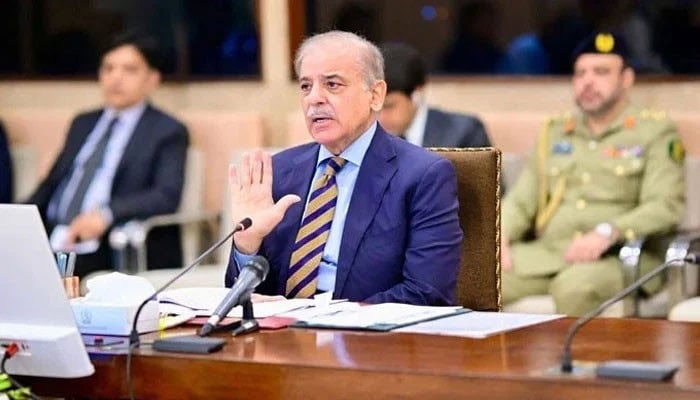
ISLAMABAD – Prime Minister Shehbaz Sharif has given in-principle approval to the new Auto Policy 2026-31.
Reports said the proposed policy will now be shared with the International Monetary Fund (IMF). Following the IMF’s approval, the policy will be presented before the Economic Coordination Committee (ECC).
According to reports, the new Auto Policy will be presented to Parliament after approval by the federal cabinet.
A meeting chaired by Prime Minister Shehbaz Sharif was held to review the draft of the long-awaited Auto Policy 2026-31.
The new auto policy aims to create a favourable environment for investment in the local automobile industry, boost vehicle exports and local production, and promote modern technology.
Reports said the draft proposes a 20% reduction in taxes on hybrid vehicle imports over the next five years. It also proposes reducing duties on hybrid vehicles up to 800cc and those between 851cc and 1,000cc from 50% to 30% over the same period.
Under the draft policy, a phased reduction in taxes on the import of hybrid vehicles above 1,800cc has also been proposed over the next five years. The duty on hybrid vehicles above 1,801cc is proposed to be gradually reduced from 50% to 30%, while the duty on hybrid vehicles between 1,501cc and 1,800cc is also proposed to be lowered from 50% to 30%.
Reports said the policy also proposes reducing the duty on hybrid trucks from 30% to 15%. The duty on hybrid commercial vehicles is proposed to be reduced from 60% to 30%, while that on hybrid buses is proposed to be lowered from 30% to 15%.
The reports said IMF approval will be sought before the new auto policy is formally announced. Implementation of the policy will begin after approval from the ECC and the federal cabinet.
The government is also considering imposing an environmental levy on larger vehicles to meet financial requirements. Revenue generated through the levy would be allocated to promoting exports and research and development.
According to reports, a 10% environmental levy has been proposed on vehicles with engine capacities between 2,001cc and 3,000cc, while a 19.5% levy has been proposed on vehicles with engine capacities of 3,001cc and above.
The proposed environmental levy is estimated to generate a total revenue of Rs142.79 billion over five years.
Web Desk
About the Author