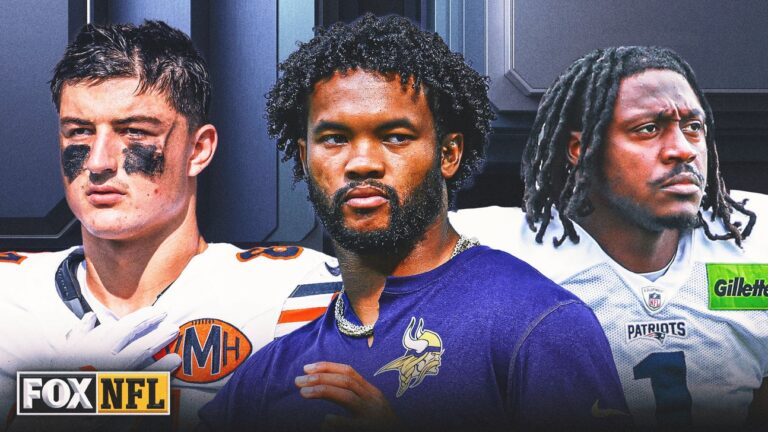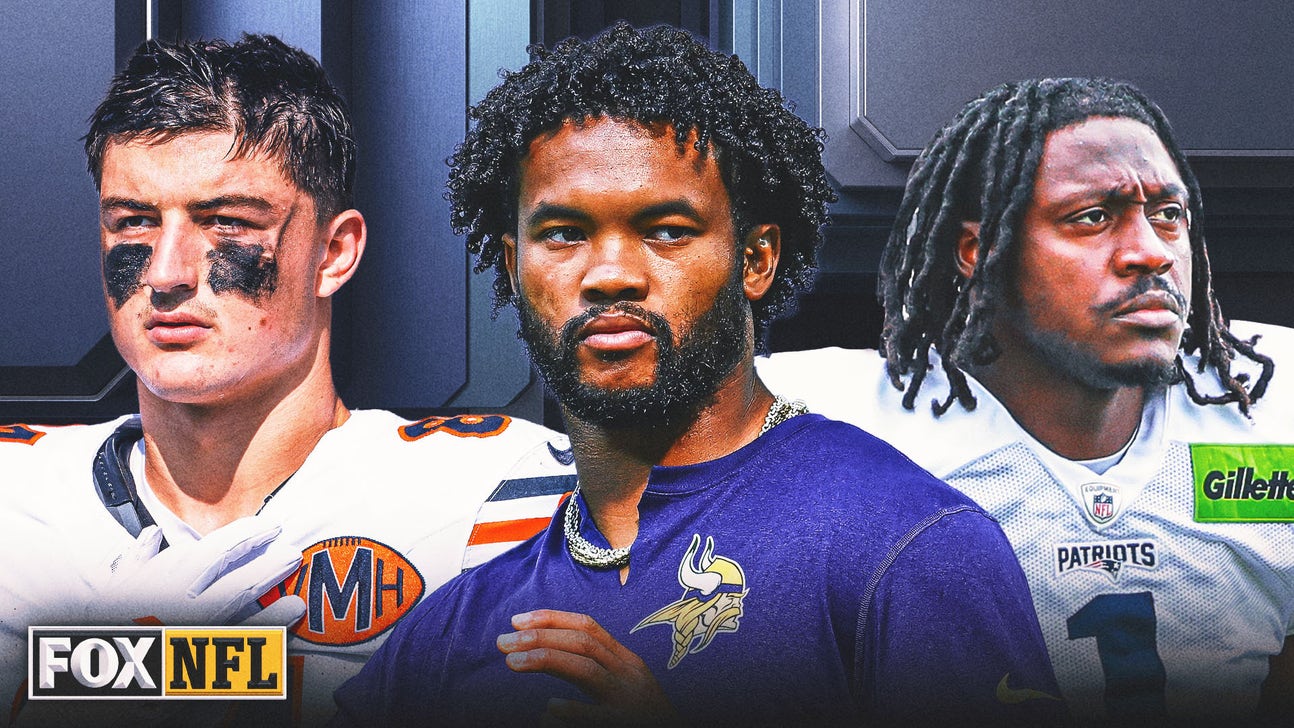
While we’re all making our final preseason predictions before the start of the 2026 NFL regular season, there’s something else I want to do before the year gets going: plant the flag.
Before the games get going, I’m planting the flag on some players (and an assistant coach) to exceed expectations and dominate headlines this season. That includes a pair of veterans looking to bounce back after relatively down seasons, and a pair of second-year pros who are ready to make the leap in 2026. I’m also buying stock in a first-year defensive coordinator with a bright future in coaching and could be a name to know in the next head coaching cycle.
So, let’s plant the flag.
A reminder: A.J. Brown is just 28. You wouldn’t know it based on the offseason conversation surrounding Drake Maye’s new weapon. You’d think he was a 30-something receiver coming off an unproductive season and not one who’s still in the prime of his career and coming off yet another 1,000-yard campaign, despite playing in the league’s most dysfunctional passing game.
The “washed up” talk is a bit premature, and I firmly believe that Brown is about to remind the NFL that he’s still one of the league’s scariest receivers.
Even during a frustrating season, Brown showed why defenses fear him. He destroys press-man coverage and will dunk on a cornerback in one-on-one situations downfield. Only Tee Higgins and George Pickens tallied more receiving yards against press coverage in 2025, according to Next Gen Stats. And while Brown has lost some speed — he hasn’t hit 20 mph on a play in nearly two seasons — he can still create quick separation on short routes with physicality and sharp route running.
Brown has mastered the art of pushing off right at the edge of the five-yard mark, when hand fighting is still legal.
Opposing defenses were still treating Brown like a star last season. He’d routinely get extra attention in obvious passing situations, whether it was a safety over the top to prevent vertical shots or bracket coverage on short in-breaking routes.
Brown remains a monster at the catch point, but in 2025, the quality and quantity of his tight-window targets dipped. Jalen Hurts targeted him on just 41 tight-window throws, the lowest mark of Brown’s four-year stint in Philadelphia, and his expected catch rate was just 53.5%, per Next Gen Stats. He still managed to haul in over 60% of those passes, showing his contested catch prowess.
And that’s why I’m so bullish on Brown in 2026. Maye was the league’s best quarterback on tight-window throws, leading the NFL in both expected points added (EPA) and completion percentage over expected (CPOE) by a wide margin. He accomplished that with Stefon Diggs, who’s certainly past his prime, as his go-to target in those situations. Now that he has the league’s preeminent 50/50 ball winner out there with him, Maye will feel even more free to let it rip on those tight window throws.
This is really a vote of confidence for Vikings coach Kevin O’Connell, whose reputation as a quarterback whisperer took a hit after J.J. McCarthy’s short-lived stint as Minnesota’s quarterback of the future. McCarthy’s play was so poor it obscured the improvement elsewhere along the offense. The Vikings’ offense went from bad in 2024 to above average last season; the offensive line allowed fewer pressures and O’Connell’s play designs kept getting receivers open.
McCarthy just couldn’t make the plays that were there to be made. He finished dead last in accurate throw rate, per Pro Football Focus. McCarthy also finished last in completion percentage over expected on attempts, with a completion probability over 75%, per Next Gen Stats. He couldn’t even hit the layups O’Connell set up for him.

Kyler Murray started five games for the Cardinals last season before suffering a season-ending foot injury. (Photo by Stephen Maturen/Getty Images)
In 2024, Murray finished sixth in that same stat. The ability to hit the gimme throws will be a big boon to the Vikings’ passing game. And Murray’s play under pressure should also raise the bar quite a bit. McCarthy struggled to extend plays in the face of pressure and had one of the higher pressure-to-sack rates in the league. Murray will take his fair share of sacks, but he looks like Tom Brady in the pocket compared to his younger backup.
Murray’s presence in the backfield should also boost Minnesota’s run game. Defenses have to account for him pulling the ball on option runs, which was less of a concern with McCarthy under center.
But let’s be honest: Murray’s performance this season won’t be measured by comparisons to McCarthy’s 2025 campaign. Sam Darnold’s run in 2024 will be the point of comparison. We haven’t seen much of Murray over the past year, so it’s difficult to say if he’s still a better quarterback than Darnold in a vacuum, but we can say this: Murray is stepping into a more balanced offense, and all the key contributors who helped Darnold get his career back on track are still around.
Murray putting up a top-10 season would not surprise me.

With George Kittle nearing the end of his prime and Travis Kelce nearly at the end of his career, the “best tight end in the league” title belt is up for grabs, and Chicago’s Colston Loveland is my pick to snatch it this season.
I don’t even know where to start. Loveland is everything you want in a tight end. He’s a massive human being who can box out smaller defensive backs in the red zone. He’s got enough wiggle to skate past linebackers who dare to cover him. And while he isn’t a burner, he gets down the seam in a hurry and can go outside of his frame to haul in passes.
Loveland can line up out wide, in the slot, or attached to the offensive line like a traditional tight end. And he’s already a solid in-line blocker in the run game and can hold his own against defensive ends in pass protection.
He got off to a quiet start in his rookie season, but he became a key figure in the Bears’ passing attack down the stretch, getting double-digit targets in each of Chicago’s last four games. Expect that to carry over into the 2026 season. While Loveland will draw more attention from defenses, Bears coach Ben Johnson makes it hard to hone in on his second-year star by moving him all over the formation, letting him pick out matchups he wants to exploit. Loveland’s versatility makes it all possible.
Arizona’s Trey McBride is another candidate to take the TE1 mantle, if he hasn’t already taken it. But McBride’s in a far worse situation, with questions at quarterback and an inexperienced head coach. The same goes for Brock Bowers in Las Vegas.
The race for the first-team All-Pro spot at tight end will likely come down to Loveland and those two, and I’ve got the Bears tight end narrowly beating them out.

I cannot wait to watch this Chargers’ offense now that Mike McDaniel is coordinating it. While the prospect of Justin Herbert slinging the ball downfield is the main attraction, second-year running back Omarion Hampton, the team’s 2025 first-round pick, will be the player who benefits most from McDaniel’s arrival.
Miami’s passing game may have crumbled in McDaniel’s final season, but his run game was as explosive as ever. Without the threat of Tyreek Hill blowing the top off the secondary, defenses could pack the box with run defenders with more confidence, forcing McDaniel to devise more creative ways to get Devon Achane out to the edge of the defense. He came up with some wild ideas, using wonky motions and backfield formations to set up advantageous blocking angles and give Achane a straight-line path to the second level as he built up speed.
Watch how fullback Alex Ingold, who followed McDaniel to the Chargers, toys with the Bills linebacker and eventually creates a rushing lane for Achane.
Achane hit 15 mph on 70 run attempts in 2025, which easily led the NFL, per Next Gen Stats. His average speed when he crossed the line of scrimmage ranked second behind Seattle’s Kenneth Walker. At times, it looked as if McDaniel was firing Achane out of a cannon, right into an open rush lane.
If McDaniel can do the same for Hampton, he should be in for a monster season. Hampton doesn’t have Achane’s speed, but he ran a 4.4-second 40-yard dash and can be a nightmare to bring down in the open field due to his size. We didn’t see his top-end speed often in 2025, though. Hampton was hit behind the line of scrimmage on 53% of his attempts, trailing only Pittsburgh’s Jaylen Warren, per Next Gen Stats. Despite L.A.’s run-blocking issues, Hampton maintained a 4.4-yard rushing average and a solid 41.9% success rate.
Expect a big increase in both stats now that McDaniel is dialing up plays for him.
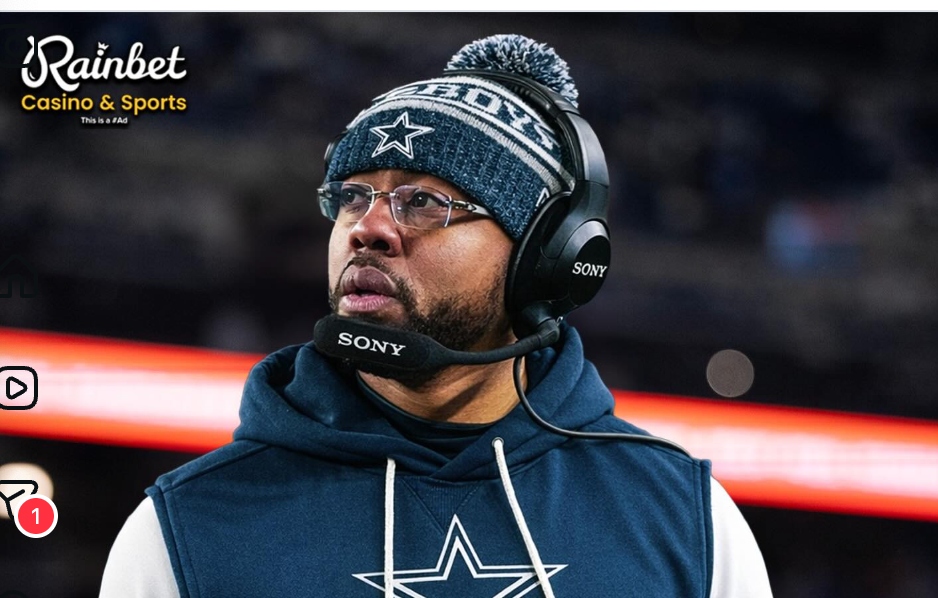
Listen to a Christian Parker press conference, and you’ll understand why folks in Dallas are excited about the new Cowboys defensive coordinator. The 34-year-old is a sharp football mind who can explain high-level concepts clearly and concisely.
Parker also has an impressive coaching lineage, having worked under Vic Fangio and Vance Joseph, two of the sport’s best defensive coordinators. But Parker has never called plays, and we’ve seen plenty of coaches who can win a press conference but can’t coordinate a defense on game day. He still has plenty to prove.
Given the state of the Cowboys defense, which is solid along the front seven despite lacking talent in the secondary, expectations for what constitutes a successful season for Parker have to be adjusted. Unless the first-year coordinator is a miracle worker, this won’t be a top-10 unit. Even an above-average finish would be considered a significant accomplishment.
Parker’s primary task will be cutting down Dallas’s explosive play rate. No defense allowed more explosive plays last season, and the Cowboys were susceptible to big plays against both the run and the pass.
Parker has harped on improving the team’s communication, which played a major role in the defensive breakdowns, especially in the secondary. Opponents racked up 483 yards on passes to deep targets to “open” receivers, per Next Gen Stats. No team was within 100 yards of them in that stat. Coverage busts like this were an all too familiar sight in Dallas last season.
Parker’s former team, Philadelphia, ranked fourth-best in that same metric. If Parker can just solve that issue for Dallas, the defense should make the leap from “awful” to “mediocre.” That may not feel like much of an upgrade, but with one of the league’s best offenses on the other side of the ball, it would be enough to get the Cowboys back into the playoffs and push Parker up the list of head coaching candidates ahead of next year’s hiring cycle.
About the Author