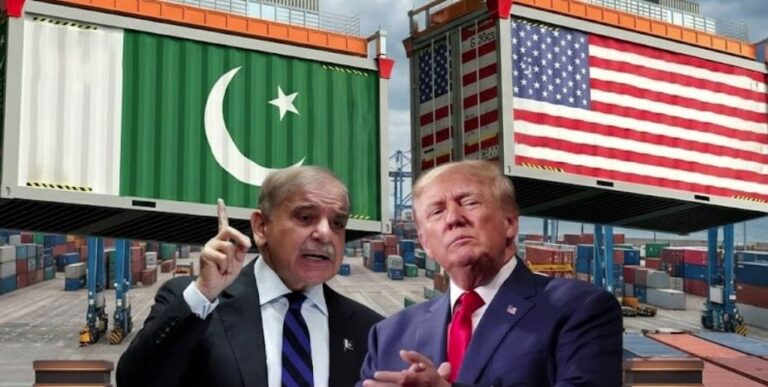
WASHINGTON – Islamabad and Washington had been projecting optimism over improving trade ties, but just as those talks appeared to be gaining momentum, Trump administration unveiled sweeping new tariff regime, placing Pakistan among 60 countries facing fresh US duties over alleged failures to curb imports linked to forced labor.
US slapped fresh tariffs of 10% to 12.5% on imports in a sweeping move that Trump administration says is aimed at punishing nations that fail to crack down on goods produced through forced labor.
For Pakistan, the timing is particularly critical. The new 10% tariff arrives despite ongoing trade talks between two sides, and two natoopms had recently claimed progress toward reciprocal trade agreement. Instead of relief, Pakistani exports now face another hurdle in accessing one of the world’s largest markets.
Unlike Trump’s earlier reciprocal tariffs, which were struck down by US Supreme Court in February for exceeding presidential authority, the new duties have been imposed under Section 301 of the Trade Act of 1974, a legal tool with a stronger record of surviving court challenges.
The fresh tariff regime will apply to nearly 99.4% of all goods imported into the United States, making it one of the broadest trade actions in recent years. Only a limited number of products—including crude oil, natural gas, fertilizers and selected food items—have been spared.
US Trade Representative Jamieson Greer defended the decision, arguing that countries allowing imports linked to forced labor not only fuel human rights abuses but also gain an unfair economic advantage over nations that enforce stricter labor standards.
Trade tensions between Pakistan and the US have remained in news in recent times. Last year, Trump administration imposed a 29% tariff on Pakistani exports under the International Emergency Economic Powers Act (IEEPA) before later reducing it to 19%. The latest measures do not replace those earlier actions but introduce another layer of trade pressure under a different legal framework.
The tariffs will take effect immediately after the temporary global levy expires at 12:01 a.m. EDT on Friday, although shipments already on their way to the United States have been granted a grace period until July 28.
Pakistan joins a long list of countries facing the 10% tariff, including India, Bangladesh, Canada, Britain, Mexico, Malaysia, Indonesia, Cambodia, Argentina, Jordan, Sri Lanka, Ecuador, Guatemala, Honduras, El Salvador and Trinidad and Tobago.
Meanwhile, the European Union, Japan, South Korea, Taiwan and Switzerland will face effective tariff levels of up to 12.5%, while another 38 countries, including China, have been placed under the higher 12.5% rate. Washington continues to accuse Beijing of benefiting from forced labor involving Uyghur Muslims in Xinjiang.
Norway rejected the tariffs outright, insisting it already enforces strict laws preventing imports linked to forced labor. Australia and Brazil also criticized the decision as unjustified and vowed to press Washington to reconsider.
Canada, which has already been targeted by several rounds of US trade measures, adopted a more cautious tone. Trade Minister Dominic LeBlanc said Ottawa would continue engaging with Washington in hopes of resolving the dispute through dialogue.
Pakistan proposes zero-tariff trade agreement to boost US economic ties
About the Author