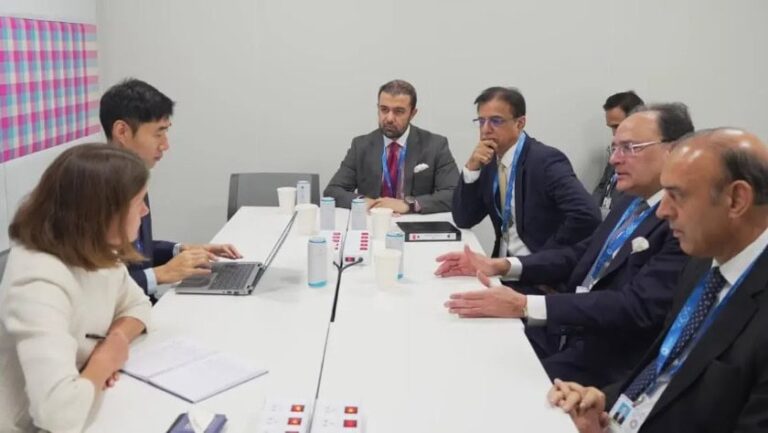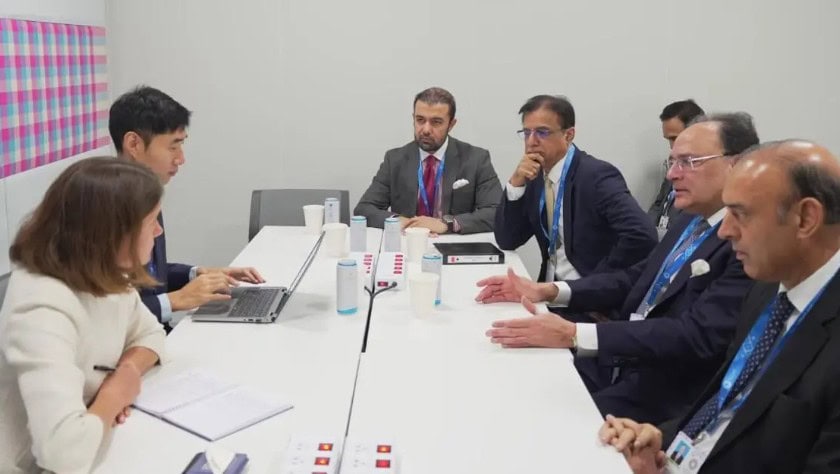
BANGKOK – Pakistan is seeking sovereign credit rating upgrade as Finance Minister Muhammad Aurangzeb holds talks Moody’s on economic stability, rising foreign exchange reserves and debt management, while exploring expanded OPEC Fund financing for key infrastructure projects, including the M6 motorway and ML-1 railway.
During talks on sidelines of the IMF-World Bank Annual Meetings in Bangkok, Aurangzeb discussed Pakistan’s economic outlook, its recent rating improvement and prospects for further progress, according to the Finance Ministry. The discussions come as Islamabad targets a ‘B+’ sovereign rating by the July–September quarter of fiscal year 2027–28.
His pitch to Moody’s rests on several key developments: rising foreign exchange reserves, a contained current account deficit, lower forward liabilities at the State Bank of Pakistan (SBP) and renewed access to international capital markets. Aurangzeb also outlined plans to replace expensive short-term borrowing with financing carrying longer maturities, with the objective of easing repayment pressures without increasing the country’s overall external debt stock.
The finance minister reaffirmed that Pakistan would need to sustain structural reforms and build an export-led growth model beyond the current IMF programme to strengthen its economic position over the longer term.
He also sought Moody’s views on the requirements for a further rating improvement, including how the agency weighs political risks against improvements in economic performance.
Pakistan has already secured improvements in its sovereign credit standing. S&P Global Ratings raised the country’s rating to ‘B’ from ‘B-’ in July 2026, retaining a stable outlook. Moody’s subsequently upgraded Pakistan from ‘Caa1’ to ‘B3’ in August, also assigning a stable outlook.
Aurangzeb said earlier this month that Pakistan could reach the ‘B+’ category by the first quarter of fiscal year 2027–28, provided the country maintains its macroeconomic stability and continues implementing structural reforms. The target, however, remains an expectation rather than a confirmed decision by the rating agencies.
The government’s immediate challenge is to turn improved economic indicators into a more durable financial position by managing debt repayments, maintaining foreign exchange buffers and reducing reliance on short-term external financing.
Alongside rating discussions, Aurangzeb met Dr Abdulhamid Alkhalifa, president of the OPEC Fund for International Development, to explore expanded financing support for Pakistan’s trade and development projects. The finance minister briefed Alkhalifa on Pakistan’s economic stabilisation, progress under the IMF programme and renewed access to international capital markets. He welcomed the Fund’s willingness to broaden its financing support.
The M6 motorway emerged as a central item on the agenda, with discussions covering the approved first tranche, the pending loan agreement and subsequent financing tranches. The two sides also identified the modernisation of the ML-1 railway line and improvements to power transmission infrastructure as priority areas requiring further attention.
Both officials stressed the need to accelerate approvals and improve coordination to prevent delays in project implementation. Regional peace and stability also featured in their discussions.
News Desk
About the Author