ISLAMABAD/TEHRAN – Pakistan on Sunday stepped up diplomatic engagement with Iran as tensions in the Middle East continue to escalate amid fresh US military strikes and growing security concerns in Strait of Hormuz.
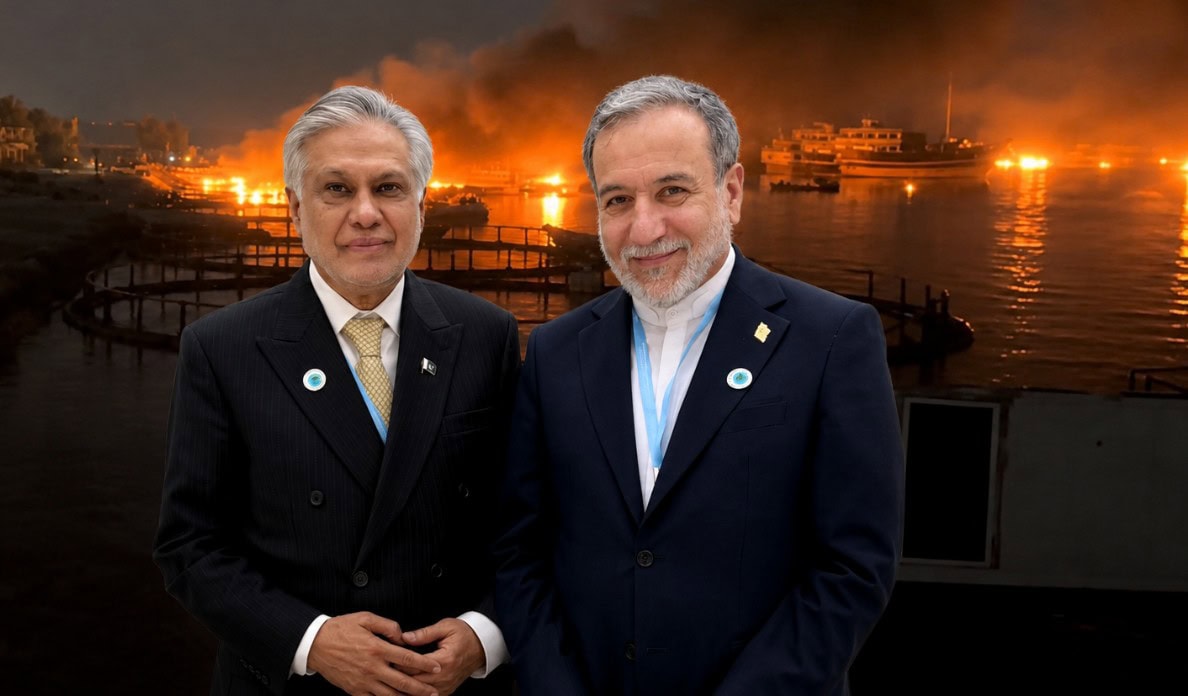
Deputy Prime Minister and Foreign Minister Ishaq Dar held telephone conversation with Iranian Foreign Minister Abbas Araghchi, during which both leaders discussed the deteriorating regional situation.
Dar urged all sides to pursue de-escalation and exercise maximum restraint. He also stressed that the Islamabad Memorandum of Understanding (MoU), agreed in June 2026, underscores that dialogue and diplomacy remain the only path to resolving disputes and ensuring lasting regional peace and stability. The two foreign ministers agreed to remain in close contact as developments continue.
Meanwhile, Iran’s chief negotiator and Parliament Speaker Mohammad Bagher Ghalibaf issued a sharp warning, saying: “The era of one-sided agreements is over. We told you: either honor your commitments or pay the price for breaking them. The reality is now before you.”
Ghalibaf also shared a picture of Clause Five of the US-Iran Memorandum of Understanding, highlighting the provision stating that Iran would arrange safe passage for commercial vessels traveling between the Persian Gulf and the Gulf of Oman for 60 days without charge.
US Central Command (CENTCOM) earlier announced that the third phase of military operations against Iran is now underway, calling the campaign as response to an attack by Iran’s Islamic Revolutionary Guard Corps (IRGC) on the Cypriot container ship JFS Galaxy.
US military accused Iran of once again failing to comply with the Memorandum of Understanding despite previous attacks on commercial shipping, saying Washington’s operations are aimed at degrading Iran’s ability to target civilian mariners and commercial vessels transiting the Strait of Hormuz. The strikes are being carried out under the direction of the US President.
Iranian Foreign Ministry spokesman Esmaeil Baghaei said talks held in Muscat between Foreign Minister Abbas Araghchi and Omani officials focused on coordinating navigation and shipping procedures in the Strait of Hormuz.
Baghaei said legal and technical delegations from both countries participated in the negotiations, which addressed maritime security while respecting the sovereign rights of both coastal states, international law and the obligations outlined in Clause Five of the Islamabad Memorandum of Understanding.
He added that Iran believes any new traffic management arrangements for the Strait of Hormuz should be developed jointly by Iran and Oman, taking into account recent months’ events, particularly the war and its impact on maritime security along one of the world’s most strategically important waterways.
Qatar, Bahrain, Kuwait, Jordan, UAE and Oman face Iranian Attacks as War reignites
News Desk
About the Author