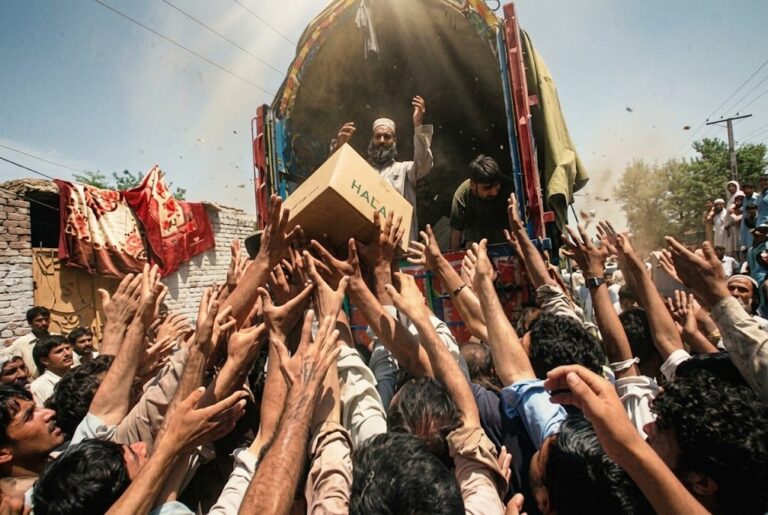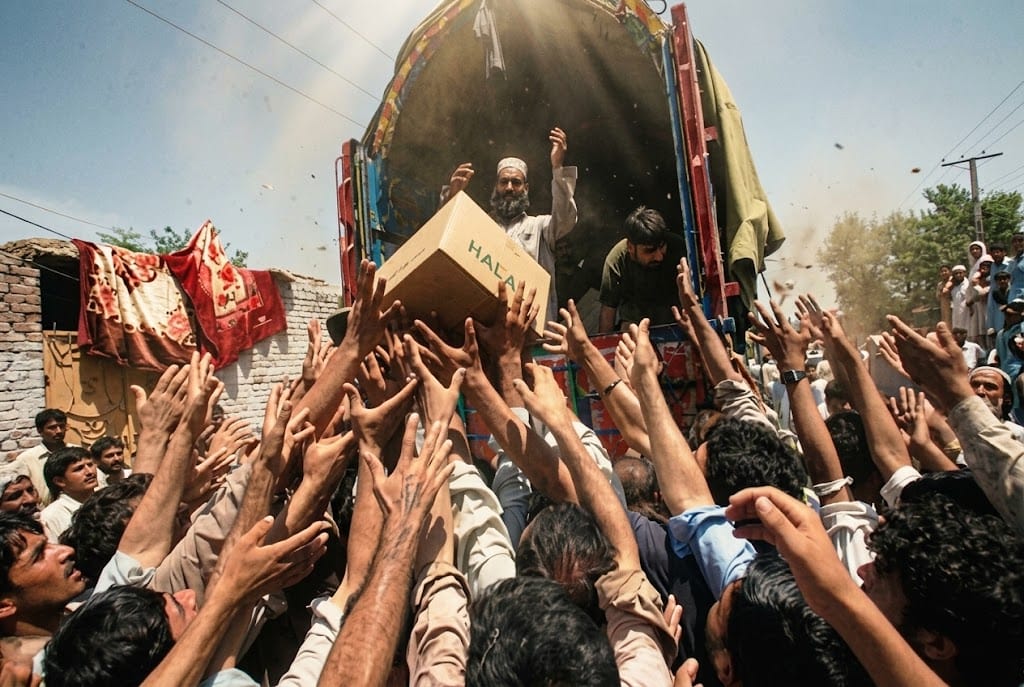
ISLAMABAD – For millions of Pakistanis, making it through the month on just a few thousand is harsh reality, not a statistic. Now, a new World Bank report puts the scale of the crisis into stark perspective, saying Pakistan is home to nearly 48% of the people living in extreme poverty across the MENAAP region.
Behind that figure are families struggling with rising prices, limited job opportunities, and the lasting impact of economic and climate shocks. Pakistan’s economy may finally be turning a corner, but the recovery is unfolding against a sobering reality as millions of households remain trapped in poverty, while inflation, climate shocks, weak job creation, and global economic turbulence threaten to keep living standards under pressure.
Real GDP growth is projected to rise from 3.2% in FY2025 to 3.7% in FY2026 and 3.8% in FY2027, signaling a gradual strengthening of economic activity. Services, manufacturing and livestock are expected to support the expansion. But beneath the headline growth figures lies a more difficult story.
Real per-capita growth is expected to remain at only around 2.1–2.2%, meaning that the improvement in economic output per person could remain limited. For ordinary households, stronger GDP numbers may therefore translate into only modest improvements in living standards.
Pakistan’s economic stabilization comes after years of severe disruption. The country of nearly 250 million was hit first by COVID-19 pandemic, then by the devastating 2022 floods, followed by major macroeconomic crisis marked by high inflation, currency depreciation and painful economic adjustment. Between 2018/19 and 2024/25, poverty increased by around 6.4 pc points at the $3.00-per-day poverty line and by around 3.2 percentage points at the $4.20 threshold.
Recent estimates put Pakistan’s poverty rate at roughly 23% under the $3.00 international poverty line. But the picture becomes considerably more alarming when the higher $4.20 lower-middle-income poverty line is used: approximately 47.9% of the population falls below that threshold. In simple words, nearly half of the population remains economically vulnerable even when not classified as living in extreme poverty.
Pakistan’s poverty crisis is also shaping the broader regional picture. Approximately 48% of people living below $3.00 per day across the MENAAP region are in Pakistan. Afghanistan, Syria and Yemen together account for roughly another 47%. The wider region is facing an unusually difficult poverty trajectory. In 2024, around 14.3% of MENAAP’s population lived below $3.00 per day, compared with 10.4% globally.
At the $4.20 poverty threshold, the regional rate climbed to approximately 26.9%, compared with 18.9% worldwide. In Pakistan, Syria, Yemen and Djibouti, the share of people living below $3.00 per day reached or exceeded 20%. The numbers underline why Pakistan’s economic performance matters far beyond its borders: progress, or failure, in Pakistan can materially influence the region’s overall poverty trajectory.
The biggest threat to the economic recovery may be what households feel in their shopping baskets. Inflation is projected to rise to approximately 7.1% in 2026 and 8.2% in 2027, with higher energy, commodity and transportation costs contributing to price pressures.
For poorer families, this can be devastating. Low-income households typically devote a large share of their earnings to necessities such as food, fuel and housing. When prices rise, they have little room to cut spending without sacrificing essential consumption.
There is some relief as Pakistan’s fiscal deficit dipped from levels of around 5.4% of GDP and is projected at approximately 2.6% in FY2026. But the improvement may not last at the same pace. The deficit is expected to widen to approximately 3.5% of GDP in FY2027.
The primary balance is still expected to remain in surplus, suggesting that fiscal consolidation is continuing. Yet maintaining that discipline could become increasingly difficult if economic and social pressures intensify.
Pakistan’s current account is also expected to remain relatively contained, with a deficit of just 0.1% of GDP in FY2026. But that is projected to widen to approximately 0.8% in FY2027. Higher import costs, particularly for energy and essential commodities, could put renewed pressure on the external balance.
Two lifelines remain particularly important: remittances and ICT-service exports. Remittances provide crucial support to households and foreign-exchange reserves, while technology-related exports offer Pakistan an opportunity to generate foreign currency without relying exclusively on traditional goods exports. But both the external account and household incomes remain exposed to developments abroad.
Any major escalation in regional conflict could send fresh shockwaves through Pakistan’s economy. Higher oil, energy, commodity, transportation and insurance costs would put pressure on inflation while increasing the cost of imports. For a country already sensitive to energy prices, another external price shock could quickly filter through to businesses and consumers.
The central question now is whether Pakistan can convert economic growth into jobs. Higher GDP will have limited impact on poverty if expansion is concentrated in areas that generate insufficient employment or if rising production costs discourage businesses from hiring. That is why education, skills, human capital and productivity are likely to be crucial to Pakistan’s next phase of development.
There is, however, a potentially powerful opportunity coming from tech side as the South Asian naiton has growing digital ecosystem and a relatively large pool of technically skilled workers. Information technology, digital services and artificial intelligence could become important engines of future growth.
Pakistan has largest share of poor population in MENAAP: World Bank
About the Author