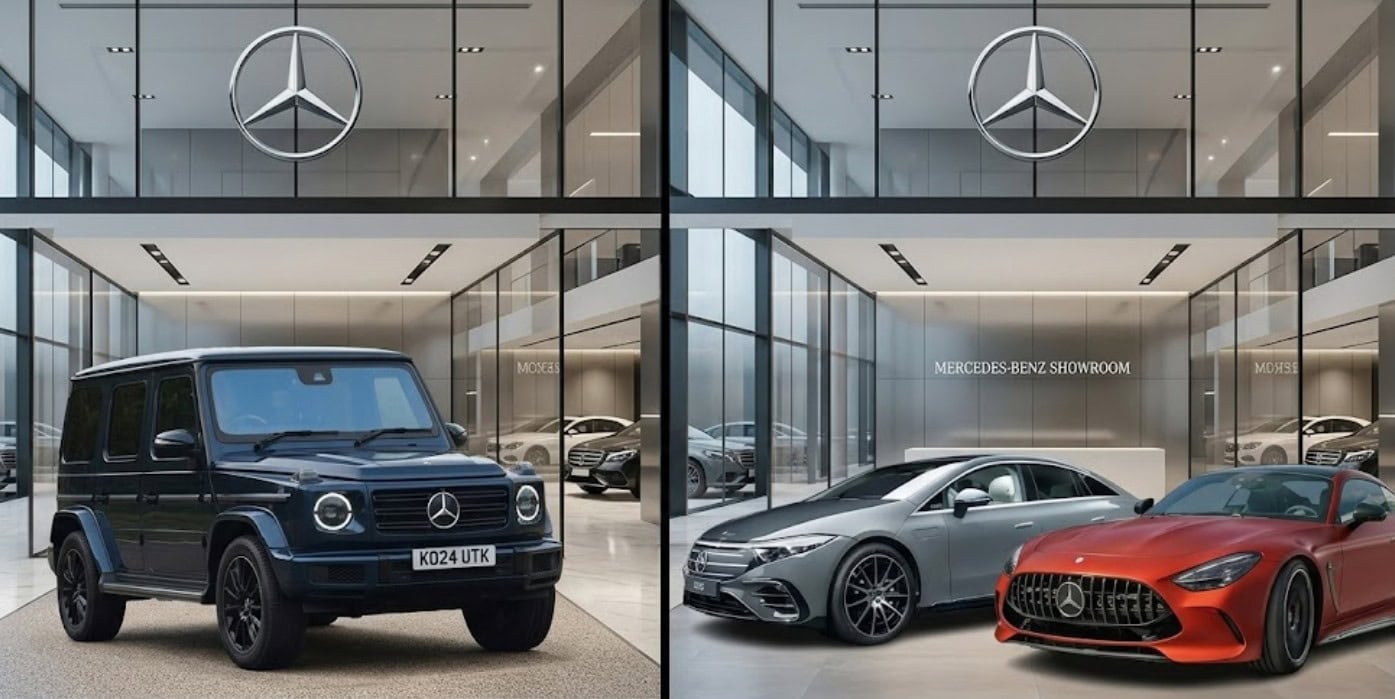
Mercedes-Benz, one of oldest and most influential carmakers, tracing its origins to the 18th century, is at a crossroads as a proposed legislative push aimed at tightening national security controls over the auto sector is raising fresh uncertainty for global automakers, putting Mercedes-Benz Group in an unexpected policy crossfire.
The bill, dubbed Motor Vehicle Modernization Act of 2026 was designed to block automakers with any direct or indirect equity ties to governments deemed “foreign adversaries,” including China, Russia, and North Korea, from importing, manufacturing, or selling vehicles in US.
With core debate on how broadly the legislation defines foreign influence. The proposal would extend restrictions not only to companies directly controlled by such governments, but also to firms with indirect ownership links, raising questions about how multinational shareholding structures will be assessed in practice.
Mercedes-Benz Group is headquartered in Germany and deeply integrated into the American market, but the auto giant’s Chinese-linked shareholders are creating problem for the company. Its largest individual shareholder is the state-owned BAIC Group with just under a 10% stake. In addition, Chinese billionaire Li Shufu, founder of Geely, holds another significant stake of roughly similar size through his investment vehicle. Combined, these holdings approach 20% of the company’s equity.
Even indirect government-linked ownership could be enough to trigger restrictions, particularly given an additional clause that flags firms with 15% or more influence or control tied to foreign adversary entities. This led to concerns among industry observers that the definition could sweep in legacy global manufacturers that are not Chinese-controlled, but partially exposed through international investment portfolios.
US lawmakers are preventing Chinese automakers from gaining strategic access and protecting supply chains tied to connected vehicle technology. However, the lack of a Senate companion bill and the absence of detailed exemption rules have left significant uncertainty over how the proposal would be applied in real-world cases.
For Mercedes-Benz Group, the stakes are particularly notable given its substantial footprint in America and other first world countries. The company employs thousands of workers and producing hundreds of thousands of vehicles annually, including both passenger cars and commercial vans.
Existing rules already move to restrict Chinese-linked software in new vehicles starting with the 2027 model year, followed by hardware restrictions around 2030 amid growing concern over digital supply chain security in automotive technology.
For now, the legislation remains in the proposal stage in the House of Representatives, with no Senate counterpart and no finalized implementation framework. But the direction of travel is clear, whether Trump led administration is tightening scrutiny of foreign-linked influence in the auto sector, and depending on how the final language is written, even long-established players.
About the Author