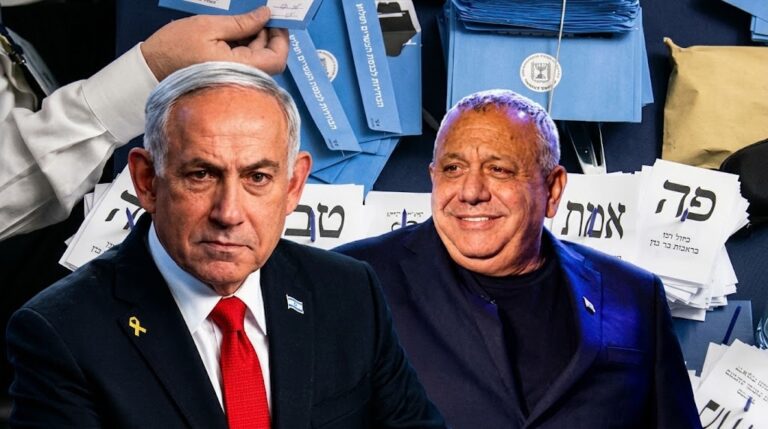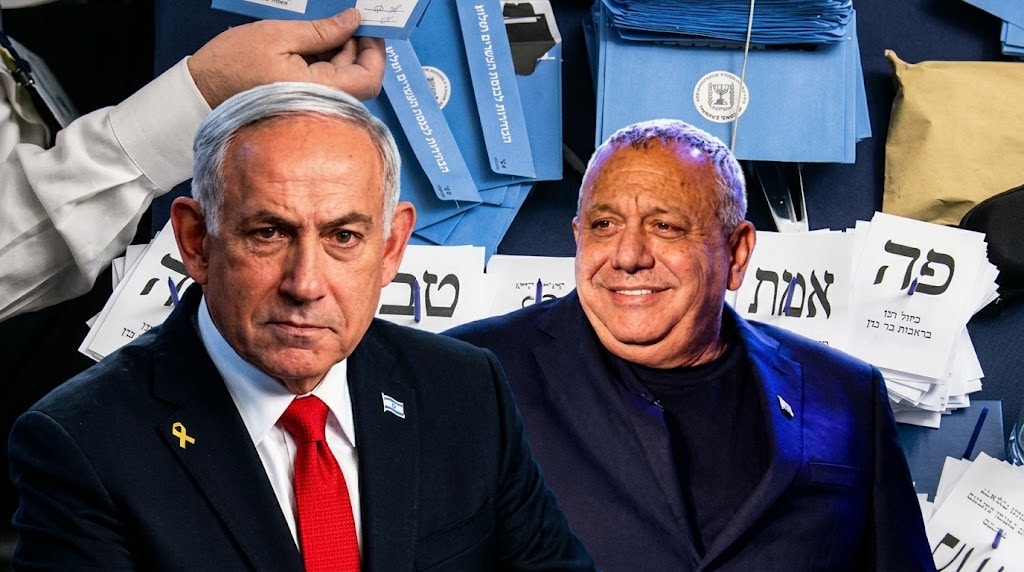
TEL AVIV – Israel is witnessing high-stakes political showdown as millions of voters head to the polls in election that could end Benjamin Netanyahu’s long grip on power, and bring former military chief to premiership.
The contest for Israel’s 26th Knesset developed into closely fought battle between current PM Netanyahu, who is seeking a seventh term, and former army chief Gadi Eisenkot, whose growing political influence has transformed him into a serious challenger.
With approximately 7.3 million eligible voters, more than 12,000 polling stations opened at 7am local time on Tuesday to elect the 120 members of Israel’s parliament. The vote comes three years after the outbreak of a devastating regional conflict, with Israeli society deeply divided over national security, the Gaza war, judicial reforms, military conscription, the cost of living and Netanyahu’s political future.
Recent opinion polls suggest that neither the ruling coalition nor the main opposition bloc is guaranteed to secure the 61 parliamentary seats required to form a government, raising the possibility of prolonged coalition negotiations.
Netanyahu vs Eisenkot
Israel’s longest-serving prime minister Netanyahu is campaigning on his record of confronting security threats and securing what he describes as major strategic achievements during conflicts since 2023. His opponents, however, are seeking to turn the election into a referendum on his leadership, particularly the security failures surrounding the October 7 attacks.
Those attacks left approximately 1,200 people dead, while 251 others were taken hostage to Gaza. PM attempted to reinforce his image as Israel’s strongest defender, reviving his longstanding political reputation as “Mr. Security.” Yet his principal challenger comes from within Israel’s own military establishment.
Gadi Eisenkot, a former chief of staff of the Israeli military, has gained political ground by promising greater accountability and a different approach to national leadership. His military experience has become a major political advantage, particularly among voters concerned about Israel’s security challenges.
Eisenkot established his Yashar Party last year and has positioned himself as an alternative to the country’s traditional political leadership. His personal experience of the Gaza war has also shaped his political standing. One of his sons was killed while serving in the Israeli military during the early months of the conflict.
Eisenkot himself served in Netanyahu’s wartime cabinet before resigning in 2024 over disagreements about the government’s conduct of the war. He has since made accountability for the failures preceding October 7 a central theme of his political campaign.
Opposition Unites against Netanyahu
Eisenkot has emerged as a prominent figure in the opposition’s so-called Change Alliance, a grouping of parties united primarily by their determination to remove Netanyahu from office. The opposition includes former Prime Minister Naftali Bennett, Avigdor Lieberman and former general Yair Golan.
However, the alliance contains significant ideological differences. Bennett and Lieberman represent right-wing political positions and favour tough security policies, including continued Israeli control over extensive areas of the occupied West Bank.
Naftali Bennett brings Netanyahu s 12-year rule to an end, takes over as Israeli PM
Golan, by contrast, belongs to the political left and supports Israeli withdrawal from large parts of the occupied territory. Despite their differences, these leaders could cooperate with Eisenkot if their combined parliamentary strength offers a viable route to power. Netanyahu, meanwhile, is relying on the support of far-right and conservative religious parties that form the backbone of his existing coalition.
His administration has been widely described as the most right-wing government in Israeli history. Some of his political allies advocate annexing the occupied West Bank. Critics warn that such policies could lead to the forced displacement of civilians.
Arab Parties in Election Deadlock
One of key uncertainties surrounding the election is the potential role of Arab political parties in deciding who governs Jewish state next. Arab citizens make up approximately one-fifth of Israel’s population, and many identify themselves as Palestinian citizens of Israel.
Two Arab political alliances are contesting the elections, potentially placing them in a powerful position if neither Netanyahu nor Eisenkot secures enough support to form a majority government. Their influence could take several forms, from backing a preferred candidate for prime minister to joining a coalition or supporting a minority administration without formally entering government.
Some years back, Mansour Abbas led United Arab List into coalition government headed by Naftali Bennett. It was the first time an independent Arab party formally participated in an Israeli governing coalition. Ahead of the latest vote, Abbas has expressed openness to participating in the formation of a new government.
Ahmad Tibi, associated with the Joint List, has suggested that Arab lawmakers could support an alternative administration without necessarily becoming coalition members.
Army chief Removal Buzz
The final hours of the election campaign were overshadowed by controversy over Netanyahu’s relationship with Israeli military chief Lieutenant General Eyal Zamir. An Israeli Channel 12 report claimed that Zamir’s prospects of retaining his position would be extremely limited if Netanyahu returned to power.
The report pointed to serious disagreements between the prime minister and the military chief over a sensitive security operation. The dispute did not concern a direct Israeli attack on Iran. Instead, it involved an operation that Zamir reportedly feared Tehran could misinterpret, potentially provoking an unexpected military confrontation.
Netanyahu moved to dismiss speculation about the army chief’s future. In an unusual public clarification shortly before voting, the prime minister declared that he had no intention of dismissing Zamir. The controversy highlighted the tensions between Israel’s political and military leadership at a particularly sensitive moment.
Beyond personal contest between Netanyahu and Eisenkot, several major issues have shaped the election. National security remains central to the campaign, with Netanyahu defending his record in the conflicts involving Gaza and other regional fronts. His opponents have demanded accountability for the October 7 security failures and questioned the government’s handling of subsequent military operations.
About the Author