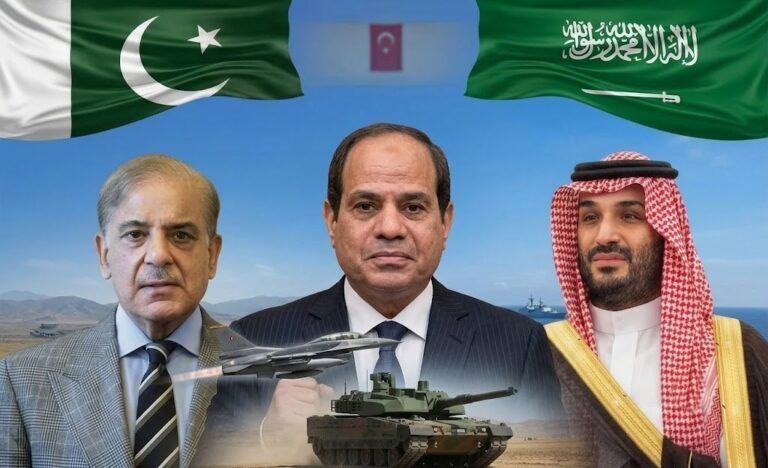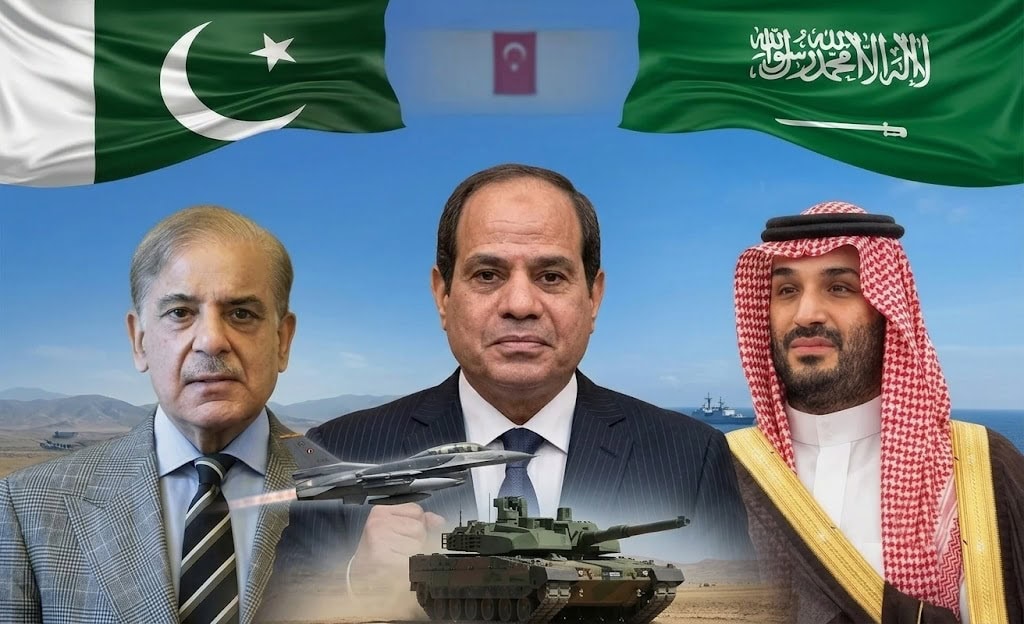
MECCA — Saudi Arabia, Pakistan and Türkiye inked mutual-defence agreement in Mecca that could become far more consequential than the ceremony surrounding it. The three countries established a framework under which an attack on one member is to be treated as an attack on all three shifting alliances and competing security guarantees have defined the strategic landscape for decades.
Turkish Foreign Minister Hakan Fidan said the arrangement contains explicit collective-defence obligations. Pakistani officials, meanwhile, have spoken about keeping the framework open to other Muslim-majority countries, raising the possibility that what began as a trilateral agreement could eventually develop into something much larger.
🇸🇦🇹🇷🇵🇰 The most significant security realignment the Middle East has seen in DECADES was just signed in Mecca; most have no idea what it actually means.
Fmr. CIA analyst Larry Johnson joined me to discuss this monumental agreement and much more…
The signing in Mecca wasn’t… pic.twitter.com/qtTfDbFnfi
— Mario Nawfal (@MarioNawfal) August 9, 2026
For now, however, the distinction between reality and speculation is critical. Saudi Arabia, Pakistan and Türkiye are founding members. Countries such as Egypt, and Oman have been discussed as possible future participants, but none of them has formally joined the pact.
Turkish officials said the agreement carries collective-defence principle similar to NATO’s Article 5: an attack on one member would be treated as an attack on all three. But the biggest question may be what happens next.
Egypt is emerging as a key potential addition. Cairo has strategic geography, one of the region’s largest militaries and control of the Suez Canal. Its entry could dramatically increase the military and geographic weight of the emerging bloc. Qatar, Jordan, Kuwait, Bahrain and Oman have also been discussed as possible future participants, although none has formally joined.
Pakistan adds another critical dimension: it is the only nuclear-armed Muslim-majority state, while Türkiye contributes advanced defence technology and a powerful military-industrial base. Saudi Arabia brings enormous financial strength and strategic influence in the Gulf.
The timing of this pact is crucial as amid years of regional conflict and uncertainty, Middle Eastern powers appear increasingly interested in building security arrangements that do not depend entirely on outside guarantees. Pakistan’s leadership has even floated the idea of a broader collective-security framework, a potential “NATO of the Islamic world.”
At the same time, Washington is facing pressure over its own defence-industrial capacity. The Pentagon has given officials 21 days to propose ways to accelerate weapons production, expand manufacturing and speed up deliveries of critical munitions.
Is Delhi Losing Strategic Edge as Pakistan inks Defence Pact with Saudi Arabia, Turkey?
News Desk
About the Author