TEHRAN – Iranian officials warned that another phase of war could put more than $2 trillion worth of US-linked cables, data centres and AI facilities across the region at risk, as Tehran hardens its stance on negotiations and control of Hormuz.
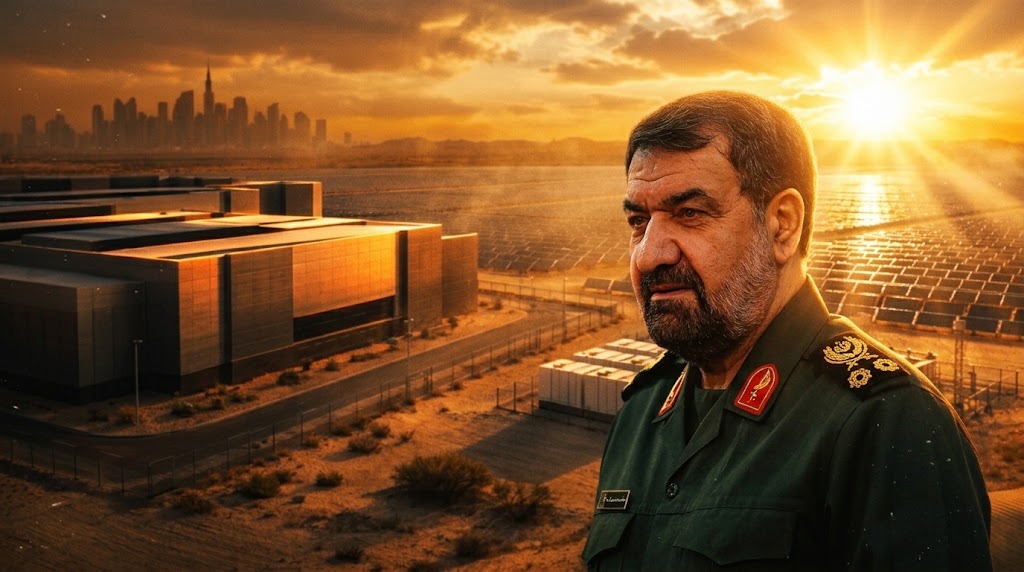
Mohsen Rezaei, head of Iran’s National Security Committee, issued warning in interview with Iranian state TV, saying Tehran was prepared to demonstrate new military capabilities and expand its strategy against the United States if hostilities resumed.
Rezaei claimed that major American assets in the region had not yet been targeted, pointing to strategic installations in the United Arab Emirates (UAE) and areas near the Strait of Hormuz.
He warned that any new conflict would be met with a broader and more comprehensive plan, raising the prospect of threats extending beyond conventional military targets to critical digital infrastructure.
Rezaei said cables, data centres and AI facilities across the region are worth more than $2 trillion. However, his remarks did not establish that all these assets are American-owned or that Iran has confirmed plans to strike specific installations.
Rezaei declared that Iran would never surrender its weapons and would continue pressing its demands until its rights were recognised. He also revealed that Tehran was considering the establishment of an economic warfare council, saying the administration of US President Donald Trump would be made to understand the consequences of economic confrontation with Iran.
The remarks are hardening Iranian position as tensions over Hormuz, economic pressure and the future of negotiations continue to dominate the confrontation. Rezaei said Iran had abandoned its previous diplomatic approach and would not return to the same model of engagement with Washington.
He claimed the two countries had held three rounds of negotiations, but the United States had walked away from the talks each time before launching attacks on Iran.
According to the Iranian official, Tehran believes a different diplomatic approach is necessary when dealing with a party it accuses of abandoning agreements. Rezaei said the United States had responded to seven conditions presented by Iran, but Tehran remained dissatisfied with the response.
He claimed Washington had contacted Tehran through Pakistan, Qatar and Iraq over the preceding two months, asking Iran to submit its proposals. Iran presented its seven conditions to the United States two weeks ago, he said, adding that some demands had been accepted while others remained unresolved.
Rezaei insisted that negotiations would not resume until Iran’s conditions were fulfilled and declared that the Strait of Hormuz would remain closed in the meantime.
He argued that the burden had shifted to Washington to clarify the outstanding issues, saying Tehran was no longer in a position where it needed to provide another response to the United States.
Iranian official escalated his rhetoric over Hormuz, accusing the US of involvement in smuggling operations despite President Trump’s repeated claims that the strategic waterway remains open. Rezaei alleged that Trump had used individuals operating in Omani coastal waters to facilitate smuggling and accused the commander of US Central Command (CENTCOM) of leading the alleged operations.
He further claimed that the UAE military was being used to support the activities. Rezaei said large oil tankers were accompanied by five or six smaller boats to transfer oil. He alleged that Iranian forces had been targeting five or six vessels involved in smuggling in the strait every night over the past several months.
The allegations were presented by Rezaei and were not independently verified in his remarks. He said US officials had failed to find a way out of the crisis because they underestimated Iran’s capabilities. Rezaei maintained that the outcome of the conflict would ultimately be determined by the Iranian people and vowed that Tehran would continue resisting until its demands were met.
Rezaei argued that the Persian Gulf could not remain secure without Iranian control over the Strait of Hormuz, one of the world’s most strategically important maritime passages.
He described control of the waterway as a major national asset, stressing that Iran’s interests went far beyond shutting the strait or collecting tolls from passing vessels.
According to him, Tehran viewed the waterway as a source of broader strategic and economic benefits.
About the Author