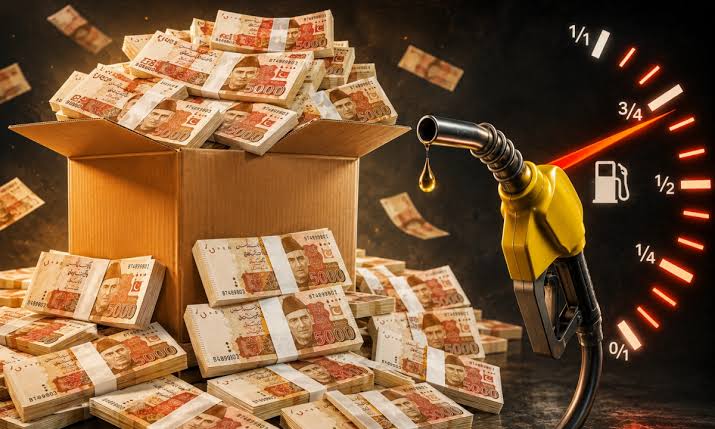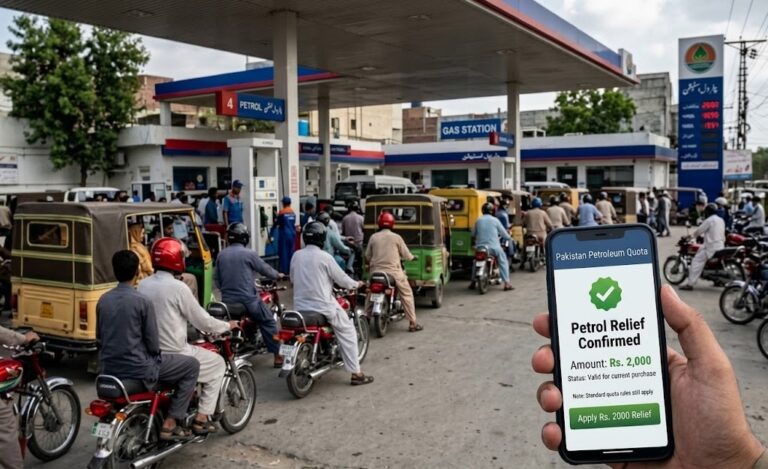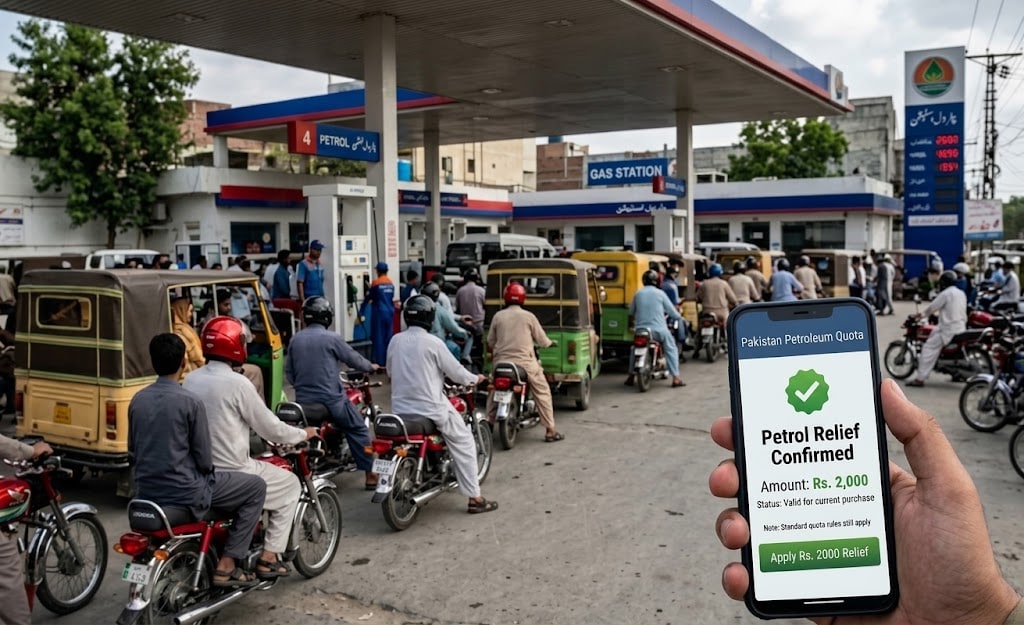
ISLAMABAD – Unafforadable petrol prices have been squeezing inflation-weary Pakistnais, turning everyday travel into expensive burden. Now, as fuel costs continue to bite, the government planned a much-needed relief package for bikers, with a monthly petrol allowance of Rs2,000.
Bikers, who bore brunt of sky-high prices, may get monthly relief of just Rs2,000, as the government moves to support motorcycle riders instead of cutting the petroleum levy, despite Rs430 billion being available in emergency funds.
Prime Minister Shehbaz Sharif reportedly approved relief scheme under which motorcycle owners could receive around Rs2,000 per month initially for three months.
IT Ministry is working on a mechanism to ensure the money reaches eligible beneficiaries transparently, while the final amount is expected to be determined by the prime minister. But the move has triggered questions over whether a small cash payment can genuinely offset the impact of an unprecedented fuel-price shock.
Petrol prices have jumped by around Rs30 in recent days, while diesel has risen by Rs25, pushing petrol to nearly Rs376 per litre and diesel to around Rs403. At these prices, the proposed Rs2,000 monthly payment would barely cover five litres of petrol, leaving motorcycle users exposed to much of the additional transportation cost.
The government is currently collecting Rs106 per litre in taxes on petrol, equivalent to around 28% of its retail price, while diesel carries Rs101 per litre in taxes, or roughly 25% of its price.
Pakistan’s Petrol Levy Explained: The Tax That Could Cost More Than It Raises
The biggest controversy surrounds the government’s refusal to use Rs430 billion in emergency funds to reduce the petroleum levy.
The claim comes under scrutiny because IMF’s third review report reportedly allows emergency funds to be used amid economic uncertainty and the fallout from the Middle East conflict, including for public relief and protection against fiscal risks.
Rs50 levy proposal ignored
Petroleum Minister Ali Pervaiz Malik had proposed in May that the petroleum levy should be capped at Rs50 per litre. Instead, the Finance Ministry approved an increase that took the levy to Rs80 per litre.
Critics argue that the policy effectively leaves ordinary consumers paying the price through higher transportation, food distribution and production costs.
Petrol Levy in Pakistan could fall to Rs5–10, Here’s How Govt plans to fill Rs1.5 Trillion Gap
Experts warned that limiting the relief to motorcycle owners may provide only temporary breathing room. Small-car owners would remain outside the scheme, while higher public transport fares could continue to push up household expenses. Businesses dependent on transport could also face higher operating costs as expensive fuel feeds into the wider economy.
An economic analyst described the proposed Rs2,000 payment as a temporary political response rather than a solution to the underlying fuel-price crisis.
The development comes as the Federal Board of Revenue faces a reported Rs2.2 trillion shortfall. At the same time, the government collected a record Rs1.567 trillion in petroleum levy during the previous fiscal year, raising questions over its growing dependence on fuel taxation as a source of revenue.
News Desk
About the Author