KARACHI – A wardrobe scene in hit Pakistani drama Dar-e-Nijaat triggered heated debate across social media, with viewers divided over whether Zaryab’s refusal to wear a sleeveless dress represents a journey towards faith or sends a controversial message about women’s clothing and personal freedom.
The latest episode of popular serial unexpectedly placed women’s fashion, religious values and individual choice at the centre of growing controversy, turning what appeared to be an ordinary family celebration into one of the drama’s most widely discussed moments.
Dar-e-Nijaat topped rating charts for its portrayal of spirituality, redemption and emotional transformation as the story revolves around Zaryab, a woman gradually rediscovering her connection with religion, and Abu Bakr, whose gentle personality and supportive behaviour have made him a favourite among viewers.
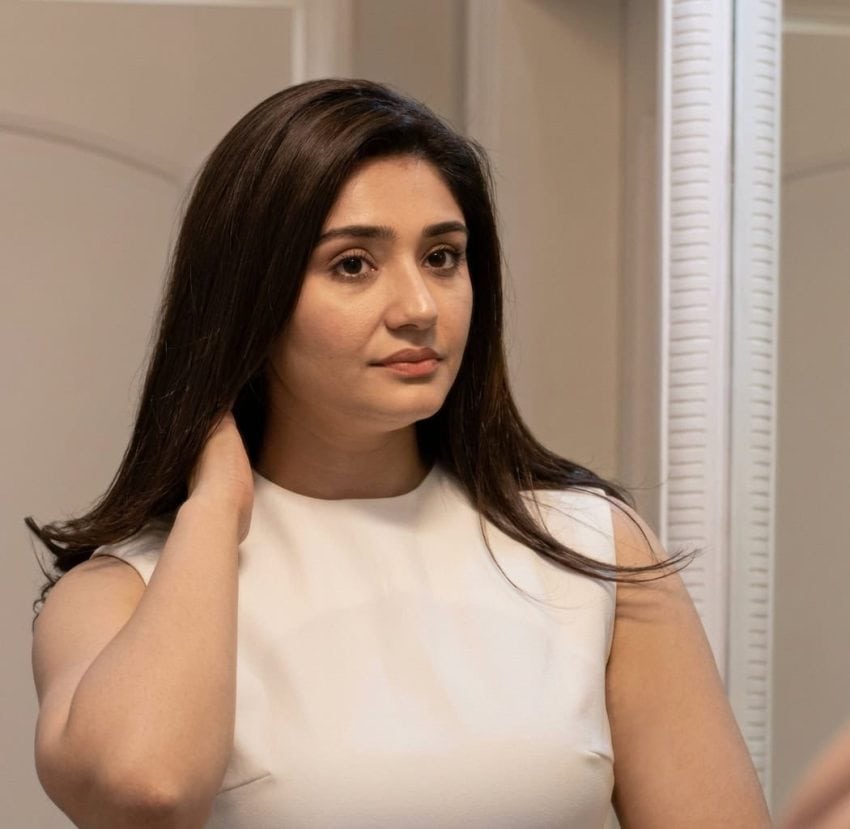
With their relationship developing into mutual affection, audiences have been closely following the couple’s emotional journey. However, the drama’s latest episode has triggered a controversy that extends far beyond their romance. The controversy erupted after Zaryab attended her sister’s baby shower and expressed discomfort with wearing a sleeveless dress.
Having grown up in liberal household and previously used to Western fashion, Zaryab’s sudden reluctance to wear revealing outfit surprised many viewers. The character, who has been gradually exploring deeper understanding of modesty, decides against dress because it no longer aligns with her personal comfort.
While the sequence was seemingly intended to highlight her changing outlook on life, it immediately drew mixed reactions. Some viewers welcomed the scene as an example of a woman independently redefining her lifestyle through faith. Others were less impressed, questioning why Pakistani dramas frequently portray spiritual development through changes in women’s clothing.
For critics, the problem was not Zaryab’s decision itself but the suggestion that covering more of one’s body necessarily signifies moral improvement. The debate quickly intensified, with viewers questioning whether the scene celebrated a woman’s freedom or reinforced conventional expectations about how religious women should dress.
Fans Question Zaryab’s Transformation
Social media users questioned how a woman raised in a modern environment, who had worn Western outfits throughout her life, could suddenly undergo such a significant transformation within a relatively short period.
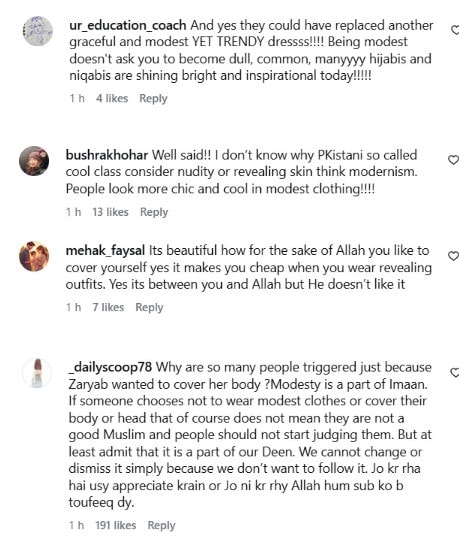
The viewer called it exaggerated and difficult to reconcile with the character’s established personality. Another social media reaction suggested that the scene was unnecessary, particularly given Zaryab’s liberal family background. The criticism shows concern among some drama enthusiasts that Pakistani television occasionally uses clothing as an overly simplified symbol of religious awakening.
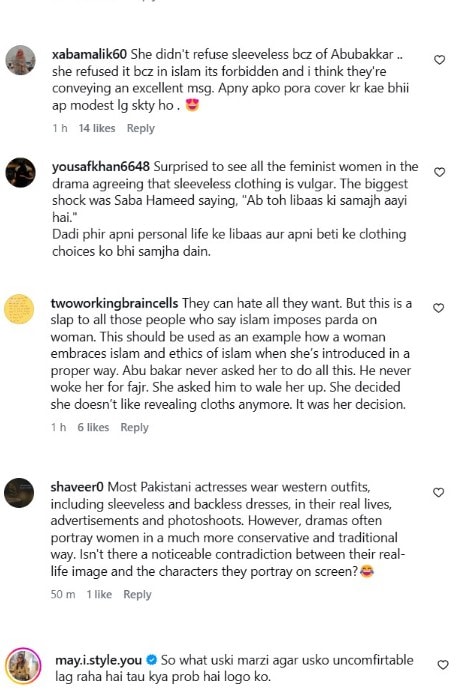
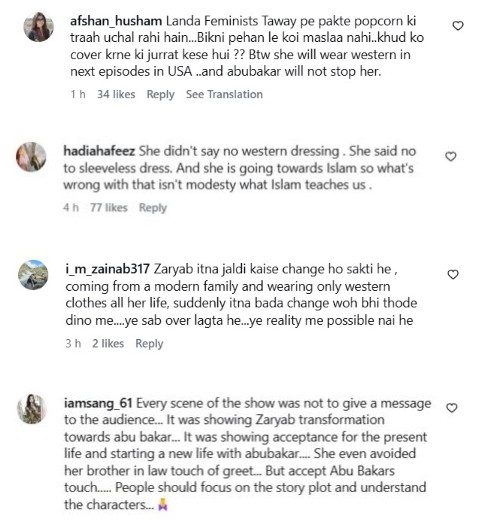
Others rejected argument that personal change must follow fixed timeline, pointing out that individuals can develop new beliefs and preferences after significant emotional or spiritual experiences.
Users argued that if women have the right to wear sleeveless outfits, they must have the same right to reject them without facing ridicule. Instagram user hadiahafeez stressed that Zaryab had not abandoned Western clothing entirely but had only chosen not to wear a sleeveless dress.
The users defended the moment as a reflection of the character’s growing religious understanding. Similarly, may.i.style.you questioned why anyone should object to Zaryab covering herself if she personally felt uncomfortable.
Several fans insisted that Zaryab’s changing appearance should not be interpreted as an attempt to please him. Fans even argued that the storyline demonstrates how religious transformation can develop through personal conviction rather than coercion.
Some social media users were surprise that characters associated with a progressive environment appeared to endorse the idea that sleeveless clothing was inappropriate. The viewer questioned whether the same standards of dressing were being applied to other women within the drama.
You will cry: This song by Shuja haider featuring Saba Qamar is what you need to play right now
About the Author