U.S. District Judge for the District of Colorado Charlotte Sweeney seemingly upended college sports with her filing on Friday.
In short, she granted an injunction against the NCAA that allows high school athletes who graduated in 2022, who’d previously exhausted their four years of eligibility, another year of eligibility based on the NCAA’s adoption of the five-for-five eligibility rule earlier this summer. And it’s being met with a mix of bemusement, optimism and acrimony.
“Definitely a cluster f—,” one football assistant coach told me. “Like assembling a plane at 30,000 feet.”
While on fire.
The five-for-five rule grants NCAA athletes an opportunity to play sports for five seasons in five years. The new rule starts the eligibility clock for high school athletes at age 19 or upon enrolling at university — whichever comes first. The five-for-five rule sought to eliminate redshirting and seek an end to the growing number of eligibility cases the NCAA faces from student-athletes who feel they’ve been unfairly restricted from play due to eligibility rules the NCAA has selectively enforced.
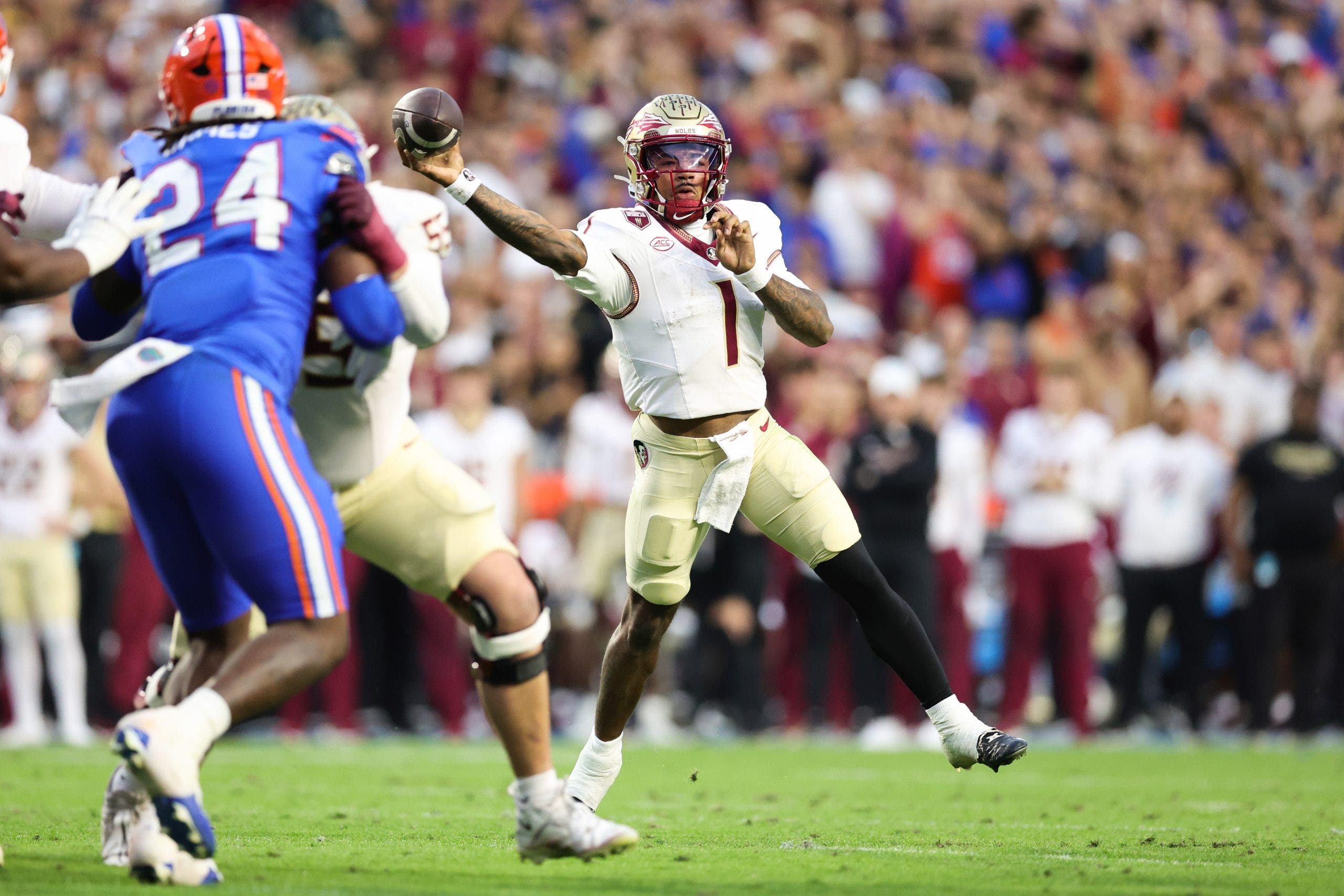
Former FSU QB Thomas Castellanos is reportedly exploring an NCAA return following Friday’s court decision. (Photo by Megan Briggs/Getty Images)
Now, with preseason training camp beginning this week for most FBS teams, general managers have an opportunity to add depth and experience to their rosters. However, they cannot dip into the transfer portal to do it. Judge Sweeney clarified this in her order on Sunday.
“The Court’s order does not enjoin the operation of transfer rules,” Sweeney wrote. “As the plain language of the preliminary injunction order and this order make clear, the Court’s injunction concerns only the implementation of the Rule (as defined in the preliminary injunction order) and any Bylaw that prohibits Plaintiffs and Class Members from competing in a fifth season of collegiate athletics.”
This means that teams can add players to their roster who were on it last year and had not entered the transfer portal, but those teams cannot break the revenue-sharing cap or go over the 105-player roster cap to do it. Furthermore, players who were 20 years old or older at the start of their five-year clock remain ineligible. Still, the NCAA plans to fight Judge Sweeney’s injunction and warned programs about adding players from the 2022 class back to their teams.
“Schools and coaches must make their own independent decisions, but an injunction is intended to be short in duration, and the NCAA intends to appeal it on an expedited basis,” the NCAA wrote in a letter to its membership. It added Sweeney’s injunction “plainly lacks the authority to undermine the House injunction, which all of the plaintiffs in the Colorado case are bound by, including the roster limits and revenue share cap.”
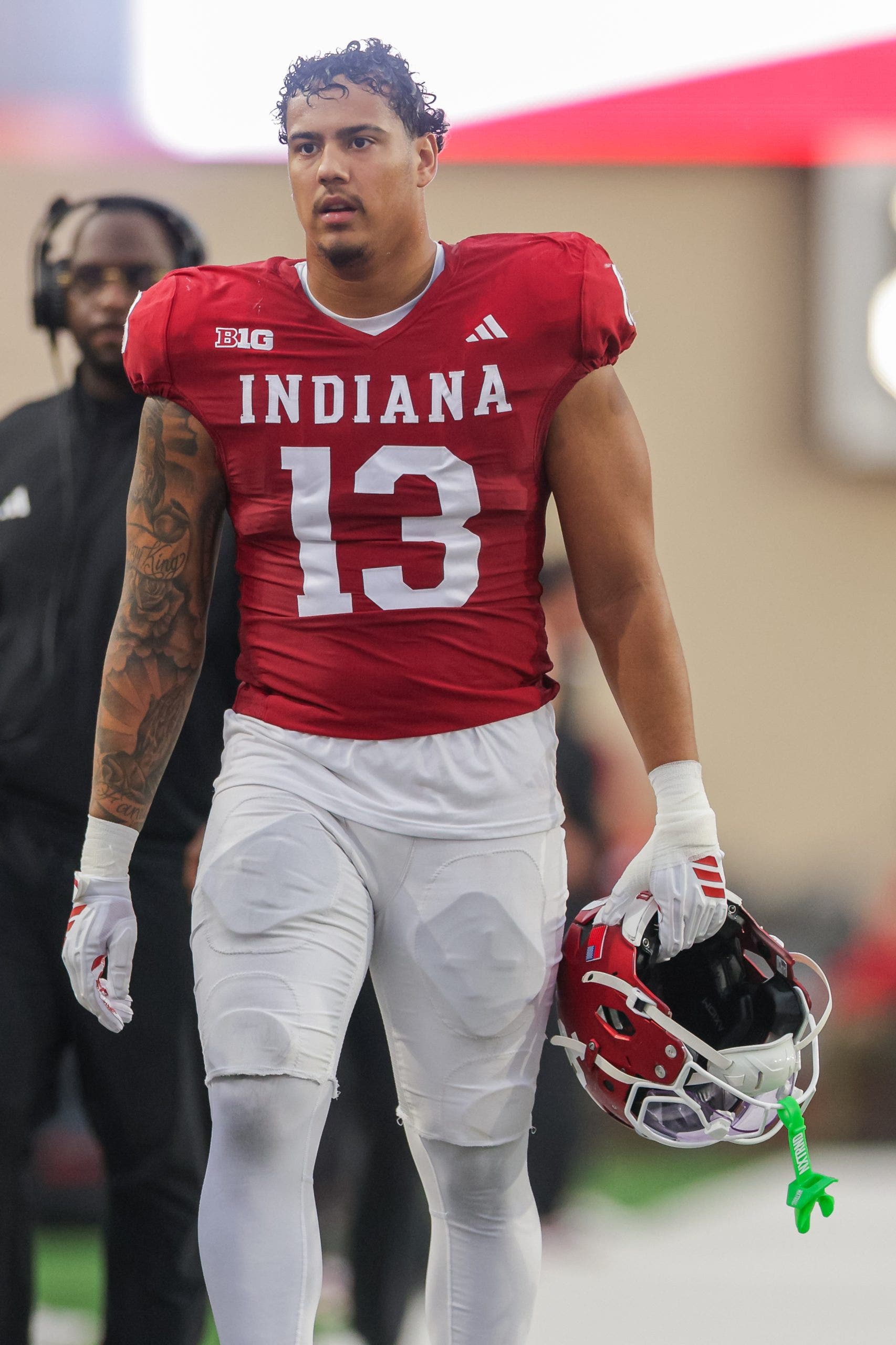
Reigning national champion Indiana could theoretically bring back linebacker Kellan Wyatt to their 2026 team if the Hoosiers have the roster and rev-cap space. (Photo by Michael Hickey/Getty Images)
However, that has not stopped both players and general managers from actively looking to engage with each other. For instance, reigning national champion Indiana could theoretically add linebacker Kellan Wyatt and defensive end Stephen Daley to its 2026 team if the Hoosiers have the roster and revenue cap space. If they did, they’d return 99 games of experience, including 65 starts.
“Par for the course this season,” an FBS general manager told me. “It’s been a year making it up as we go along.”
The 2026 offseason has certainly felt that way. Following the crowning of a national champion, Congress has drafted two separate bills attempting to save college football from itself, while local judges and at least one federal one have provided injunctions and temporary restraining orders against the NCAA for players seeking a year of eligibility. The NCAA’s remedy, five-for-five, hasn’t survived two months without an unintended consequence, and the nature of college football players has never been more different.
To wit: Players are suing to continue playing college football when, 20 years ago, Maurice Clarett was suing to get out of college football and all for one reason: money. No player was interested in playing a fourth — let alone fifth — year of college football until 2021, when it became clear that there was not just money but lots of money to be made playing the game, especially if players know the NFL believes they’re not good enough to play in its league.
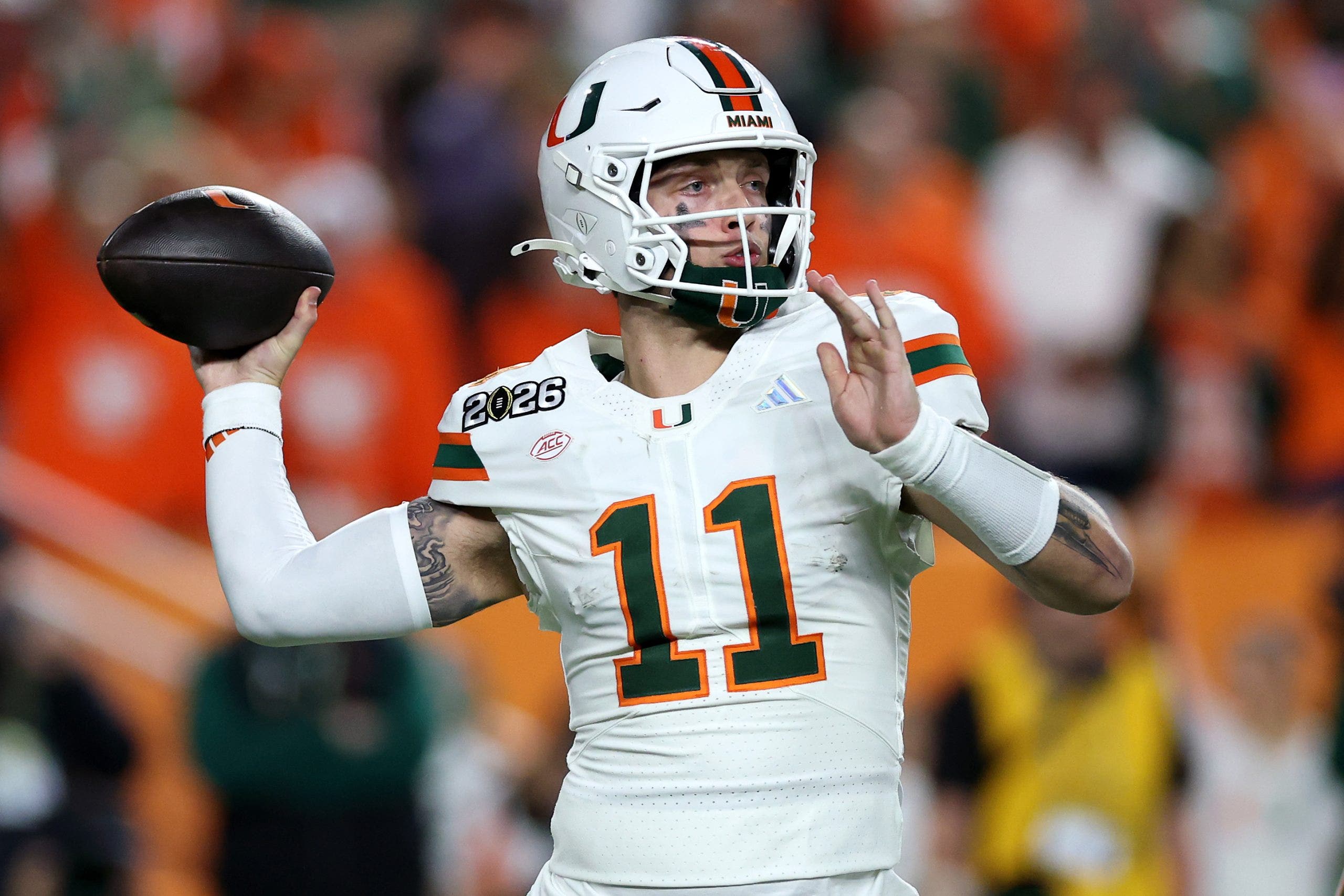
Former Miami (Fla.) QB Carson Beck is projected to earn less as a rookie in the NFL than he did in his last season of college football on an NIL deal. (Photo by Patrick Smith/Getty Images)
2022 high school seniors under contract in the NFL are ineligible to play college football under Sweeney’s order. Some might still want to, though. In some cases, a veteran college football player can make more and is worth more to his team in college than in the NFL.
Former Miami Hurricanes quarterback Carson Beck will make less as a rookie in the NFL than he did in his last season of college football on an NIL deal. Skilled labor is hard to come by in college because the nature of the sport is so transitive. Yet, there are more players to try to make college last longer because they know the NFL does not value them as much or, in some cases, at all.
Former Texas offensive lineman Connor Hutson sued the NCAA for the chance to return to the Forty Acres only when he attended rookie mini camps with the Dallas Cowboys and Cleveland Browns and left without being offered a contract. However, he played 48 games with 23 starts for Steve Sarkisian’s Longhorns and could likely help this 2026 offensive line both on the field and at practice. He has value for them.
“But should he?” isn’t a question the sport is concerned with. When Indiana wins the national title, and Texas doesn’t even qualify for the College Football Playoff, ethics in sport might well take a backseat to the cult of championships.
College Football Related Stories
About the Author