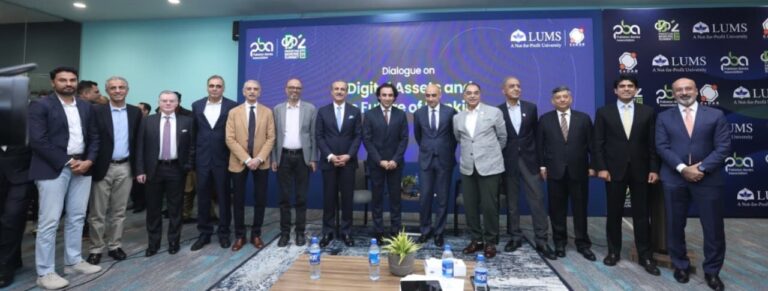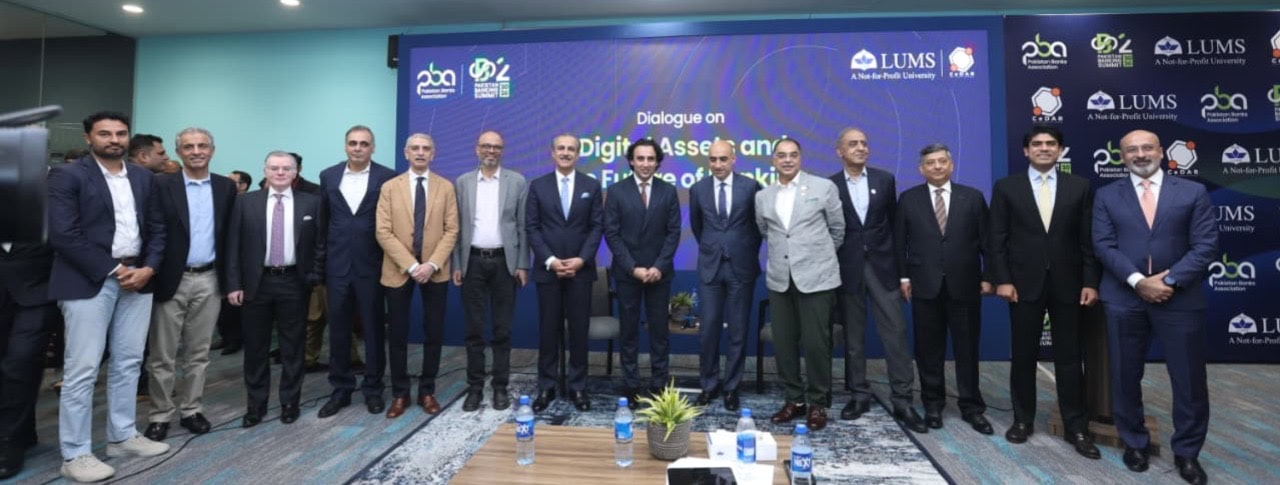
LAHORE – The Pakistan Banks Association (PBA), in collaboration with the Centre for Digital Asset Research (CeDAR) at LUMS, convened the “Dialogue on Digital Assets and the Future of Banking,” bringing together the Ministry of Finance, Pakistan Virtual Assets Regulatory Authority (PVARA), State Bank of Pakistan (SBP), Securities and Exchange Commission of Pakistan (SECP), banking industry leaders and international experts.
Held in continuation of the Pakistan Banking Summit 2026, the Dialogue explored the banking sector’s role in advancing digital finance through responsible innovation, regulatory coordination and institutional preparedness. Discussions focused on cross-border payments, tokenisation, programmable payments and the practical application of emerging technologies within Pakistan’s financial ecosystem.
The Dialogue featured Senator Muhammad Aurangzeb, Federal Minister for Finance and Revenue, as Chief Guest, alongside Bilal Bin Saqib, Minister of State and Chairman, PVARA; Saleem Ullah, Deputy Governor, SBP; Imtiaz Haider, Commissioner, SECP; and Umar Farooq, Global Co-Head of Payments, J.P. Morgan, as keynote speakers, along with other industry leaders and international experts.
Addressing the Dialogue, Senator Muhammad Aurangzeb highlighted the government’s exploration of tokenising Pakistan’s existing Eurobond debt, subject to necessary approvals. He emphasised the importance of collaboration between banks, regulators and technology practitioners to develop practical digital finance solutions aligned with national economic priorities, supported by strong risk management and cybersecurity safeguards.
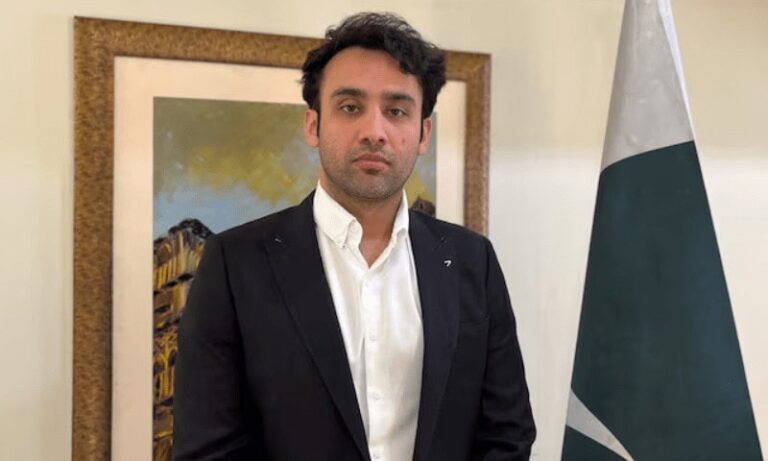
Bilal Bin Saqib, Minister of State and Chairman, PVARA,said Pakistan should help build the new financial infrastructure now taking shape. “When the world’s correspondent banking arrangements and major payment networks were taking shape, Pakistan was largely a user of systems designed elsewhere, rather than an architect of those systems. Today, the rules of finance are evolving again. The question before Pakistan is simple: do we want to keep renting our future, or do we want to help build and own it?” He called on banks to become launchpads for innovators, to invest in AI capabilities and to strengthen collaboration with universities such as LUMS. He also identified supervised, bank-led payment arrangements involving major Gulf remittance corridors as an opportunity worthy of examination, subject to regulatory coordination and appropriate safeguards.
Saleem Ullah, Deputy Governor, SBP, stressed the need to prioritise practical use cases over technology itself, identifying blockchain-enabled remittances and Roshan Digital Accounts as areas worth exploring in Sandbox. He underscored the importance of assessing and mitigating risks, including monetary and financial stability, cybersecurity, AML/KYC compliance and consumer trust, encouraging banks to test relevant solutions through SBP’s regulatory sandbox.
Imtiaz Haider, Commissioner, SECP, emphasised the need for a clear, value-driven approach to tokenisation. He urged industry stakeholders and regulators to assess who stands to benefit, identify regulatory gaps and evaluate Pakistan’s readiness to adopt emerging technologies. He stressed that the fundamental question is not how assets can be tokenised, but which assets should be tokenised to deliver meaningful economic value.
Zafar Masud, Chairman, PBA, said, “Pakistan’s banks are not asking to be protected from this change. We are asking for clear regulatory standards that we can build towards. As the ultimate delivery channel, banks must be formally engaged from the outset, particularly while the regulatory framework is being developed. The industry brings the infrastructure, compliance capabilities and public trust needed to translate innovation into practical financial solutions. This Dialogue marks an important step towards developing a coordinated industry position for engagement with SBP, SECP and PVARA.”
Dr Ali Cheema, Vice Chancellor, LUMS, highlighted the importance of connecting research, policy and industry practice to assess emerging opportunities, address implementation challenges and build the capabilities required for the future of digital finance.
The Dialogue also featured a focused industry workshop led by Umar Farooq of J.P. Morgan, bringing together banking technology leaders, regulators and academia to identify priority use cases, potential pilots and implementation considerations.
The discussions will help shape a coordinated banking industry perspective and a potential roadmap for continued engagement with policymakers and regulators, supporting Pakistan’s transition towards a responsible, innovative and future-ready financial ecosystem.
Web Desk
About the Author