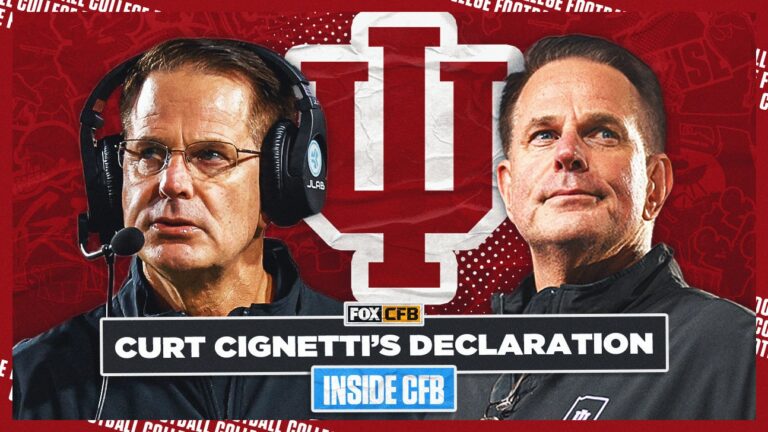
He’s at it again, folks.
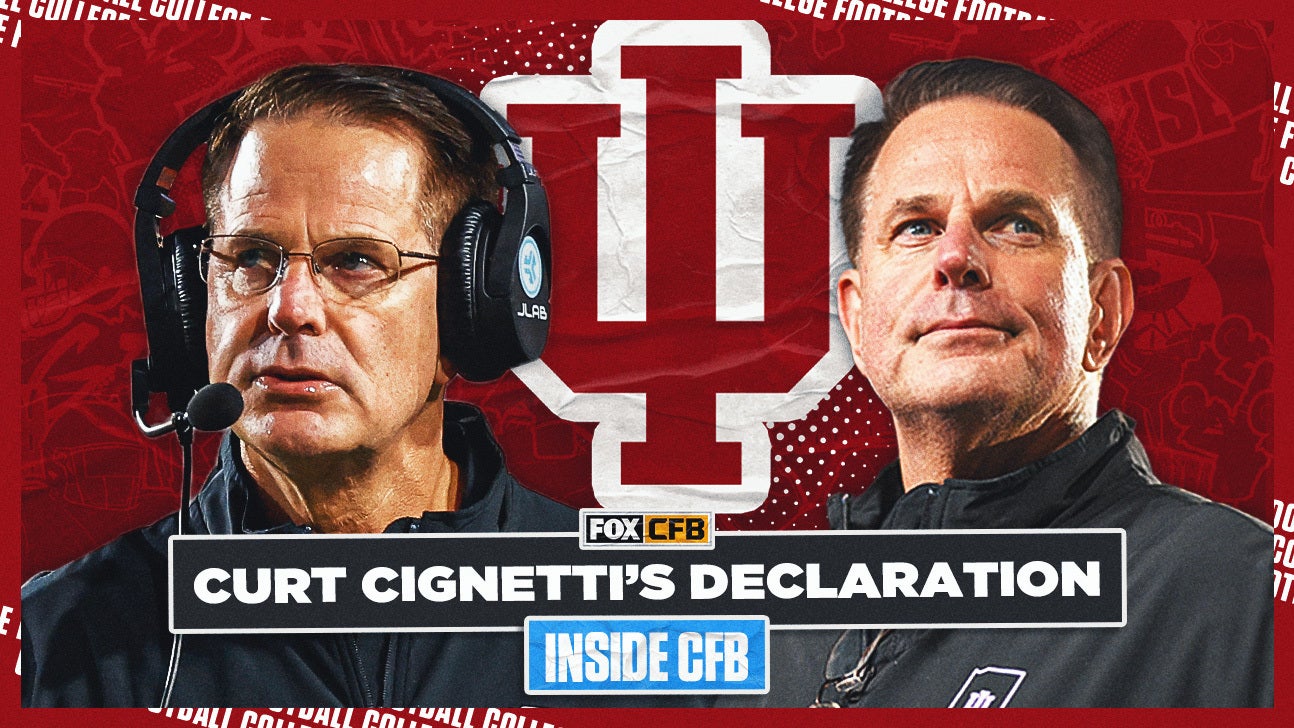
At 6:42 a.m. EST Monday, just in time for morning radio hosts and sports TV shows to solidify their rundowns, Indiana head coach Curt Cignetti pressed send on the kind of social media post that gets the attention of folks like you and me.
“Lincoln Riley critics CLUELESS. Blind squirrel can see what he is building.”
You’ll remember, Indiana beat USC handily last Saturday in Bloomington, giving the Hoosiers their first ranked win this season.
Cignetti hit send on this post one day before the third set of College Football Playoff rankings were revealed, stirring the pot and perhaps making the mistake of assuming sarcasm translates in print — it doesn’t. But he also, we can assume, hoped to give the committee something more to think about heading into deliberations.
It’s not a bad strategy.
For Cignetti, the play — or in this case, the post on X — makes sense for three reasons:
- Leaving USC ranked in the top 25 helps Indiana’s strength of schedule argument.
- College football coaches love to tell us who knows football and who doesn’t.
- Cignetti’s words carry as much weight as the defending national champion head coach’s opinion should.
But he didn’t stop at a social media post. On Monday, he stood at the podium, with an Indiana banner behind him, and made sure his declaration was heard loud and clear.
“Well, you know, we don’t play anybody,” Cignetti told reporters. “We have a soft schedule, right? That’s all I’ve heard around here for three years because people love to discredit us and what we’ve accomplished.”
Then, after highlighting wins over Northwestern (2-0 at the time), and Nebraska (5-0 at the time), Cignetti touched on the program’s lone loss this season — Ohio State.
“You saw what happened. We knocked the quarterback out,” Cignetti said. “We ripped the heart out of that team. They haven’t been the same since without the quarterback. But all I hear about is how we lost to a three-loss team. That was a team picked to win a national championship that led Texas 95% of the game at Texas. We missed a layup. You know what? They won; we didn’t. But we missed a layup. You know, that’s why we’re not 26-0, we’re 25-1.”
Picking on Ohio State and then giving the “woulda-coulda-shoulda” isn’t a great look for a program one win away from earning a chance to defend its Big Ten championship. Perhaps that’s why when it comes to head coaches writing letters to the editors at the podium, things begin to feel icky, yucky and even dirty, almost like a political ad in the middle of a college football game.
But remember this, coach: the scoreboard isn’t qualitative. It’s quantitative. And, frankly, it’s where your work is best reflected, your argument is won and our attention to your program is kept.
By all means, keep talking about who you played, what they did or didn’t do, and how the rest of us are just wrong. It worked last year. No reason it can’t again this year.
If Cignetti is enriching himself and his team by influencing the suits that make up the CFP selection committee, so be it. The list of coaches who have used television and digital platforms to stump for their teams’ invitation to the CFP gets longer each year. That’s one of the unintended consequences of extending the playoff from four to 12 teams.
But this feels beneath Cignetti, who has proven to be an elite college football coach. I get it, though. Wouldn’t it get under your skin to hear people who don’t know your team nearly as well as you do tell you how good or bad it is, without giving much consideration to your perspective? It’s why the CFP committee will never get it right in the moment. It will always have to take its victory in hindsight, when the games are compelling, the matchups feel right and the national champion is finally crowned.
By now, we know this. We’ve been at this for 12 years. What’s remarkable, though, is that football coaches don’t. They’re so accustomed to controlling their own fate that the idea of surrendering that authority to a committee — of accepting that their playoff destinies rest in the hands of a group rather than a single individual — remains a difficult proposition for men accustomed to governing like monarchs.
The CFP empowers a selection committee to make decisions, but that won’t stop coaches from stumping for their teams and conferences. The question we have to answer is: Should we be listening? Maybe. But you’ve got two eyes, too. And I’m sure you leave your biases at the door when evaluating the 12 best teams in the sport.
College Football Related Stories
About the Author