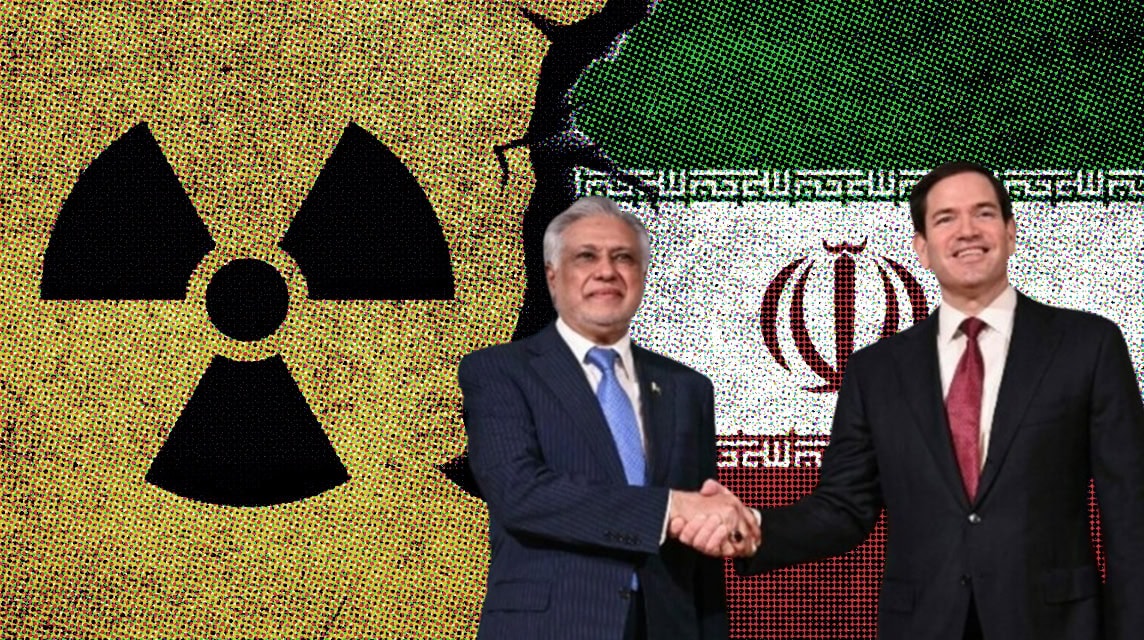
ISLAMABAD — Pakistan–US security ties have seen closer engagement in recent years, with Islamabad also positioning itself as diplomatic facilitator amid rising regional tensions. This evolving role fueled speculations after recent high-level contacts between Pakistani and US officials.
Recent unverified reports suggesting that Pakistan shared intelligence on Iran’s nuclear programme with US. Amid the buzz, Foreign Office strongly dismissed reports claiming that Deputy Prime Minister and Foreign Minister Ishaq Dar shared intelligence related to Iran’s nuclear programme with US Secretary of State Marco Rubio, calling the allegations “baseless and misleading.”
FO spokesperson Tahir Andrabi categorically rejected claims and said no such intelligence exchange took place during the recent diplomatic engagements. The spokesperson said Pakistan continues to support the ceasefire between Israel and Lebanon and remains actively engaged in efforts to de-escalate tensions across the Middle East.
He outlined series of high-level diplomatic contacts in recent weeks, noting that after returning from the US, Ishaq Dar remained in touch with Egypt’s foreign minister and later with Kuwait’s leadership. Meanwhile, Prime Minister Shehbaz Sharif also held a phone conversation with Iran’s president, reflecting continued engagement with key regional stakeholders.
The spokesperson confirmed that the premier recently undertook an official visit to China, where he held meetings with President Xi Jinping and Premier Li Qiang, underscoring Pakistan’s ongoing strategic dialogue with Beijing.
He further stated that Ishaq Dar also visited the US for United Nations-related engagements, meeting multiple global counterparts and UN officials on the sidelines. During these interactions, Dar also met US Secretary of State Marco Rubio, who, according to the Foreign Office, acknowledged Pakistan’s diplomatic and mediation efforts in regional matters.
The briefing also highlighted a joint statement issued by foreign ministers of eight Arab and Islamic countries condemning provocations at Al-Aqsa Mosque, reflecting growing concern across the Muslim world over developments in Jerusalem.
Turning to relations with the European Union, Andrabi said Pakistan maintains a constructive dialogue with Brussels and continues to show progress in the field of human rights, with regular reporting to relevant international institutions. He also noted that Afghanistan-related issues were discussed with the EU Special Representative, adding that the EU “understands Pakistan’s position.” According to him, Pakistan’s right to defend itself was also acknowledged during joint interactions with the EU delegation.
Pakistan ramps up Diplomatic Push to cool down tensions amid US–Iran clashes
About the Author