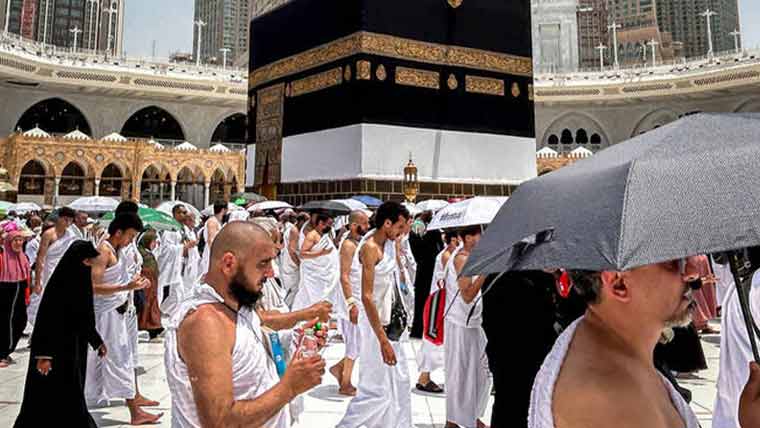
ISLAMABAD – The date for receiving applications under the government and private Hajj schemes for 2027 has been changed, with applications now set to open on August 18 instead of August 17.
According to reports, Hajj applications and payments can be submitted online or through designated branches of Habib Bank. Applications will be accepted on a first-come, first-served basis, and the process will be closed once the allocated quota is filled.
Pakistan’s total Hajj quota for 2027 has been set at 179,210 pilgrims. Of this, 60 per cent, or 107,526 seats, have been allocated to the government scheme, while the remaining 40 per cent, or 71,684 seats, will be available under the private scheme.
According to reports, Hajj expenses will be collected in two equal instalments, with applicants required to pay half of the total cost when submitting their applications.
This year, Habib Bank has been selected as the sole bank for receiving Hajj applications, instead of the 16 banks used previously. The decision has raised concerns about possible overcrowding when applications open under the first-come, first-served system.
Pilgrims will also be able to apply through the Pak Hajj app and website. Payments can be made through OneLink, PSID or credit cards. Applicants will also have the option of downloading a challan and paying the Hajj expenses in cash.
Overseas Pakistanis will also be able to submit their applications through the digital system.
Only pilgrims who have already registered will be eligible to apply under the government Hajj scheme. Applications will be accepted for both long and short Hajj packages.
A quota of 30,000 pilgrims has been allocated for the short Hajj package, while 77,526 seats have been reserved for the long package.
The short Hajj package will last between 20 and 25 days, while the long package will have a duration of 38 to 42 days.
The cost of the short government Hajj package has been set at Rs1.3 million, while the long package will cost Rs1.2 million.
For the first time, applications for the private Hajj scheme will also be received under government supervision. Pilgrims opting for the private scheme will likewise be able to make payments through OneLink, PSID or credit cards.
One per cent of Pakistan’s Hajj quota has been reserved for overseas Pakistanis holding POC cards, allowing 1,792 pilgrims to perform Hajj under the special allocation.
Sources said the digital system had been introduced to make the process of submitting Hajj applications and depositing payments easier and more convenient.
Web Desk
About the Author