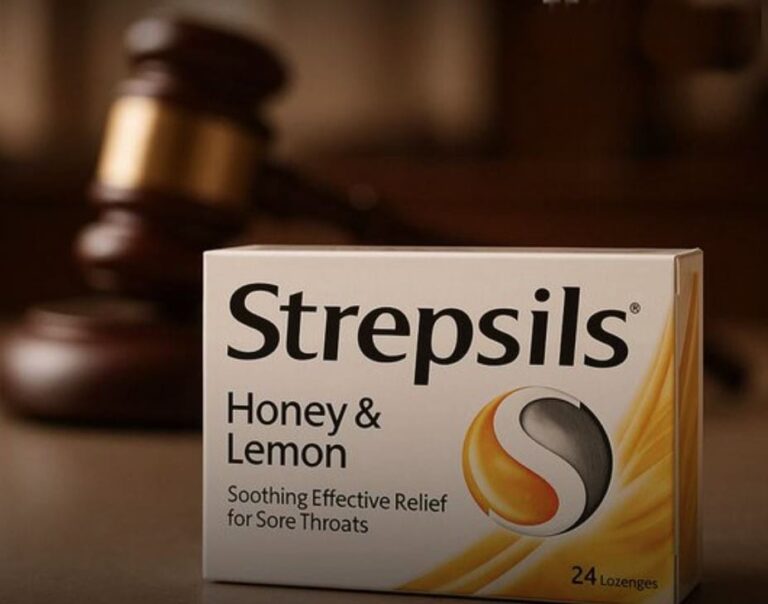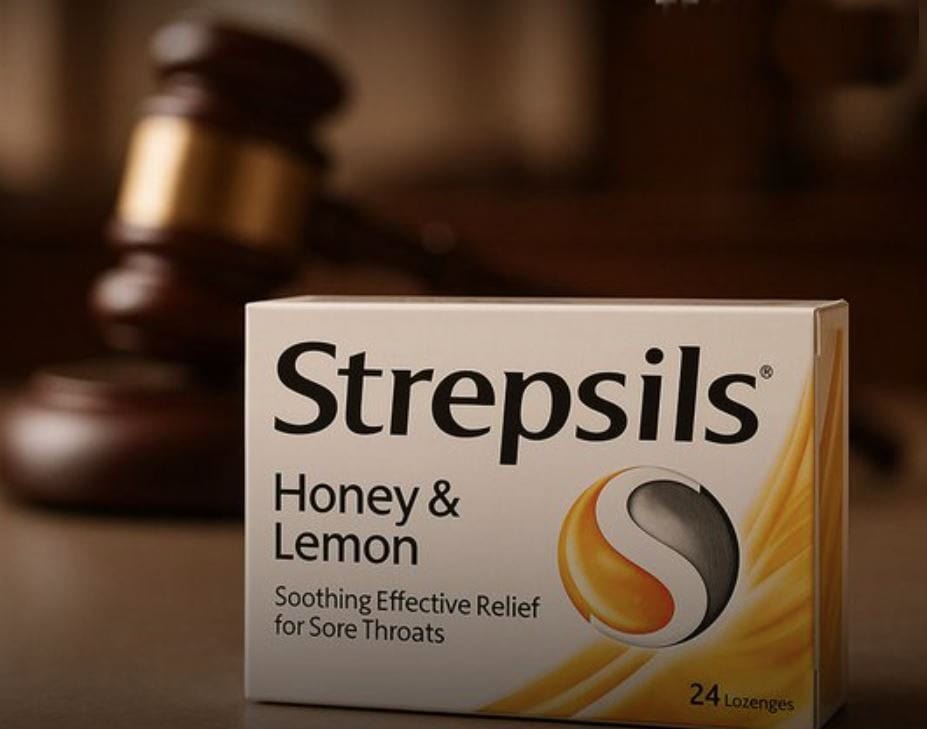
ISLAMABAD – Reckitt Benckiser ordered to pay Rs30 million as Competition Appellate Tribunal (CAT) upholds the Competition Commission of Pakistan (CCP) findings on Strepsils over misleading claims.
Competition Appellate Tribunal (CAT) upheld the decision against Reckitt Benckiser Pakistan Limited over its marketing of Strepsils, confirming Rs30 million penalty and compliance orders. The tribunal agreed that the company’s advertising created a misleading impression of the product as a medicinal treatment, despite its classification as a food item.
It further directed continued corrective advertising and clearer labelling to ensure consumers are not misled about the product’s true status. The tribunal confirmed a Rs. 30 million penalty and reinforced strict orders aimed at correcting what regulators described as misleading impressions created in the marketplace.
At centre of case is a key finding, the company violated Section 10(2)(b) of Competition Act, 2010 by presenting information that could mislead ordinary consumers about what Strepsils actually is. According to the ruling, the product was repeatedly portrayed in advertising and marketing in a way that made it appear like a medicine for sore throat relief, despite fact that it had already been deregistered as a drug and is currently classified as a food item.
The case originated from complaint by M/s Square Distribution & Marketing System (Pvt.) Ltd., which alleged that the brand’s marketing blurred an important regulatory distinction, effectively keeping a “medicinal aura” around a product that no longer falls under the drug category. That impression, the complainant argued, could influence consumer trust and buying decisions.
As the tribunal reviewed the matter, it highlighted noticeable shift in packaging that took place after CCP stepped in. The newer packaging, it observed, now clearly carries the words “Non-Medicated” in both English and Urdu, placed prominently on the front of the pack as well as on blister strips. This was a stark contrast to earlier versions, where such disclosures were far less visible or easily overlooked.
The judgment noted that these changes were not minor cosmetic updates but significant corrections in how the product is presented to the public. In fact, the tribunal pointed out that the revised packaging itself reflected a recognition that clearer, more transparent labelling was necessary once regulatory concerns were raised.
But consequences do not end with packaging changes. Under CCP’s enforcement directions, Reckitt Benckiser has also been ordered to launch corrective public notices in at least three widely circulated English and Urdu newspapers. These advertisements must explicitly clarify that Strepsils is no longer classified as a medicine but as a food product—and they cannot be a one-time exercise. They must continue on a weekly basis until full compliance is ensured.
CCP called ruling as firm message to the market, advertising cannot blur legal definitions or consumer understanding. Regulators said the case shows broader principle, consumers have right to know exactly what they are buying, without ambiguity, assumptions, or “medical-sounding” impressions influencing their choices.
About the Author