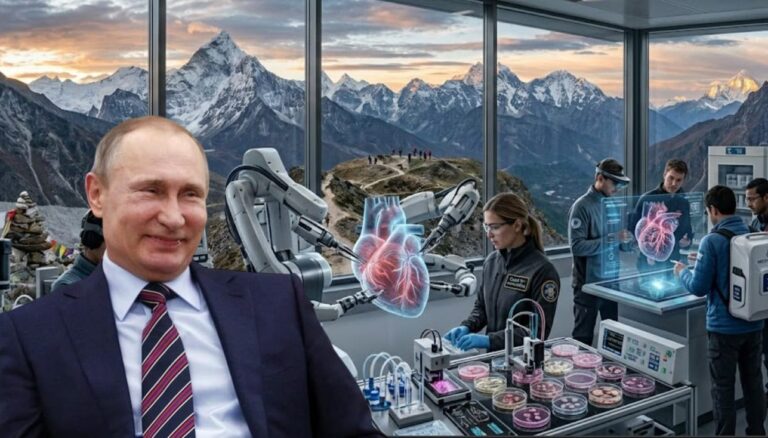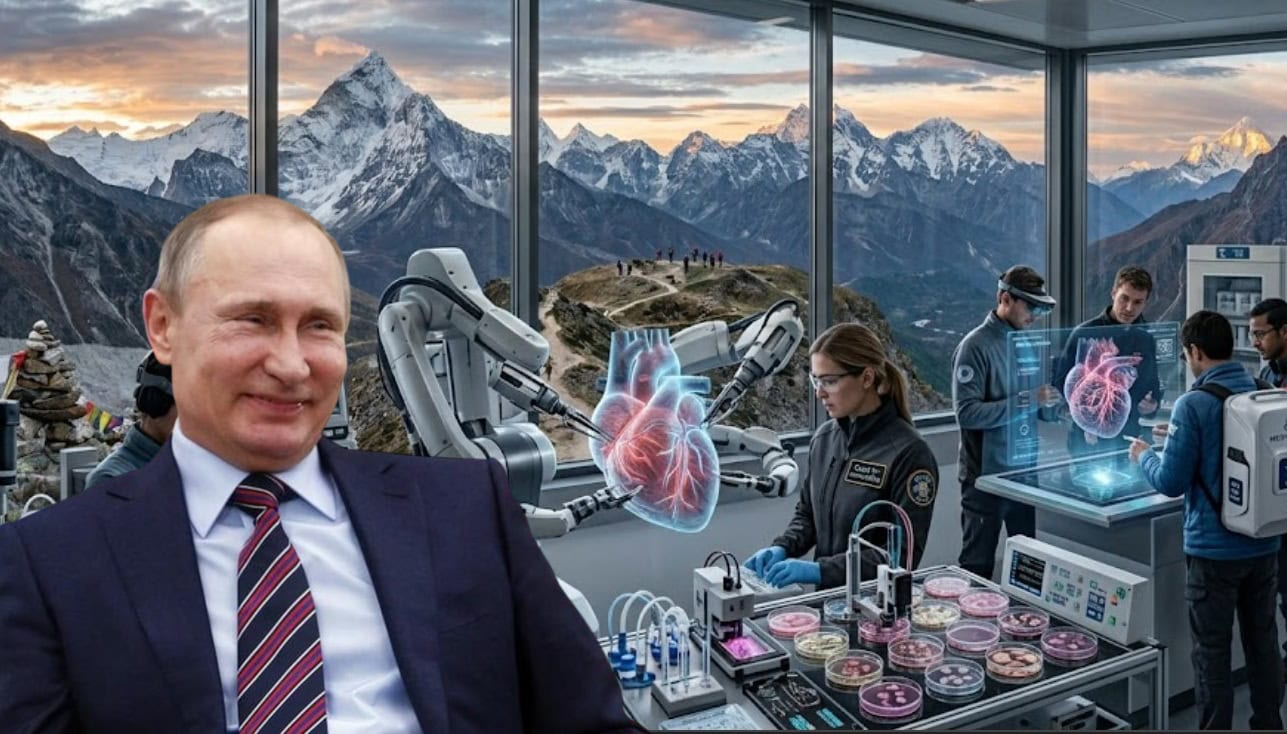
MOSCOW – Russian President Vladimir Putin is reportedly backing $26 billion scientific initiative aimed at pushing humanity toward something that sounds less like policy and more like extended life for himself, radical organ replacement, and, if you take the most enthusiastic interpretations at face value, something no less than ‘immortality’.
The new controversial project is being treated as state-level scientific priority in Kremlin, combining biotechnology, genetic engineering, and experimental medicine. The ambition is to make aging less of an inevitability and more of a technical glitch that can be patched.
The research allegedly spans everything from 3D bioprinting of human organs to growing biological tissues inside animals, along with genetic therapies designed to slow or reverse aging. Early experimental claims reportedly include lab-produced biological samples such as human cartilage and rat thyroid tissue, though independent scientific verification remains absent from peer-reviewed literature.
Some reports go further, suggesting an almost timeline in which full organ replacement systems for humans could become viable by the end of the decade. That would place the program somewhere between “highly ambitious biomedical research” and “science fiction with a procurement budget.”
The initiative is said to involve figures close to Russia’s scientific and political establishment, including endocrinologist Maria Vorontsova, often identified in reports as Putin’s daughter, and physicist Mikhail Kovalchuk, who has long expressed interest in advanced biological systems and the idea of repairing or rebuilding the human body through science.
Several Russian scientists quoted in critical coverage point out that there is little to no peer-reviewed evidence in major international journals supporting the more dramatic claims. In other words, while the science of organ regeneration is very real and progressing globally, the leap from lab research to engineered immortality still belongs firmly in the speculative category.
Still, the story has gained traction partly because of the way it intersects with long-running public perceptions of Putin himself, his emphasis on physical fitness, his curated image of endurance, and reported interest in wellness practices such as cryotherapy.
Add to that anecdotal claims that he once discussed life extension via organ replacement in a conversation with Chinese President Xi Jinping, and the narrative practically writes itself, even if the sourcing remains unverified.
Analysts suggest the broader framing is less about literal immortality and more about a convergence of scientific ambition, geopolitical competition, and the eternal human obsession with not aging out of relevance. Or, as the more sarcastic reading goes, if anyone was going to try turning biology into a long-term lease agreement, it was probably going to be a state project with a very serious budget.
Russian election 2024: Vladimir Putin re-elected for fifth term with big majority
About the Author