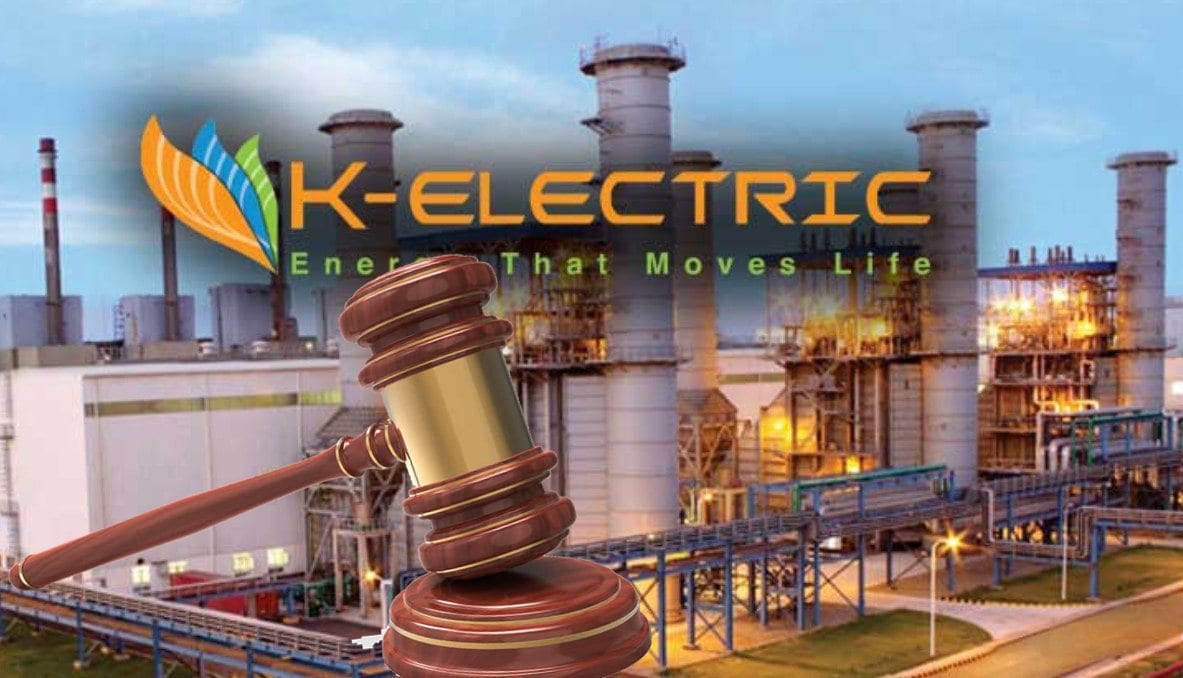
Karachi’s electric utility, K-Electric (KE), continues to face ongoing legal and regulatory challenges, and now City Court ordered K-Electric to pay Rs 13.5 million in compensation after holding the utility responsible for a devastating electrocution incident in which a man lost his life while bravely attempting to save a child.
Senior Civil Judge (Central) declared power utility negligent, ruling that electricity companies bear an “extraordinary responsibility” to ensure public safety. The court rejected arguments suggesting that the presence of other wires on electric poles could excuse the company from its duty of care.
The verdict stressed that safeguarding electricity transmission systems and public spaces is fundamentally the responsibility of K-Electric. It further observed that the existence of live electric current in poles installed in public areas itself stands as clear evidence of negligence.
The court also took firm stance on victim’s final act, saying the deceased’s attempt to rescue child could not be considered negligence. It noted that the law treats such life-saving efforts with leniency and respect rather than blame.
The court also ordered K-Electric to ensure payment of the compensation to the bereaved family within a maximum period of 90 days, bringing legal closure to a tragic case that highlighted serious concerns over public electrical safety.
K-Electric is facing increasing legal pressure in Karachi due to multiple electrocution-related lawsuits that accuse the company of negligence in maintaining its power infrastructure, especially during monsoon rains when exposed wires and damaged poles often become hazardous.
Courts repeatedly ruled against KE in several notable cases. These include compensation orders such as Rs 13.5 million (2026) for a man who died while trying to help a child during rainfall, Rs 4.8 million (2024) for the death of an 8-year-old due to fallen live wires, Rs 50.6 million (2026) in a father-son electrocution case, and Rs 9.2 million (2023) for injuries caused by a pole-mounted transformer.
In many cases, courts rejected KE’s claims that municipal bodies, illegal connections, or third-party wiring were responsible, emphasizing its legal duty to ensure public safety.
Poor maintenance of aging infrastructure heightened risks during heavy rain as key factors behind these incidents. As a result, courts often treat exposed live electricity in public areas as strong evidence of negligence.
Beyond electrocution cases, KE also faces disputes over billing, service issues, and regulatory fines from NEPRA for safety and operational failures.
K-Electric CEO booked after two brothers electrocuted during rain in Karachi
News Desk
About the Author