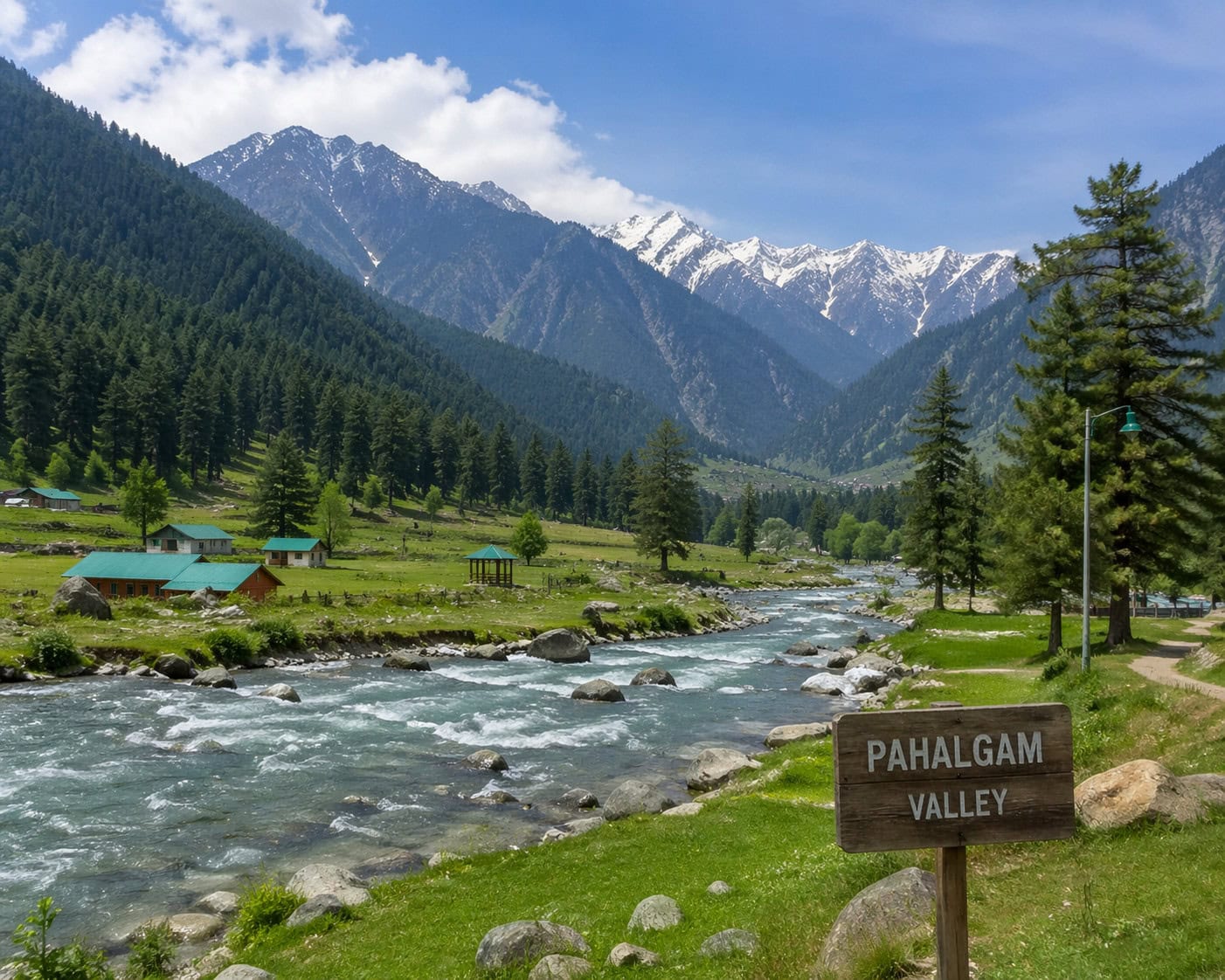
A year ago, families were having lunch in a valley famous for its stillness. By evening, some of them were dead. And today, twelve months later, nobody in India’s security establishment has lost so much as a posting over it.
Think about that for a moment.
Over 700,000 Indian troops are stationed in Kashmir. It is not a lightly guarded picnic ground. It is one of the most watched, most monitored, most militarised patches of land anywhere on the planet. And yet gunmen came, killed, and left. No interception. No pursuit worth speaking of. No one caught. And in the year since, not one senior official has been questioned publicly, transferred in disgrace, or made to stand before any kind of inquiry. The Tribune, an Indian newspaper with no particular sympathy for Islamabad, found this worth asking about. The government in New Delhi, apparently, did not.
This is where the story starts to feel less like a tragedy and more like something else entirely.
India has form here. That is not a Pakistani talking point. It is an observable pattern that anyone following South Asian politics over the past decade has had ample opportunity to study. Uri happened in 2016. The BJP needed an uplift heading into Uttar Pradesh. What followed was a surgical strike, blanket television coverage of a nationalism that practically packaged itself, and an election result that satisfied. Pulwama arrived in 2019 at a moment when the Rafale deal was generating serious domestic embarrassment and Modi was facing a genuinely uncertain general election. What followed was Balakot, a second majority, and the quiet burial of every inconvenient question that had been building for months.
Pahalgam in 2025 carries the same smell. Bihar polls are on the horizon. The economic narrative the government has been pushing, the growth figures, the vibrancy, the global ambition, is wearing thin for ordinary people who are not feeling any of it. And then, right on cue, a beautiful valley runs red, and Pakistan is named before the bodies are even counted.
The FIRs were filed with a speed that serious investigators find puzzling. When an attack genuinely catches a state off guard, the paperwork is messy and slow. Witnesses are confused. Accounts conflict. Bureaucracies scramble. Here, everything moved with the smoothness of a rehearsed process. That detail has not received the attention it deserves.
Then came Pakistan’s offer of a joint investigation. Transparent, formal, open to international observers. It is worth sitting with that for a second, because it is genuinely strange behaviour for a guilty party. Countries that carry out attacks do not typically volunteer to be examined. They deflect, delay, and deny. Pakistan put its hand up and said look at us, look at the evidence, let us do this together. India said no. The official explanation was that Pakistan was playing games. But if you have a watertight case and your accused is asking to be investigated, refusing that examination is an odd way to demonstrate your confidence.
The rest of the world seems to have noticed the oddness. Post-Pulwama, a number of governments were willing to take New Delhi’s version at face value, at least publicly. This time, the response was more careful. The credulous nods were fewer. The quiet scepticism was more visible. Something has shifted in how the international community reads these episodes, and India’s government does not appear to have registered that shift.
None of this is abstract. The stakes in this part of the world are not theoretical. After Pulwama, two nuclear-armed states came close enough to direct military confrontation that several foreign governments made urgent behind-the-scenes phone calls to prevent an escalation that neither side could fully control once it began. Pahalgam has again raised temperatures. Again, put two armies on edge. Again created the conditions for a miscalculation that would not be measured in political points but in something far worse.
The people who died in Pahalgam were not soldiers. They were not combatants in anybody’s war. They were tourists, ordinary people who had gone to one of the more quietly gorgeous places on earth for a few days of peace. They had families waiting. They had return tickets. They deserved a genuine investigation, an honest account of how a security apparatus of that size and cost failed to protect them, and if possible, justice.
Instead, they got a political campaign.
The officials whose negligence, deliberate or otherwise, left that valley unprotected are still in their jobs. The investigation that might have established the truth was turned away before it started. The questions that The Tribune and others have raised hang in the air, unanswered and largely ignored by the people with the power to answer them.
When a government refuses scrutiny this consistently and this completely, it is usually because scrutiny would cost it something it is not prepared to lose.
Pahalgam is not resolved. It is buried. And there is a difference.
Asma Bangash
About the Author