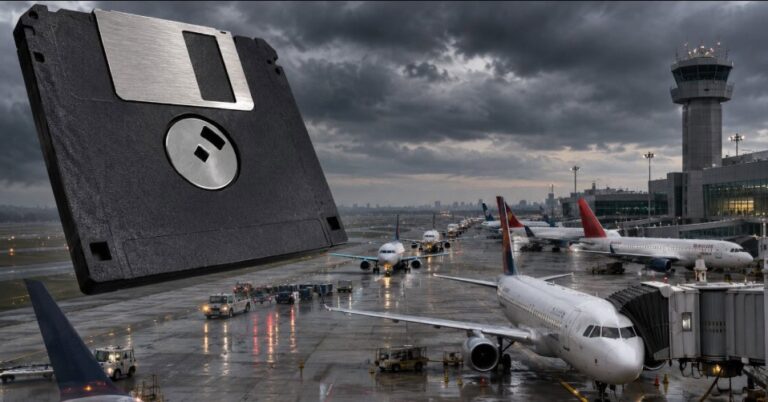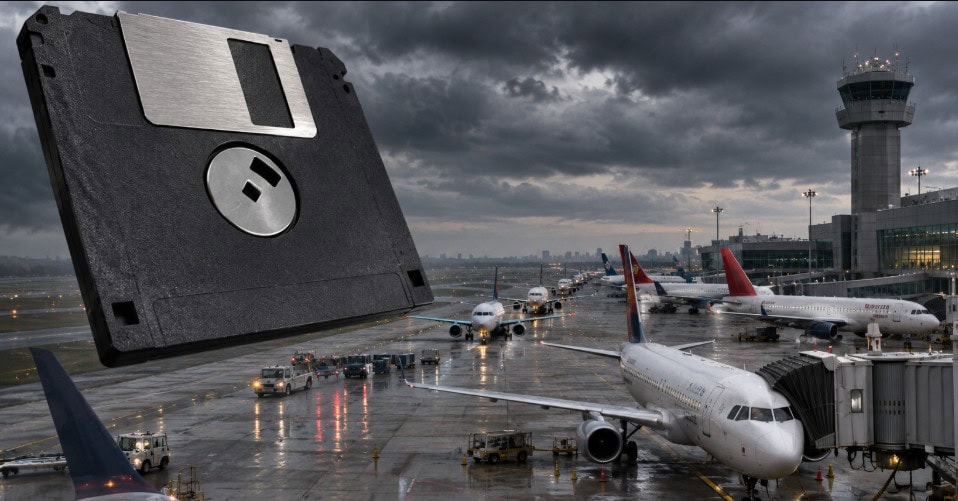
WASHINGTON – US aviation sector hits by massive disruption this weekend with more than 15,000 flights affected. American air traffic controllers are still working with decades-old technology, including equipment dating back to the 1980s and computer systems that continue to use floppy disks.
The massive disruption brought departing flights across the country to halt for nearly five hours, leaving tens of thousands of passengers stranded and airlines struggling to recover from one of the most serious aviation breakdowns in recent history.
What initially appeared to be temporary technical failure now turned into major controversy over Federal Aviation Administration’s (FAA) aging infrastructure, with senior US officials warning that the country risks further nationwide disruptions unless its air traffic control network undergoes a complete overhaul.
The incident marked the longest nationwide ground stop since the September 11, 2001 terrorist attacks, although a shorter nationwide suspension also occurred in January 2023. Aircraft already airborne were allowed to continue their journeys and land safely, but departures were temporarily suspended across the country.
The resulting chaos spread through major airports as airlines faced a mounting backlog of grounded aircraft, disrupted schedules and stranded passengers.
America’s Air Traffic Control System under scrutiny
US Transportation Secretary Sean Duffy flagged outdated communications equipment as major factor behind nationwide breakdown. Aging telecommunications switches and routers became overloaded while handling large amounts of information, triggering unstable communications and inconsistent readings across parts of the air traffic control network.
Some equipment reportedly dates back to 1980s, with older systems continuing to depend on copper-based communications infrastructure and legacy telecommunications technology.
Perhaps most surprising revelation surrounding America’s aviation infrastructure is that FAA using floppy disks, a storage technology that disappeared from most modern workplaces years ago. Just days before the nationwide shutdown, the agency announced program to end floppy disks from legacy information display systems used at hundreds of air traffic control facilities.
The outdated technology remains associated with four older display systems, some developed during the 1980s. These systems use floppy disks to transfer weather reports and other operational information to screens used by air traffic controllers.
Despite their limited storage capacity and technological age, floppy disks have survived in specialized aviation environments because replacing older systems requires complex and carefully coordinated upgrades.
The malfunction affected infrastructure serving Air Route Traffic Control Centers and Terminal Radar Approach Control facilities, both essential components of the country’s aviation management system. Authorities suspended departures as a safety precaution rather than risk operating amid unreliable communications.
Interestingly, newer digital systems reportedly continued functioning, suggesting that the greatest vulnerabilities lay in the older infrastructure supporting the wider network.
As thousands of flights were grounded, speculation emerged about whether the disruption involved a cyberattack or an external security threat. US Homeland Security Secretary Markwayne Mullin rejected those possibilities, saying officials had found no evidence linking the incident to terrorism, artificial intelligence or malicious cyber activity.
He also dismissed suggestions that the disruption was connected to a separate global Microsoft outage. Instead, Mullin indicated that efforts to introduce new equipment and software updates into the FAA’s outdated systems had placed excessive pressure on existing infrastructure.
The combination of old hardware and ongoing modernization work reportedly overwhelmed components that were already struggling to meet contemporary operational requirements.
FAA launched replacement program intended to eliminate floppy disks and upgrade information display systems across the country. Under the initiative, older equipment will be replaced with the Enterprise Information Display System, commonly known as E-IDS.
The unprecedented flight disruption has intensified demands for a massive federal investment to rebuild America’s air traffic control system. In July 2025, Congress approved approximately $12.5 billion in initial funding for aviation infrastructure modernization.
US Air Travel paralyzed for hours as Nationwide ground stop Sparks Travel Chaos
About the Author