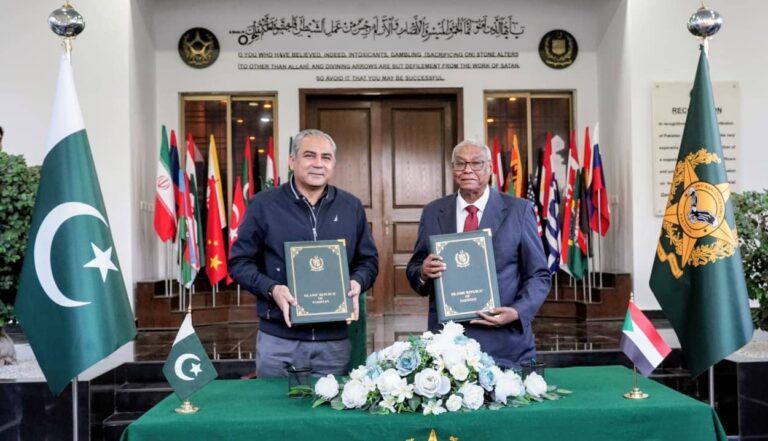
ISLAMABAD – Pakistan and Sudan inked landmark Visa-Free travel agreement to ease official travel between the two countries in another step toward stronger security cooperation and deeper bilateral ties.
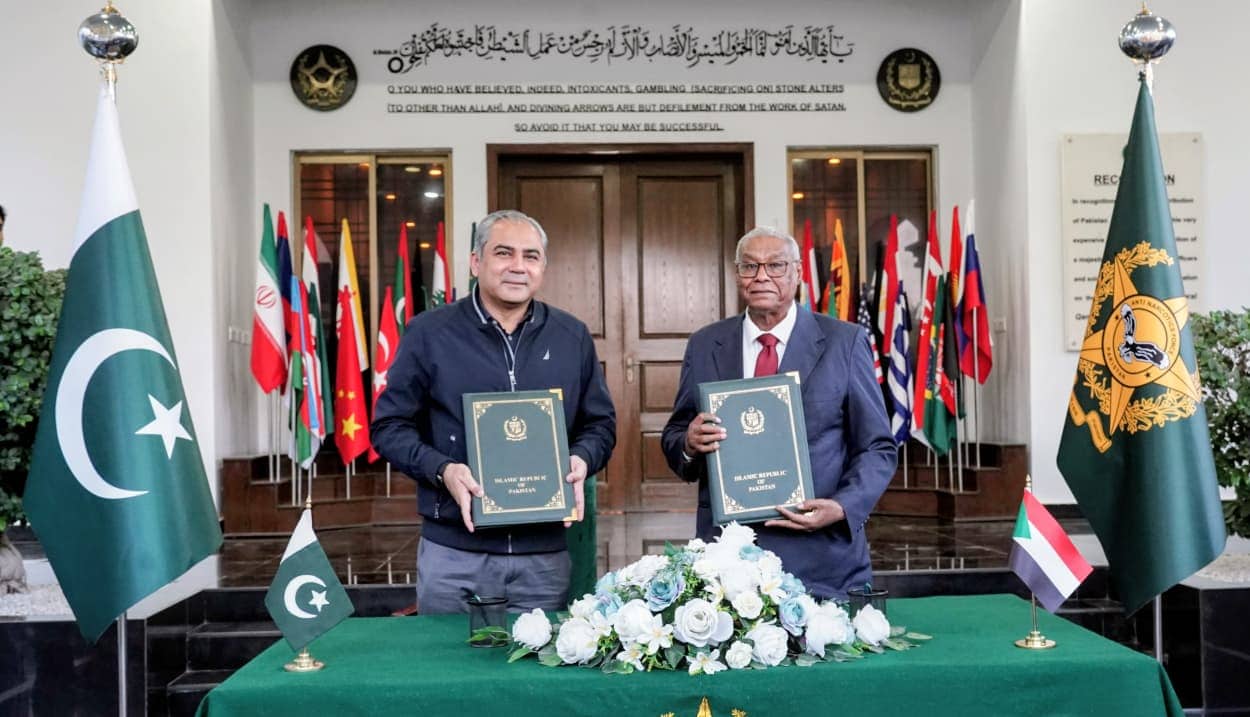
Federal Interior Minister Mohsin Naqvi and Sudanese counterpart, Lieutenant General Babaker Samra Mustafa Ali signed the agreement during a high-level visit focused on strengthening bilateral cooperation. Under new arrangement, Pakistani and Sudanese citizens holding diplomatic or official passports will be exempt from visa requirements when travelling between the two countries, making official visits and government-level exchanges more convenient.
سوڈان کے وزیر داخلہ لیفٹیننٹ جنرل بابکر سمرہ مصطفیٰ علی کی پاکستانی ہم منصب محسن نقوی اور وزیرمملکت طلال چوہدری سے ملاقات، وفود کی سطح پر مذاکرات https://t.co/j5DoM0LVkO
— Ministry of Interior GoP (@MOIofficialGoP) November 7, 2026
Both ministers hailed the development as a positive step in bilateral relations, expressing confidence that easier travel would encourage closer coordination between their governments.
Mohsin Naqvi said the agreement would help remove administrative barriers to official engagements and create fresh opportunities for cooperation in areas of shared interest.
The visa agreement was only one of several important outcomes of the Sudanese delegation’s visit, as both countries also agreed to strengthen cooperation in combating cybercrime, improving law enforcement capabilities and modernising government institutions.
Earlier, the Sudanese interior minister held talks with Mohsin Naqvi and Minister of State for Interior Talal Chaudhry, followed by detailed discussions between senior officials from both sides.
Both sides dicusssed broad range of issues, including internal security, police training, cybercrime investigations, identity management and institutional development.
Pakistan and Sudan agreed to pursue a Memorandum of Understanding (MoU) specifically dedicated to combating cybercrime. Sudanese minister conveyed his country’s interest in learning from Pakistan’s experience in investigating online offences and developing effective mechanisms to tackle emerging digital threats. Pakistan, in response, expressed its willingness to share relevant expertise and strengthen cooperation between the concerned institutions.
One of key highlights of discussions was Pakistan’s contribution to Sudan’s civil registration infrastructure through the National Database and Registration Authority (NADRA). Naqvi revealed that NADRA-supported systems had facilitated the issuance of millions of essential identity and civil registration documents in Sudan.
According to the interior minister, the initiative has resulted in the issuance of 36 million citizenship cards, 9 million national identity cards, 18 million birth certificates and 500,000 death certificates. The figures show scale of Pakistan’s technical involvement in Sudan’s documentation and population registration systems.
Naqvi assured the visiting delegation that NADRA was prepared to continue supporting Sudan in improving and expanding these services.
The high-level meeting also addressed a humanitarian concern affecting Sudanese women married to Pakistani citizens. During the discussions, the Sudanese interior minister drew attention to visa-related difficulties being experienced by these women and requested assistance from Pakistani authorities.
Responding promptly, Mohsin Naqvi directed the relevant departments to take immediate steps to resolve the complications and facilitate the affected families. The move shows importance both governments attached to addressing practical concerns affecting citizens with family connections across the two countries.
Reaffirming Pakistan’s commitment to its longstanding friendship with Sudan, Mohsin Naqvi offered Islamabad’s continued assistance in efforts aimed at restoring peace, promoting stability and supporting reconstruction in the African nation. Islamabad also expressed readiness to provide professional training to Sudanese police personnel, allowing them to benefit from the experience and expertise of Pakistani law enforcement institutions.
The interior minister further highlighted opportunities for Sudanese citizens to seek medical treatment in Pakistan, assuring the delegation that necessary facilitation would be provided in the healthcare sector.
Sudanese Interior Minister Lieutenant General Babaker Samra Mustafa Ali warmly acknowledged Pakistan’s support and described the country as a brotherly nation with which Sudan enjoys strong and friendly relations. He said his government placed considerable value on its partnership with Pakistan and wanted to further expand cooperation in security, technology, institutional development and other mutually beneficial fields.
Appreciating Pakistan’s willingness to share its expertise, the Sudanese minister thanked Mohsin Naqvi for the offers of assistance and reaffirmed his country’s commitment to strengthening bilateral relations.
About the Author