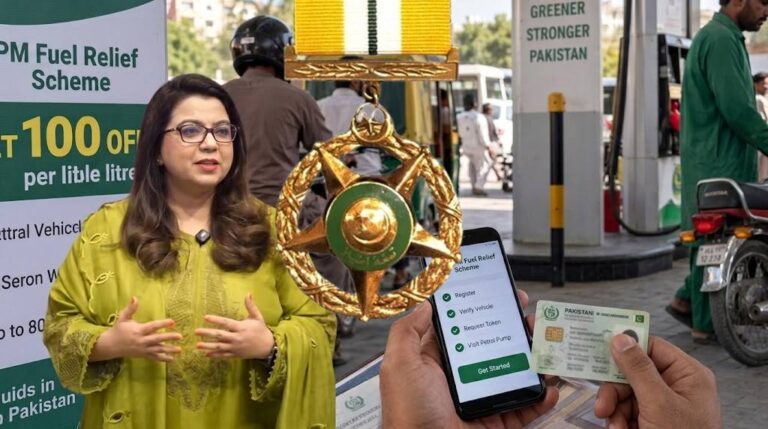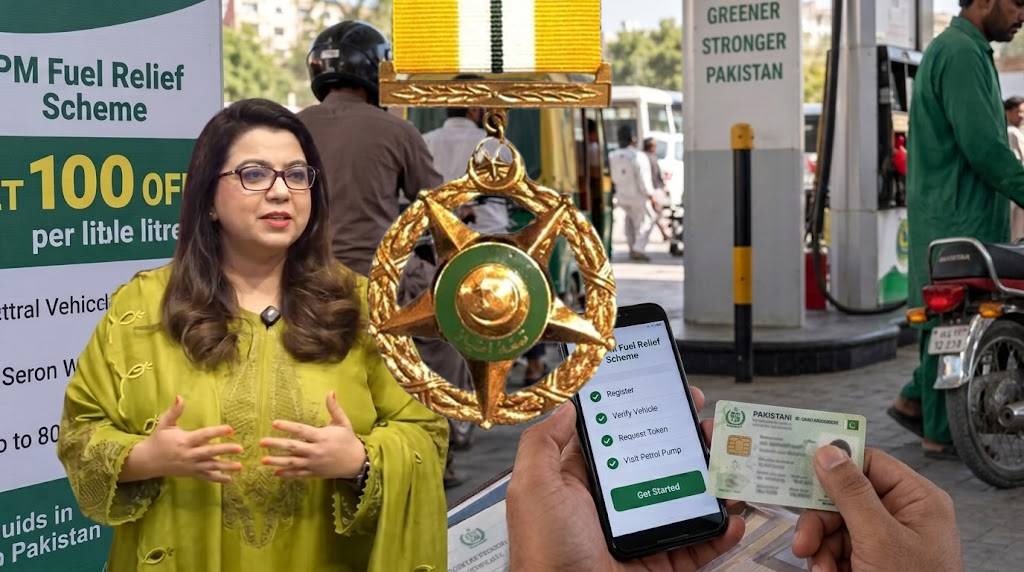
ISLAMABAD — Prime Minister Shehbaz Sharif hailed the success of the government’s Fuel Relief Scheme, announcing a national award for Federal Minister for Information Technology and Telecommunication Shaza Fatima Khawaja in recognition of her role in the programme’s digital implementation.
At a meeting reviewing the initiative, the premier praised federal and provincial teams for delivering relief to millions of motorists amid soaring international oil prices and regional tensions. He announced that Shaza Fatima would receive a national honour on March 23, Pakistan Day, and said shields would be awarded to other officials and team members involved in the scheme.
According to figures presented in PM statement, registrations exceeded 1 Core by October 9, while approximately 10.198 million vouchers had reportedly been redeemed. The total number of tokens issued was cited at around 21.7 million, although some reports placed the figure closer to 27 million.
Approximately 19.4 million tokens had reportedly been used to obtain subsidised petrol, while around 9.27 million users had obtained tokens more than once. Motorcyclists accounted for an estimated 96 per cent of beneficiaries.
The government puts the number of direct beneficiaries at more than 10 million. When their household members are included, the overall reach is estimated at approximately 50 million people, based on an average household size of five.
The figures show scale of the initiative, although the distinction between registrations, unique beneficiaries, issued tokens and redeemed vouchers remains important when assessing its actual reach.
Under the reported structure of the scheme, motorcycle, rickshaw and Qingqi users can receive weekly fuel-relief tokens worth Rs500, potentially adding up to Rs2,000 a month. Owners of cars with engine capacities of up to 800cc are eligible for a reported discount of Rs100 per litre on up to 10 litres every 10 days. This translates into a potential monthly benefit of approximately Rs3,000, depending on eligibility and actual usage.
The government initially imposed a five-litre limit for certain beneficiaries but later relaxed the restriction to give users greater flexibility in purchasing petrol according to their needs.
The scheme was introduced in mid-September 2026 as international oil prices rose amid regional tensions and the effects of war. Its rapid expansion has placed the programme at the centre of the government’s efforts to shield transport users and lower-income households from rising fuel costs.
Ministry of IT played key role in developing and operating the programme’s digital infrastructure through the Fuel Pass System, designed to streamline registration, verify eligibility and improve transparency.
The reported registration process involved SMS verification through the short code 9771, with vehicle and identity information checked against provincial records. Eligible users could subsequently obtain tokens and redeem their benefits at participating petrol stations.
The government also made SMS registration free and introduced changes to address public complaints, including adjustments to eligibility rules and the inclusion of motorcycles and vehicles registered after 2006.
Is Pakistan ending Petrol Relief Scheme amid IMF Objections?
The digital verification mechanism relied on coordination with provincial excise and transport departments, making intergovernmental cooperation a critical part of the programme’s implementation.
PM also acknowledged the contributions of Deputy Prime Minister Ishaq Dar, Finance Minister Muhammad Aurangzeb, Shaza Fatima Khawaja and her team, Ahsan Iqbal, Ahad Cheema, Attaullah Tarar, Bilal Kiani, Musharraf Rasool and other officials involved in the initiative.
Provincial authorities in Punjab, Khyber Pakhtunkhwa, Sindh and Balochistan were also credited with helping implement the programme. The prime minister reportedly wrote letters of appreciation to the provincial chief ministers for their cooperation.
How Much Tax are Pakistanis Paying on Every Litre of Petrol amid Fuel Relief?
About the Author