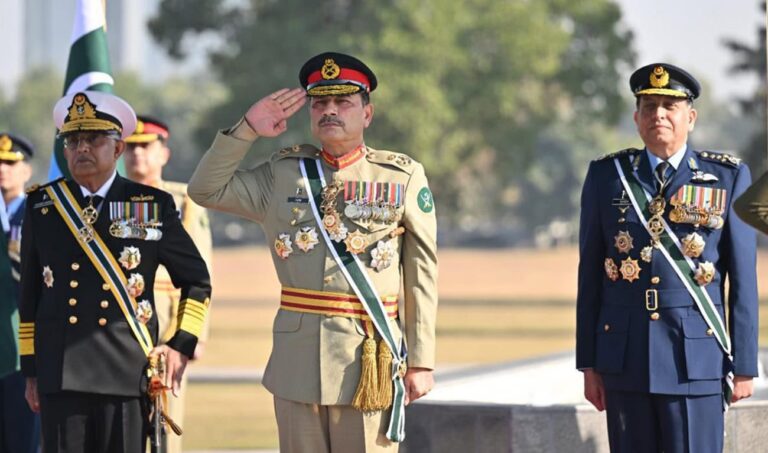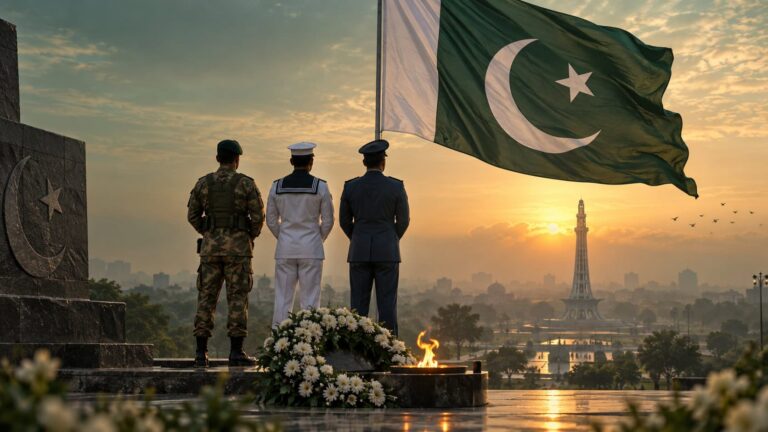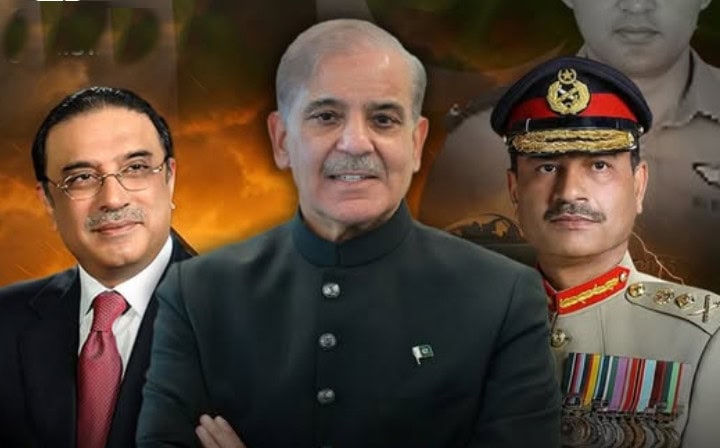
ISLAMABAD – Gun salutes rang out across Pakistan on Sunday as the country observed Defence and Martyrs’ Day, remembering the soldiers who gave their lives for the country while Prime Minister Shehbaz Sharif and President Asif Ali Zardari called for greater national unity, stronger economic foundations and a more active role in regional security.
The day began with a 31-gun salute in Islamabad and 21-gun salutes in the provincial capitals. In Karachi, a change-of-guards ceremony was held at the mausoleum of Quaid-i-Azam Muhammad Ali Jinnah.
For Pakistan, September 6 is more than a date on the calendar. It marks the country’s defence during the 1965 war with India, a conflict that began after Indian forces crossed the international border.
The fighting ended with a ceasefire on September 22, followed months later by the Tashkent Declaration on January 10, 1966, reached through Soviet mediation.
Historical figures cited in the account show the scale of the fighting. Pakistan occupied around 1,617 square miles of Indian territory, while India captured about 446 square miles of Pakistani territory. Pakistani forces also took 20 Indian officers, 19 junior commissioned officers and 569 other ranks as prisoners.
In his Defence and Martyrs’ Day message, Prime Minister Shehbaz Sharif paid tribute to the country’s fallen soldiers, veterans and their families. He said the events of September 6, 1965, continued to remind Pakistanis of the courage and unity shown by both the armed forces and the public at a critical moment in the country’s history.
Shehbaz said Pakistan’s military had faced a numerically stronger adversary but relied on professionalism, preparedness and determination to defend the country. The prime minister also looked beyond 1965, pointing to last year’s four-day military confrontation with India, which the government refers to as Marka-i-Haq.
He praised the country’s military leadership, including Chief of Defence Forces and Chief of Army Staff Field Marshal Syed Asim Munir, Air Chief Marshal Zaheer Ahmad Babar Sidhu and Naval Chief Admiral Naveed Ashraf.
Shehbaz said Operation Bunyanum Marsoos, carried out in response to India’s attack during the confrontation, had added another chapter to Pakistan’s military history.
President Asif Ali Zardari also used the occasion to honour Pakistan’s fallen soldiers, veterans and their families. He described September 6 as a day deeply rooted in the country’s history and said the sacrifices made during the 1965 war remained a source of inspiration for future generations.
Zardari said the unity shown by Pakistan’s armed forces and people in 1965 demonstrated the strength of a nation that stands together when its freedom and sovereignty are at stake. He drew a similar connection with Marka-i-Haq, saying the reported success of Operation Bunyanum Marsoos reflected the same spirit of patriotism and determination associated with September 6.
The president praised the armed forces for their vigilance, preparedness and courage, while highlighting the strong bond between Pakistan’s military and its people.
News Desk
About the Author