After the first test match with England, renowned English cricket journalist Scyld Berry wrote in the Daily Telegraph about Pakistan’s test team as the worst side in 50 years. He was statistically correct, but for cricket fans at home, it was painful and alarming. In 2022, our team was ranked 5th in the ICC Test rankings, which went down to 7th in 2024, and now we are holding 9th position, which happens to be the lowest on the ranking table. Leaving aside rain delays, we lost both test matches against England within 3 days of actual playing time, thus saving 2 days each for picnic trips or some soul-searching. PCB showing concern immediately flew white ball coach to London in the middle of the second test match for reasons best known to PCB only.
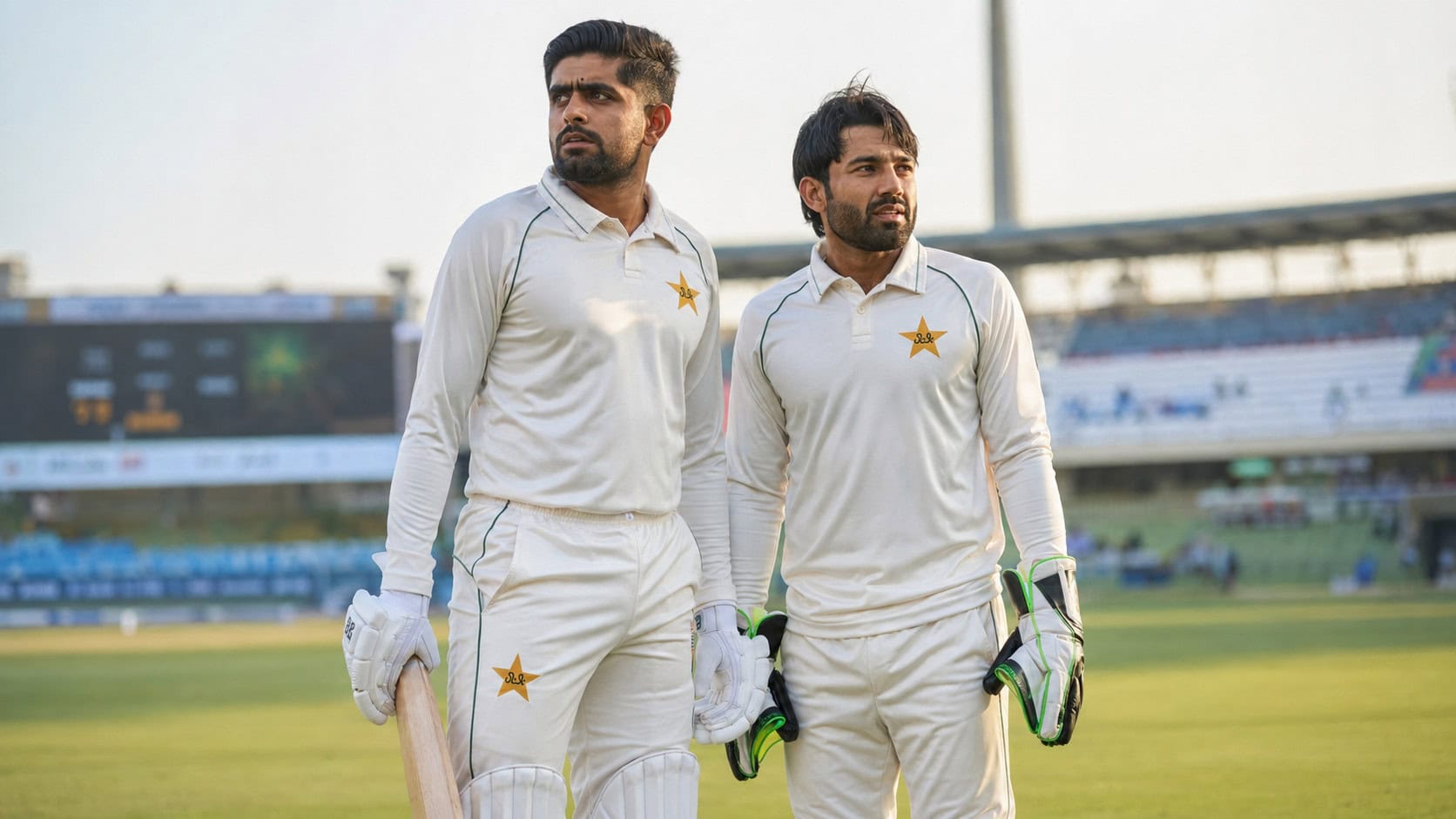
Paradoxically, any player in our Test team can be dropped from the playing eleven and replaced by another sitting in the pavilion, even the vice-captain. We saw this in Salman Agha not playing the 2nd Test match. The irony is that the decision was made on merit. The nation watched images of players with 2 to 3 bandages on their hands guarding slips and dropping catches, while Shaheen Afridi kept standing at square leg with an injured finger. Rizwan Ahmed fearfully stood near the stumps with a loosely fitted stomach guard and a borrowed fielder’s helmet, giving a clumsy look. All this reflects a lack of cricketing sense or a fate accomplice forced by wrong selection, unprofessional training and below-standard physical fitness. Not learning from mistakes in the first test match, our team still entered the 2nd test match with one pace bowler short.
A decision emerging more out of fear of batting failure than the condition of the pitch and weather in Lord’s Test. Seven specialist batsmen, and we still made 110 runs in the first and 194 runs in the second innings. One genuine pace bowler who was sitting in the pavilion, if included in place of any batsman, would have restricted England below 200 in the first and below 150 in 2nd innings of this Test match. We gave over 100 runs more in the 1st innings, including a 48-run last-wicket partnership, which created pressure, and our team bungled at 110 and, in fact, lost the test match on the 2nd day. In the game of cricket, a dip in batting performance is referred to after a definite rise in the performance of any cricketer. Since 2022, Salman Ali Agha has played 54 Test innings with an average of 36, with only three centuries. The selection committee knows best which talent, performance, and selection criteria Salman Agha meets to play all three formats of cricket. Similarly, Rizwan Ahmed, had lost his utility as a wicketkeeper and even as a national level batsman a year ago but how long PCB will take to understand this fact is a mystery.
Millions of cricket lovers in Pakistan are watching the sustained poor performances of our last 5 wickets. The trend has quietly sneaked in over the last day and recently in T20 cricket. Peculiar to Test matches, in the first innings of the 2nd Test, the last 5 wickets contributed 19 runs and 39 runs in the 2nd innings. The average score made by the last 5 wickets in the last 86 innings in five years is 59 runs. It is more shameful than being alarming. Average score made by the first five wickets in test matches in the last 86 innings is also 185 only.
In the last four years, Pakistan has played 75 Test innings with a total of 14540 runs, averaging 195 runs per innings. 78% of these runs were made by the first five wickets, while the last five wickets’ contribution stands at 22%. There were 85 ducks, 230 dismissals for less than 10 runs and 314 dismissals for less than 20 runs Faulty strategy of making super spin wickets at home have shaken the very foundation of our batter’s technique on normal or Pacey wickets.
Mediocrity prevails in both selection and our Test team’s batting performance. The standard of fielding is yet another disastrous area of our cricket in all three formats. It looks as if we have left it as a bad job or have surrendered ourselves in the fielding arena. A lack of awareness of modern fielding techniques is leading to finger injuries and frequent dropped catches. All statistical realities reflect a definite void in selection, training, grooming and playing sectors in all three formats of cricket.
Three indispensable actions are needed for any upward start. Firstly, a genuinely autonomous and truly powerful selector’s team of 3 and preferably 5 persons with no chief selector. These should be cricketing minds with an instinctive sense and an eye for ground to identify talent. We have domestic talent in this category. Secondly, a concept-based training methodology under new batting, bowling and fielding coaches who can address issues and make players physically and technically strong.
We may combine domestic and international resources in this category of reforms, but foreign coaches must remain dominant. Thirdly, an administrator and a mentor, but not a physiatrist or an ex-player, who is frequently talking, interacting, living and eating with the team almost 24/7. He even sits in the pavilion for on-the-spot planning, preparing the players in both psychological and mental domains. Only talent, focused training and mental strength can guarantee victory in today’s changing cricket in all three formats. We can and should restore cricket’s lost prestige, and to do that, we must take immediate, comprehensive, and practical remedial measures.
Dr Mahmood Sadiq
About the Author