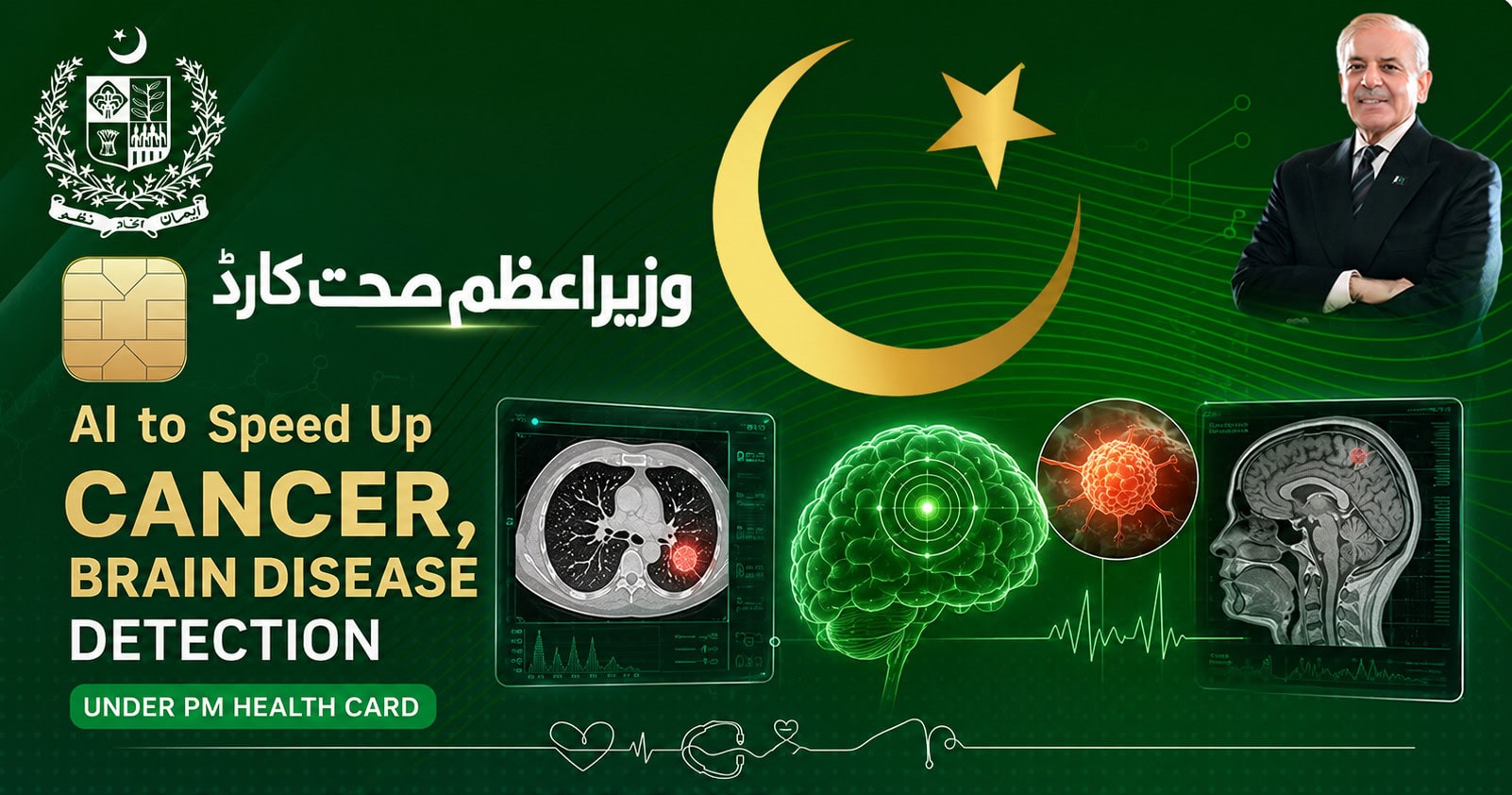
ISLAMABAD – AI is no longer part of tech sector only as it is rapidly becoming a part of everyday life, transforming industries from finance to education. Now, Pakistan’s healthcare sector is preparing for its own AI-driven transformation as the government plans to integrate AI into the PM Health Card Program to make disease diagnosis faster, smarter, and more accessible for millions of people.
Pakistan is set to take a major leap in healthcare by integrating artificial intelligence (AI) into the Prime Minister Health Card Program. The AI-powered system will be introduced in around 1,100 public and private hospitals across the country, enabling faster and more accurate detection of complex diseases, including cancer and neurological disorders.
Officials believe the technology will not only improve patient outcomes but also reduce the burden on the country’s healthcare system. Sources revealed that a formal agreement between the Prime Minister Health Card Program and Chinese technology giant Alibaba Group is expected to be signed next month, paving the way for the nationwide rollout of AI-driven diagnostic services. To strengthen the collaboration, the Prime Minister has also invited Alibaba’s leadership to visit Pakistan.
The ambitious initiative will be implemented in Islamabad, Punjab, Khyber Pakhtunkhwa, Balochistan, Gilgit-Baltistan, and Azad Kashmir, bringing advanced diagnostic capabilities to hospitals across all participating regions.
Authorities estimate that adopting AI in medical diagnostics could save the government billions of rupees by reducing testing costs, improving diagnostic efficiency, and enabling earlier detection of life-threatening illnesses.
PM Health Card Program already represents one of Pakistan’s largest healthcare investments. The federal government allocates around Rs10 billion annually to the scheme, while Punjab contributes approximately Rs60 billion. Khyber Pakhtunkhwa spends more than Rs40 billion each year on its Sehat Sahulat Card program, and Balochistan allocates about Rs10 billion annually to provide healthcare coverage for its residents.
About the Author