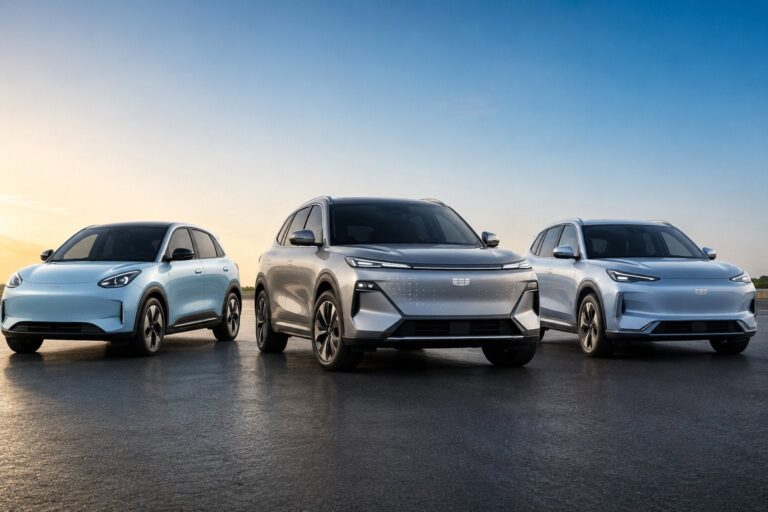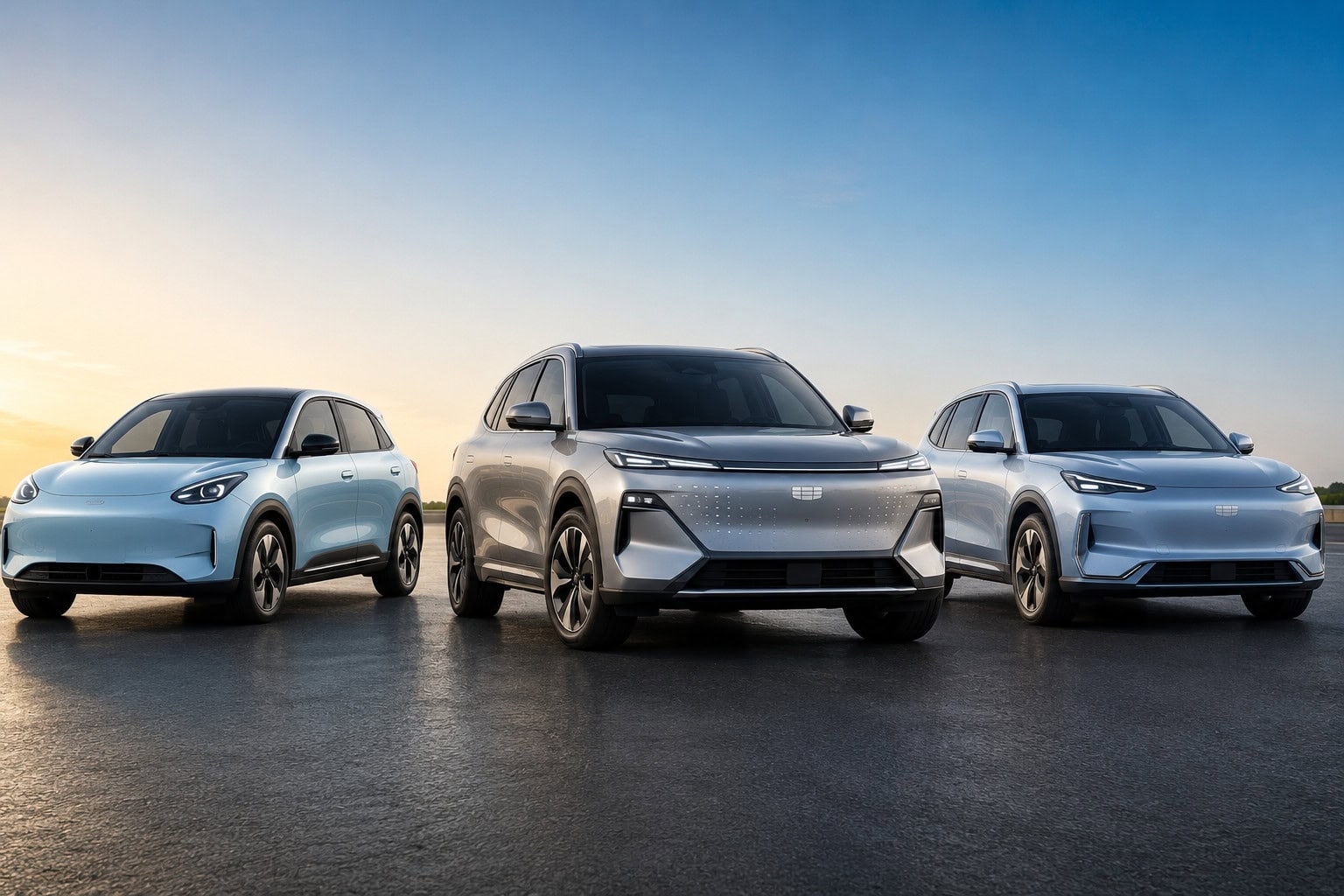
Geely’s upcoming entry into Pakistan is not stopping at electric vehicles. Alongside EX2 hatchback and EX5 electric SUV, Chinese automaker is also preparing to bring Starray EM-i, a plug-in hybrid crossover that could intensify competition in one of the country’s fastest-growing automotive segments.
The said models are reportedly arriving in late 2026, Starray EM-i will initially be imported before local assembly begins. The launch is another step in Pakistan’s growing shift towards hybrid and electric vehicles, giving buyers another alternative in the increasingly competitive family SUV market.
Starray EM-i looks almost identical to fully electric EX5. Both SUVs share the same exterior styling, but underneath they are built for different purposes. Instead of relying entirely on battery power, the Starray pairs a 1.5-litre petrol engine with a single front-mounted electric motor and an 18.4kWh battery. Together, the system produces around 260 horsepower and 387Nm of torque, driving the front wheels through a hybrid transmission.
Starray EM-i enters Pakistan with specifications that place it among the stronger contenders in the plug-in hybrid SUV category. Internationally, it accelerates from 0 to 100km/h in around 8.0 to 8.2 seconds before reaching a top speed of 170km/h. On electric power alone, Geely claims an NEDC-rated range of up to 105 kilometres, while combining the battery with the petrol engine extends the total driving range to more than 1,000 kilometres.
The Starray EM-i will enter one of Pakistan’s most competitive vehicle categories, where it is expected to go head-to-head with the Haval H6 PHEV and Chery Tiggo 8 PHEV.
Geely is slightly longer and wider than both rivals while also offering the longest wheelbase, which could translate into improved cabin space. In terms of electrification, its 18.4kWh battery sits close to the Haval’s 19kWh pack and the Tiggo’s 18.3kWh unit, while Starray stands out is its claimed 105km electric-only driving range, which slightly exceeds the Haval H6 PHEV’s 100km and comfortably surpasses the Tiggo 8 PHEV’s 90km under the NEDC testing cycle.
The biggest unknown remains pricing so far. Since the first units will arrive as imports, exchange rate fluctuations, import duties and taxes could push prices well above expectations. Charging infrastructure is another concern. Although plug-in hybrids are less dependent on public chargers than EVs, charging facilities remain limited outside major cities, meaning many owners may not fully benefit from the vehicle’s electric capability.
Being a new entrant also presents challenges. Geely will need time to establish a nationwide dealership network, ensure spare parts availability and build consumer confidence in after-sales service. There are also longer-term concerns surrounding battery durability in Pakistan’s hot climate and how plug-in hybrids will hold their resale value over the coming years.
Chinese manufacturers continue expanding their hybrid and electric vehicle line-ups as rising fuel prices encourage buyers to look beyond conventional petrol-powered vehicles. The addition of another plug-in hybrid crossover is expected to increase competition, potentially leading to better pricing, improved features, longer warranties and stronger after-sales service across the segment.
Land Cruiser, Haval SUVs part of Punjab govt’s Rs300 million vehicle plan for Bureaucrats
About the Author