ISLAMABAD – Pakistani authorities are investigating country’s first known case involving alleged commercial trade and international smuggling of human placenta, with investigators claiming the network collected nearly 200 kilograms of placenta every month from hospitals before attempting to export it abroad.
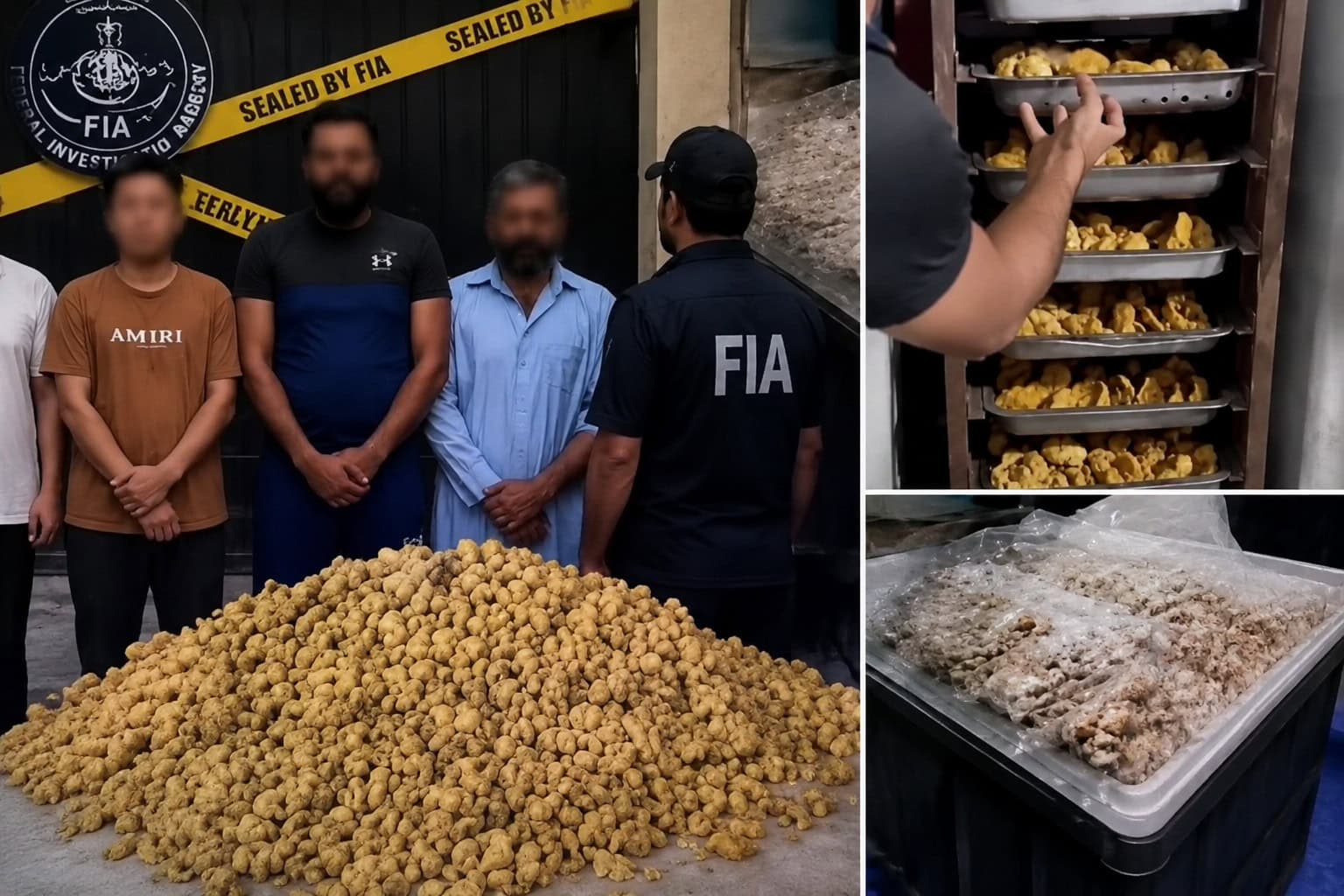
The probe started after joint operation conducted by FIA and Human Organ Transplant Authority (HOTA) in Islamabad uncovered approximately 500 kilograms of suspected human placenta, leading to the arrest of five suspects, including three Chinese nationals, on allegations of involvement in the illegal trade of human biological material.
The investigation has since expanded beyond Islamabad to Lahore, Rawalpindi and Peshawar. Authorities are also examining the possible involvement of customs officials, hospital staff and waste management companies in the alleged network.
Investigators claim they intercepted shipment of around 100 kilograms of suspected human placenta that was allegedly destined for Vietnam. During court proceedings, the FIA informed the court that the accused had attempted to export a consignment comprising 30 cartons of placenta and that approximately 580 kilograms had been seized at Islamabad Airport.
The agency sought 7-day physical remand to further investigate the case, but a local court granted only a one-day remand before ordering the suspects to be produced again. According to the First Information Report (FIR), investigators allege that the suspects falsely declared the recovered material as “sheep placenta” to facilitate its commercial export.
Samples collected during the operation were initially sent to the Pakistan Institute of Medical Sciences (PIMS) before being forwarded to the Punjab Forensic Science Agency for laboratory analysis. Officials say the final forensic report is still awaited.
Despite pending laboratory findings, FIA investigators and HOTA officials maintain that preliminary investigations indicate the recovered material is human placenta allegedly collected from hospitals in exchange for money. The investigation stems from intelligence received by HOTA regarding the alleged illegal trade of human organs and tissues in Islamabad’s F-7 sector.
A joint raid on private residence reportedly uncovered what investigators described as a facility used for storing and processing human placenta. During the operation, three Chinese nationals and two Pakistani nationals were detained.
Authorities said information obtained during questioning led investigators to another property in Islamabad’s E-11 sector, where they allegedly recovered a large quantity of placenta stored inside refrigerators and containers. Two additional Pakistani nationals and another Chinese national were subsequently detained for questioning regarding their possible involvement.
The case has been registered under Sections 11 and 12 of the Transplantation of Human Organs and Tissues Act, 2010, along with Section 109 of the Pakistan Penal Code. If convicted, the accused could face up to ten years’ imprisonment and fines of up to one million rupees.
“FIA has conducted numerous operations against illegal organ transplantation in the past, but this is the first investigation involving the alleged commercial trade of human placenta and an international network,” an official involved in the probe said.
Investigators have also recovered what the FIA described as processing equipment and finished products during the raids. Authorities are examining whether additional individuals were involved in collecting placenta from hospitals and facilitating its transportation and export.
The suspects allegedly purchased placenta from hospitals in Islamabad and Rawalpindi for approximately Rs800 per placenta before preparing it for shipment overseas. Investigators estimate the seized material to be worth millions of rupees, its precise commercial value has yet to be determined.
Placenta contains hormones such as estrogen and progesterone and has recognised medical applications. Placenta-derived materials are used internationally in certain pharmaceutical products, including treatments for postpartum depression and postpartum anaemia. She added that the inner membrane of the placenta contains growth factors used in regenerative medicine for treating severe burns, chronic wounds, ulcers and some eye injuries.
Officials said placenta-derived products are also used in the pharmaceutical and cosmetic industries. According to the FIA, investigators believe the recovered placenta was intended for manufacturing anti-ageing injections, some of which reportedly sell for as much as Rs700,000 in Pakistan.
It also raised question as such quantities of placenta could not have reached private residences without possible assistance from individuals connected to hospital administrations, an aspect that remains under investigation.
Is Human Placenta edible? How a medical waste became Smuggling Commodity
About the Author