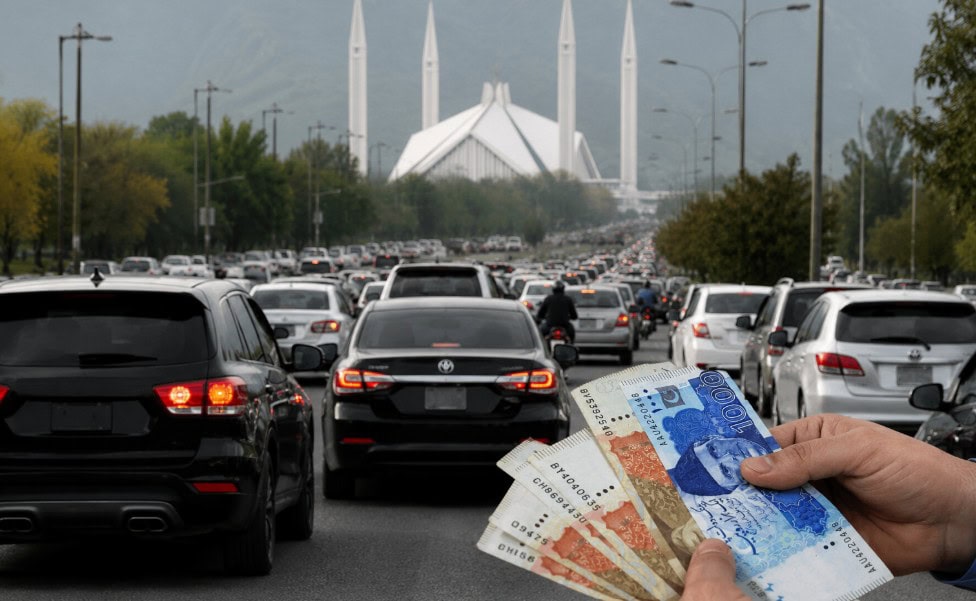
ISLAMABAD – Owning a car in Pakistani capital is about to become more expensive as the government approved major increase in vehicle token taxes, with owners of older 1000cc cars facing annual charges of up to Rs20,000.
National Assembly Standing Committee on Finance approved major increase in vehicle token taxes in federal capital, with some categories facing tax hikes of up to 100 percent as authorities seek to boost revenue collections, despite strong objections from lawmakers who argued that the additional burden would fall primarily on middle-class citizens already struggling with rising living costs.
DC Islamabad said vehicle token tax rates in the federal capital had remained unchanged for the last seven years, while all provinces had already revised their tax structures. Officials argued that Islamabad’s rates needed to be brought in line with those prevailing elsewhere in the country.
Under newly approved framework, vehicles with engine capacities of up to 1000cc manufactured before 2010 will now be subject to an annual token tax of Rs20,000, compared to the previous one-time fixed tax of Rs10,000, doubling the financial burden on owners of older vehicles.
For vehicles ranging from 1000cc to 1300cc, the tax formula has been revised from 0.3 percent of the total invoice value to 0.25 percent, resulting in substantially higher annual payments for many owners. Cars manufactured before 2010 in this category will pay around Rs2,500, while post-2010 models could face token taxes of around Rs. 6,200.
A vehicle valued at Rs2 million would now attract a token tax of Rs. 6,200, compared with the previous charge of only Rs. 1,500.
The government expects the revised tax regime to boost revenues. Officials informed committee that Islamabad collected Rs3.9 billion in vehicle token taxes during the current fiscal year, with 19 percent of payments made through digital channels. Following the latest increase, authorities estimate annual collections could surge to Rs. 5.2 billion, representing an increase of approximately Rs. 1.3 billion.
The proposal faced strong resistance from members of the committee. Several lawmakers questioned the rationale behind imposing additional taxes on motorists who already pay substantial levies through fuel purchases, vehicle registration, and taxes at the time of purchase.
One member raised question as another blow to middle class, arguing that ordinary citizens are repeatedly being targeted to generate revenue. Others questioned why token taxes must be collected annually and suggested that a lifetime tax system should be expanded to all vehicles to reduce inconvenience and administrative burdens.
Critics challenged the government’s justification that additional revenue is needed for road maintenance, arguing that existing collections should already be sufficient to meet Islamabad’s infrastructure requirements.
Budget 2026: Toyota Corolla prices may surge by up to Rs3Lac after New 6% Levy
About the Author