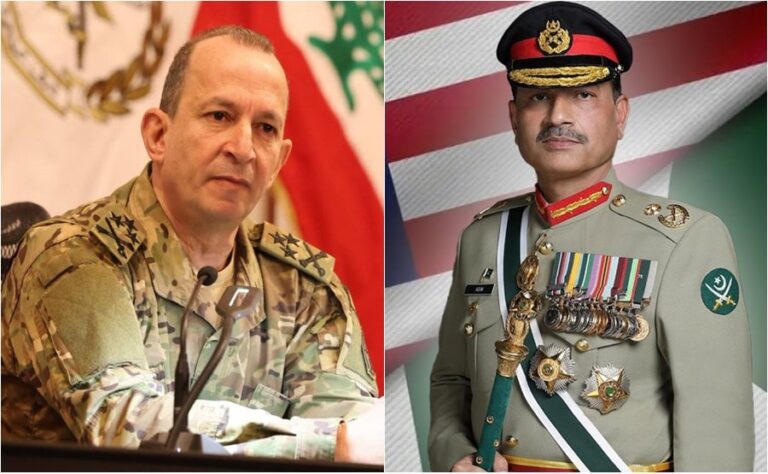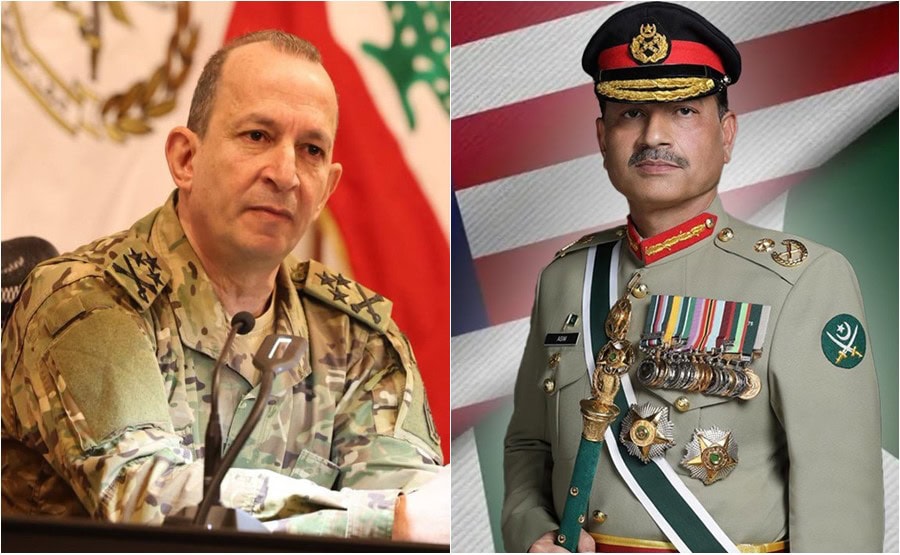
ISLAMABD/BEIRUT – Lebanese Army Chief General Rodolphe Haykal is set to visit Pakistan for high-level discussions at the invitation of Pakistan’s Chief of Army Staff Field Marshal Asim Munir. The visit comes amid heightened tensions in the Middle East and is being viewed as part of broader diplomatic and security engagement efforts in the region.
The rare visit will be pivotal moment as Pakistan advances backdoor diplomacy, being the peace broker. The high-level visit comes at time when Lebanon remains under severe pressure from continued Israeli military operations, with reported casualties since early March crossing 3,500 dead and nearly 11,000 injured, according to Lebanese authorities.
The fragile ceasefire reached in mid-April is now hanging by a thread, as cross-border tensions intensify and regional fault lines widen.
Pakistan is quietly stepping deeper into complex diplomatic web stretching from Beirut to Tehran and Washington. Islamabad has been engaged in behind-the-scenes efforts aimed at reducing Iran-US tensions and facilitating indirect communication channels between the two adversaries.
General Haykal’s visit, though lacking official detail on agenda or duration, is being closely watched given the timing: just as diplomatic pressure mounts across multiple conflict zones that many believe are no longer isolated but interconnected.
Iranian officials recently said any sustainable agreement with the US must include stability in Lebanon, while Lebanese leadership has pushed back strongly against any perception of southern Lebanon being used as a negotiating chip in broader geopolitical bargaining.
The regional picture is further complicated by earlier escalations involving US and Israeli military actions against Iran, which Tehran claims have resulted in thousands of casualties and triggered retaliatory strikes. A brief ceasefire reportedly facilitated on April 8, said to involve Pakistan’s mediation, followed by renewed sanctions pressure from Washington, particularly targeting strategic Iranian infrastructure near the Strait of Hormuz.
A recent joint statement from US, Lebanon, and Israel reiterated commitments to reinforcing the Lebanon–Israel ceasefire, but ground realities tell a different story amid violence, and diplomatic deadlock.
Against this backdrop, General Haykal’s journey to Islamabad is being seen not just as a bilateral military visit, but as part of a broader, high-stakes diplomatic chessboard. Analysts suggest Pakistan is increasingly positioning itself as a quiet intermediary in a region where formal negotiations are stalling and informal channels are becoming the only workable route.
Naqvi engages Momeni ahead of handing over Field Marshal’s Letter to Iranian Supreme Leader
About the Author