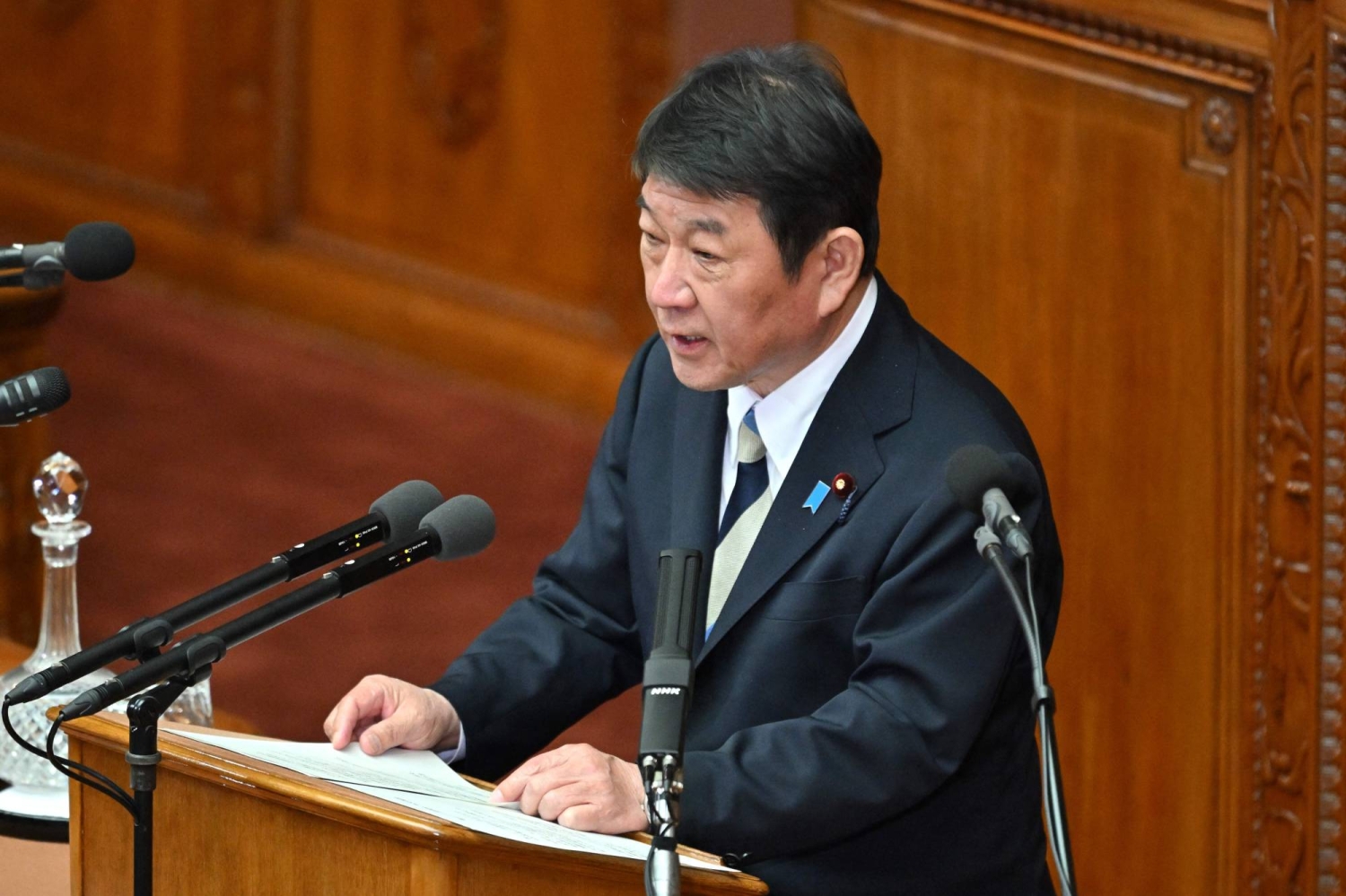
Japan's Foreign Minister Toshimitsu Motegi delivers a speech during the House of Representatives plenary session in Tokyo on February 20, 2026. (Photo by Kazuhiro NOGI / AFP)
Amid calls from politicians for Japan to take an active role in mediating deescalation of the Iran war, Foreign Minister Toshimitsu Motegi announced on Tuesday that a new “International Peace Mediation Unit” has been established within the Foreign Ministry. Through this new unit, the government intends “to engage in peace mediation efforts more actively and flexibly,” Motegi said.
But despite its diplomatic standing on the world stage, Tokyo’s past efforts to broker peace have had mixed results, and questions remain about how Japan will take on this role.
As the lone Asian member of the Group of Seven nations and an economic superpower, Japan has long sought to elevate its role in international peace and stability. It has been uniquely positioned to engage in the Middle East given its long-standing ties with Iran and its political recognition of the Palestinian right to statehood.
Yet Japan’s ability to translate diplomatic access into tangible mediation outcomes has remained inconsistent.
Ahead of the scheduled summit between U.S. President Donald Trump and Prime Minister Sanae Takaichi, both the ruling coalition and opposition parties have called on the administration to take steps to deescalate the conflict in the Middle East.
To that end, on the same day he announced the establishment of the new peace mediation unit, Motegi spoke to Iranian Foreign Minister Abbas Araghchi, their second call since the outbreak of hostilities. Motegi reportedly expressed “serious concern that the exchange of attacks had not ceased since the previous telephone conversation” and called on Tehran to “take appropriate measures to ensure the safety of all vessels in the Strait of Hormuz.”
This diplomacy marks Japan’s latest attempt to mediate tensions between the United States and Iran. The first came during Trump’s first presidential term.
About the Author