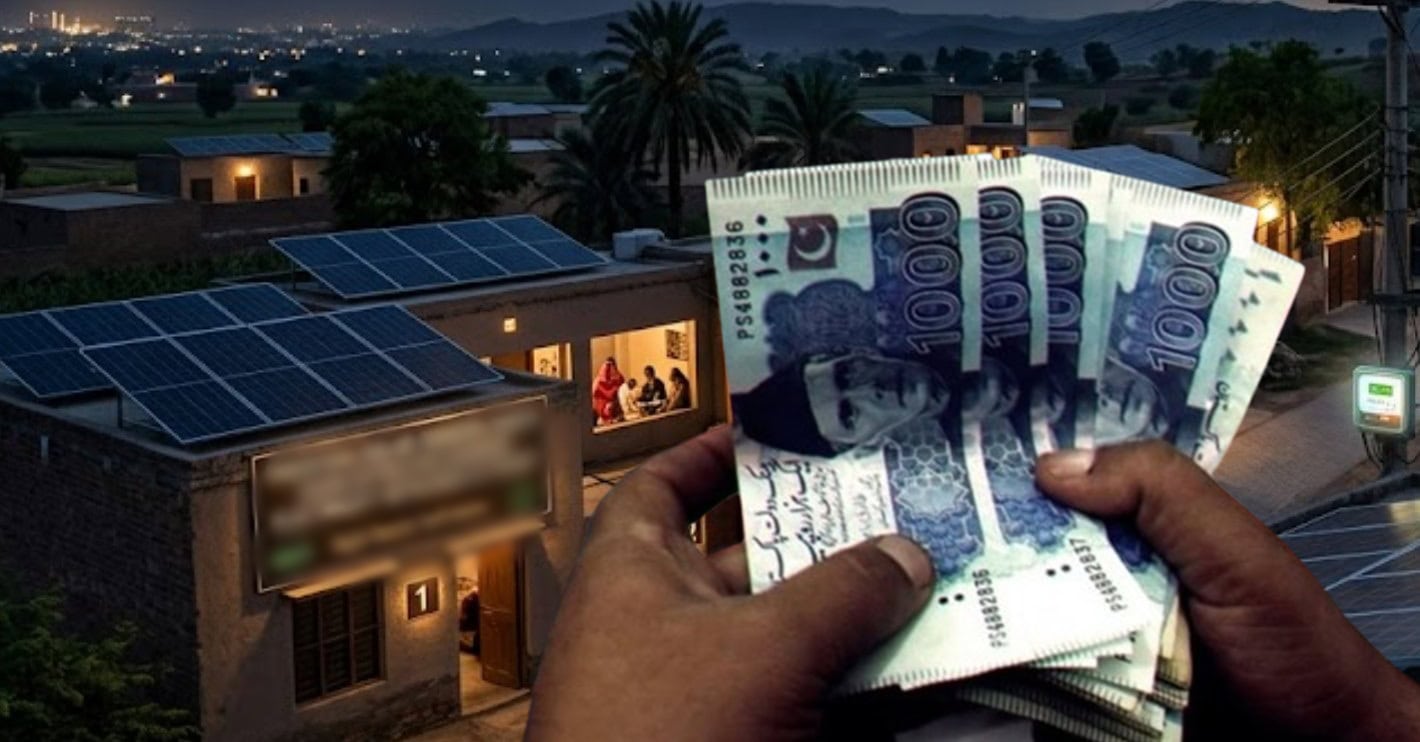
ISLAMABAD – As Pakistan’s solar revolution gathers pace, the government is preparing to bring new earning opportunity for consumers. Instead of using battery storage solely as backup power, solar users could soon be rewarded for supplying stored electricity to national grid during evening peak hours, helping ease pressure on the power system while putting extra money in their pockets.
The proposed Time-of-Use (ToU) net metering and net billing model would reward owners of battery-backed solar systems with upto Rs22 per kilowatt-hour (kWh) for electricity exported between5:00 pm and 10:00 pm, when electricity demand reaches its highest level.
The initiative aimed at strengthening the national power system as Pakistan’s evening electricity demand has crossed 26,000 megawatts (MW). By encouraging consumers to share stored solar energy during peak hours, the government hopes to reduce pressure on the grid, improve power management and make better use of clean, renewable energy.
The proposal comes at time when Pakistan’s battery storage market is expanding at pace, showing rapid shift toward smarter energy solutions.
The country imported 6.004 gigawatt-hours (GWh) of lithium-ion batteries worth nearly Rs126 billion ($454.7 million) between January 2024 and June 2026. Demand accelerated dramatically, with monthly battery imports soaring by nearly 1,640%—from just 42 megawatt-hours (MWh) in January 2024 to a record 652.2 MWh in April 2026.
More households are now pairing solar panels with battery storage systems, allowing them to save excess electricity generated during the day and use it after sunset or supply it back to the grid when demand is highest.
The transition is also gaining momentum among telecom operators, commercial businesses and large-scale energy projects, all of which are investing in battery storage to improve energy efficiency and reduce dependence on conventional power sources.
This would help create a more reliable, transparent and sustainable electricity market while supporting the continued growth of renewable energy across the country. The proposed incentive model is designed to turn battery storage into a valuable national asset.
Instead of remaining idle after charging during the day, batteries could help stabilise the grid by supplying clean electricity during evening peak hours—benefiting consumers, reducing pressure on the power network and improving overall energy efficiency.
Pakistan paid over Rs13 Trillion to IPPs, including Plants that generated No Electricity
News Desk
About the Author