ISLAMABAD – Pakistan, Saudi Arabia and Türkiye are moving towards a more closely integrated defence partnership, with their senior political and military leadership meeting in Islamabad to review implementation of a trilateral agreement that commits them to stand together in the event of an external armed attack.
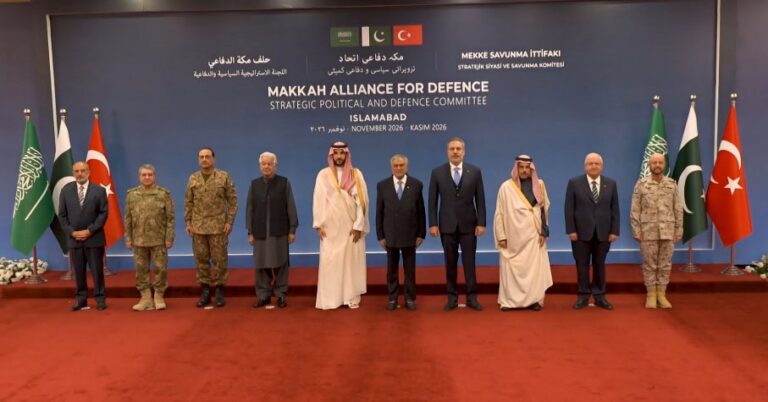
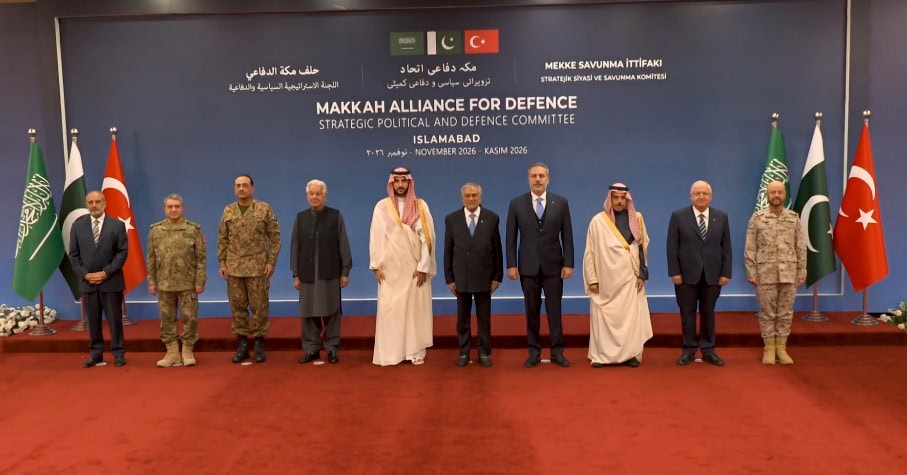
The second meeting of the Strategic, Political and Defence Committee of the Makkah Defence Alliance brought together the foreign ministers, defence ministers and military chiefs of all three countries on Friday. Changing security dynamics of the region, threats to Saudi Arabia, military coordination and the practical steps required to turn the alliance’s commitments into an effective security arrangement come under discussion.
The meeting comes at sensitive time for the Middle East, where continuing tensions involving Saudi Arabia, Yemen’s Houthi movement and Israel have raised concerns about the possibility of a wider regional confrontation.
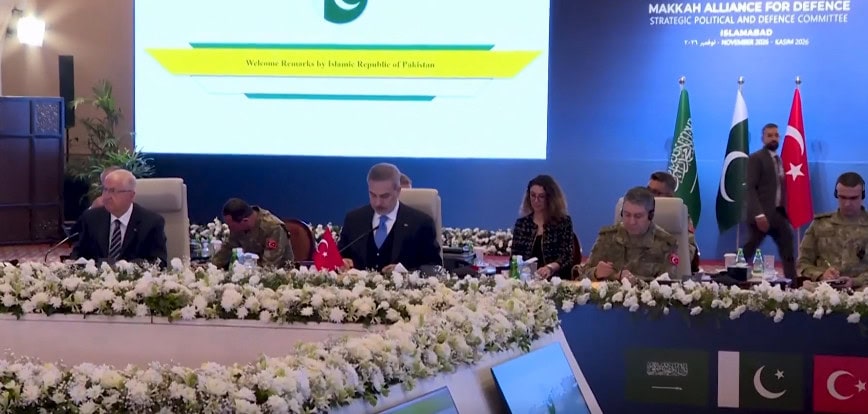
For Pakistan, the agreement places country within formal trilateral collective-defence framework alongside two strategically important partners, while creating new opportunities for military cooperation, intelligence sharing and defence-industrial collaboration.
Deputy Prime Minister and Foreign Minister Ishaq Dar said the three countries had reviewed progress on decisions taken at their previous meeting and reaffirmed their commitment to protecting one another’s sovereignty and territorial integrity. He said the participants also agreed to continue working together for regional peace, stability and security.
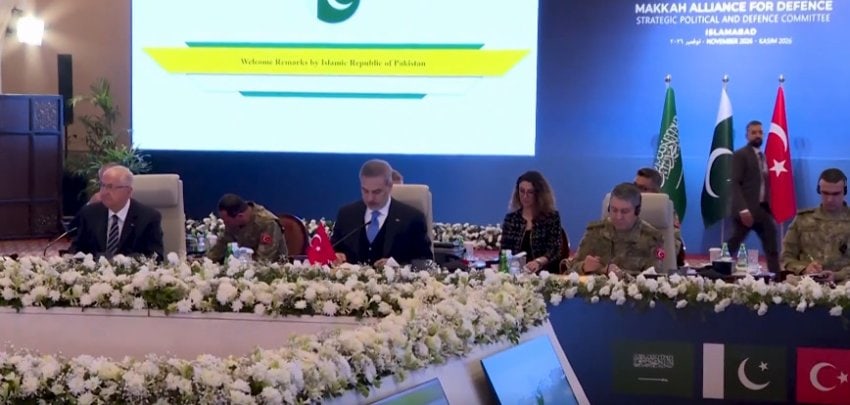
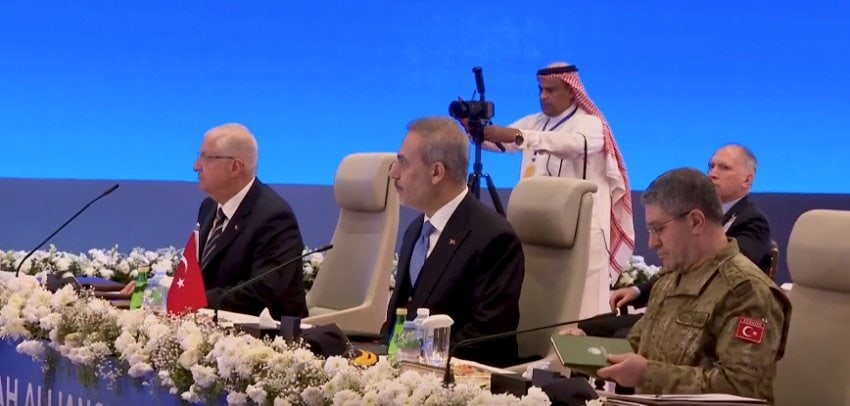
Pakistan was represented by Dar, Defence Minister Khawaja Asif and Chief of Army Staff Field Marshal Asim Munir. The Saudi delegation included Defence Minister Prince Khalid bin Salman, Foreign Minister Prince Faisal bin Farhan and Chief of General Staff General Fayyad bin Hamed Al-Ruwaili. Türkiye sent Foreign Minister Hakan Fidan, Defence Minister Yaşar Güler and Chief of General Staff General Selçuk Bayraktaroğlu.
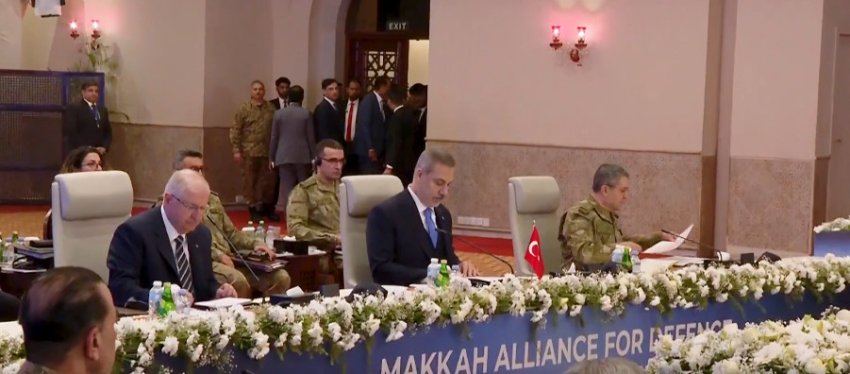
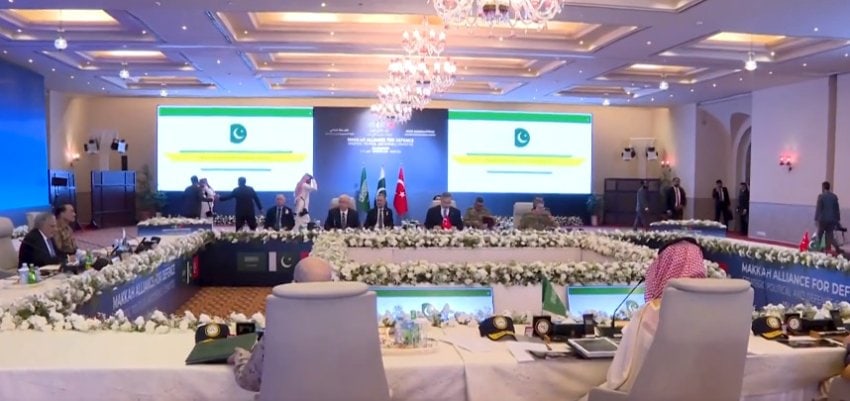
The presence of the three countries’ top military commanders alongside their foreign and defence ministers reflected the increasingly important role that military coordination is expected to play in the partnership.
The agreement’s key commitment is external armed attack against one member is to be treated as an attack against all three. Yet the arrangement is more nuanced than an automatic military intervention clause. Under its second article, the participating countries are required to provide mutual assistance using their available resources, including military capabilities.
That military relationship also has a separate bilateral foundation. Before the trilateral agreement, Pakistan and Saudi Arabia signed a Strategic Mutual Defence Agreement. According to Saudi Arabia’s official news agency, the Saudi Ministry of Defence announced in April 2026 that a Pakistani military contingent had arrived at King Abdulaziz Air Base in the Kingdom’s eastern sector under that bilateral arrangement. The deployment involved Pakistani personnel and fighter aircraft.
Türkiye, meanwhile, has completed an important step towards formalising its participation. Turkish government submitted the 16-article agreement to Parliament on October 20, 2026, and Turkish lawmakers approved its ratification. Fuat Oktay, chairman of the Turkish Parliament’s Foreign Affairs Committee, stressed that the arrangement was defensive in nature and was not designed to facilitate attacks against other countries. Foreign Minister Hakan Fidan had also said that Türkiye would not send its military personnel to another country to participate in an offensive operation.
Beyond the immediate security commitments, the agreement sets out an extensive framework for cooperation that could reshape the defence relationship between the three countries over time.
Its first provisions establish the principle of mutual protection, requiring the members to cooperate in defending one another’s independence, sovereignty, territorial integrity and internationally recognised borders.
This is followed by the collective-defence clause, which requires assistance in the event of an external armed attack. The agreement then expands the partnership into defence and security cooperation, regular consultations on international threats and joint efforts against terrorism.
About the Author